
Search Results
23 Results Found for “Bruton tyrosine kinase inhibitor”

ESMO 2026 presented new data across multiple myeloma, lymphoma and myeloid malignancies, exploring investigational bispecific antibodies, ADCs and targeted therapies. The studies selected for this round-up examine investigational approaches in relapsed/refractory disease and newly diagnosed settings, including combinations designed to deepen responses and emerging targets in patients with limited treatment options.

An immunosuppressed person is one whose immune function is impaired by underlying disease and/or immunosuppressive medications, resulting in reduced immunosurveillance against malignant cells and increased vulnerability to opportunistic infections. Longstanding immunosuppression has been linked to increased risk for cutaneous (...

Bruton tyrosine kinase (BTK) plays a functional and integral role in B-cell receptor (BCR) signalling and is expressed in normal and malignant B cells. Given BTK’s central role in the survival and proliferation of malignant B cells, BTK inhibitors ...

Welcome to the latest edition of touchREVIEWS in Oncology & Haematology. Despite the success of the human papillomavirus vaccination programme, cervical cancer remains one of the most common cancers in women, and advanced disease carries a poor prognosis. Lebreton et ...
Marginal zone lymphoma subtypes Marginal zone lymphoma (MZL) is an indolent non-Hodgkin lymphoma (NHL) that accounts for 5.0%–10.0% of NHLs.1 There are three subtypes of MZL: extranodal (including mucosa-associated lymphoid tissue [MALT]), splenic and nodal.1 Extranodal MZL (EMZL) is the most ...
B-cell signalling pathways are critical regulators of B-cell development, expansion, and survival and function via various mediators, including Src family kinases (SFKs), spleen tyrosine kinase, Bruton’s tyrosine kinase (BTK) and phosphatidylinositol 3 kinase (PI3K) (Figure 1).1,2 BTK, a member of ...
Welcome to the winter edition of touchREVIEWS in Oncology & Haematology. Despite the continued impact of the COVID-19 pandemic on cancer care, 2021 has seen important advances in many areas of oncology, which is reflected in our diverse range of articles. ...
The addition of rituximab to chemotherapy provides an overall survival benefit in aggressive lymphomas,1 whereas for indolent lymphoma subtypes this addition has resulted in improvements in progression-free survival.2 For more than two decades, immunotherapy with monoclonal ‘naked’ antibodies targeting CD20 ...
Current treatment landscape in Canada Waldenström’s macroglobulinaemia (WM) is a rare haematological disorder with an incidence of about three cases per million, leading to approximately 150 new cases per year in Canada.1,2 WM is characterized by a clonal lymphoplasmacytic ...
Allogeneic haematopoietic cell transplantation (allo-HCT) has a bi-faceted role in the treatment of haematopoietic malignancies. First, allo-HCT gives high-dose chemotherapy a chance to reduce the leukaemic burden; second, it allows graft-originated natural killer and T cells to initiate an adoptive ...
Advanced age and other comorbid conditions put patients with chronic lymphocytic leukaemia (CLL) at an increased risk of morbidity and mortality from SARS-CoV-2 infection, with early studies showing case fatality rates of over 30% in patients with CLL with symptomatic COVID-19.1,2 ...

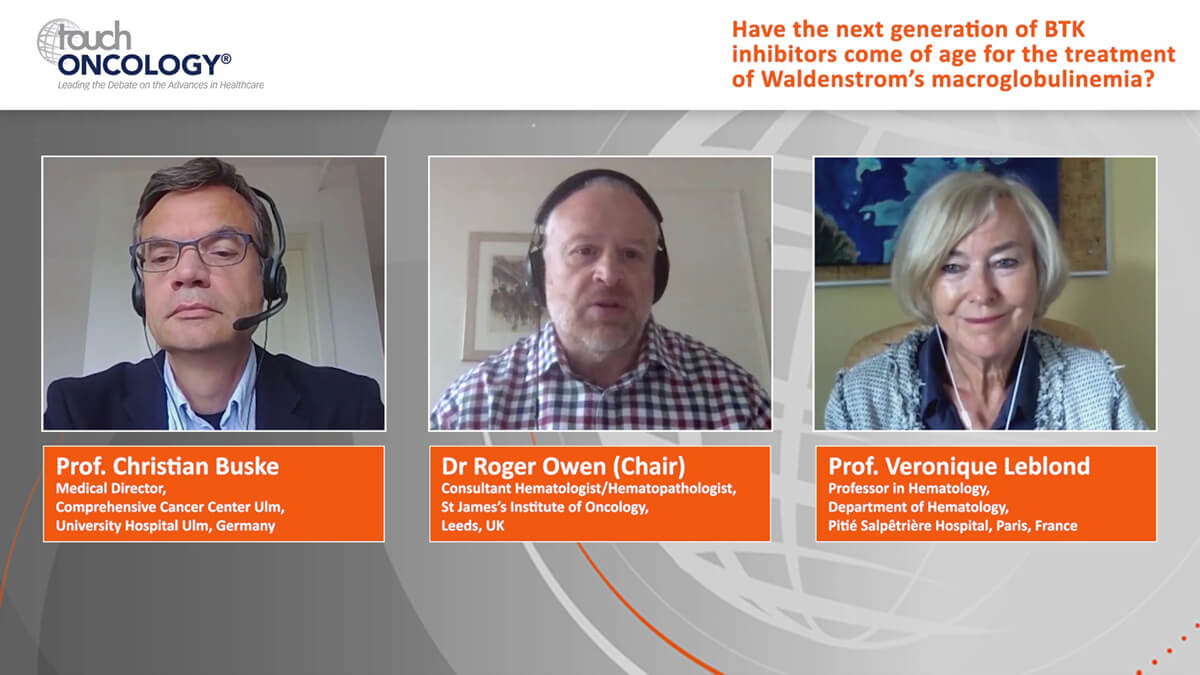
Watch a panel of internationally renowned Waldenström’s macroglobulinemia experts discuss the clinical utility of second-generation Bruton’s tyrosine kinase (BTK) inhibitors, and their potential impact on the current treatment paradigm.

COVID-19 has become one of the greatest challenges in medical history, and the rapid development and approval of effective and safe treatments is essential to minimise the loss of lives during the pandemic. Given the urgency of finding effective strategies, ...
Pancreatic ductal adenocarcinoma (PDA) is an aggressive disease with a persistently high mortality that has only marginally decreased in recent decades.1–4 The disease typically presents with nonspecific symptoms in the early stages, often leading to delayed diagnosis and a poor ...
Hodgkin lymphoma is a B-cell lymphoma that predominantly affects adults between 20–40 years of age, with a second incidence peak in those 55 years of age or older.1,2 It is also the most common form of lymphoma in adolescents, occurring in nearly ...
Waldenström macroglobulinemia (WM) is an indolent lymphoma characterized by the presence of a circulating monoclonal immunoglobulin M (IgM) protein of any size and lymphoplasmacytic infiltrate in the bone marrow.1 It lies within a continuous spectrum of disorders associated with ...

Mantle cell lymphoma is an rare, aggressive B-cell lymphoma that accounts for around 6% of all non-Hodgkin’s lymphoma but is more common in patients who are aged 65 years and over.1 Its prognosis is poor, with a median overall survival (OS) ...
Log into your Touch Account
Keep track of your clinical interests and newsletter subscriptions.
Sign up with an Email
Or use a .
Register now for FREE access
Already registered? Login below.
