
Search Results
12 Results Found for “Dopamine receptor D2”

Among glial tumours of the central nervous system (CNS), one of the most devastating is the category of H3K27-altered midline gliomas because of their uniform and rapid mortality, high neurological symptom burden and predilection for paediatric, adolescent and ...
The management of children with diffuse midline gliomas (DMG) and other paediatric high-grade gliomas (pHGG) continue to present one of the most difficult challenges facing paediatric oncologists, characterized by poor patient outcomes.1 Standard of care therapy, which includes a maximal ...
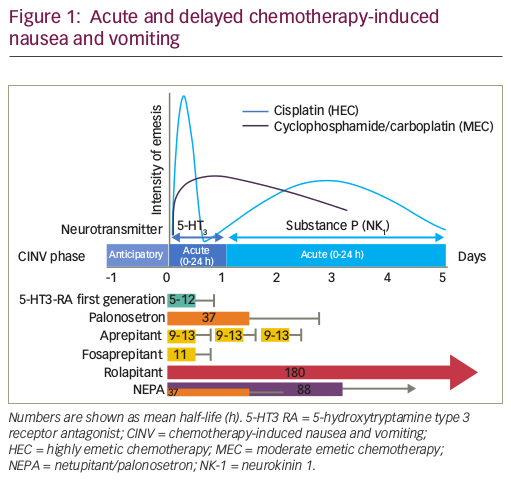
Despite the increasing availability of precision medicine and the recent introduction of immune checkpoint inhibitors in the treatment of many tumours, chemotherapy remains the standard of care for most patients with cancer. Chemotherapy-induced nausea and vomiting (CINV) is highly prevalent ...

Over the last 10 years, the availability of neurokinin-1 receptor antagonists (NK1 RAs) has led to marked improvements in the treatment of chemotherapy-induced nausea and vomiting (CINV).In clinical trials with the NK1 RA aprepitant in combination with ondansetron and dexamethasone (...
It has been almost 50 years since the first study of an antiemetic (prochlorperazine versus placebo) for chemotherapy-induced nausea and vomiting (CINV) was published.1 However, we have not reached the point where CINV is never a problem for any patient receiving ...
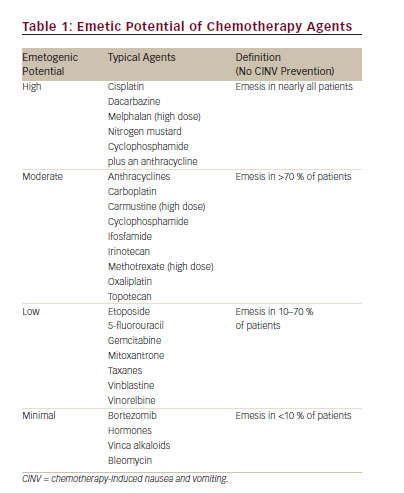
Chemotherapy-induced nausea and vomiting (CINV) is associated with a significant deterioration in quality of life and is perceived by patients as a major adverse effect of the treatment.1,2Increased risk of CINV is associated with the type of chemotherapy administered (...
Cachexia is a complex metabolic disorder that results in progressive weight loss, muscle and adipose tissue wasting and inflammation and is frequently observed in patients with incurable malignancies.1 Weight loss in cancer patients results from reduction in adipose tissue and ...
Cancer treatments are quite challenging for cancer patients to endure. The cancer treatments and subsequent adverse effects patients experience often make them feel worse than the disease itself.1–3 Chemotherapy-induced nausea and vomiting (CINV) are two of the most common and ...
Cancer treatments and their side effects are often perceived as more debilitating than the actual cancer by many patients.1–3 Nausea and vomiting (NV) are still among the most common, expected, and feared side effects among patients receiving chemotherapy.1–3 In fact, ...
Chemotherapy-induced nausea and vomiting (CINV) has long been a nightmare, primarily for patients with cancer but also for nurses and oncologists. Those who were working in chemotherapy delivery units in the 1970s remember nurses rushing from one patient to the ...
Cancer patients rate nausea the most distressing side effect of chemotherapy.1,2 Chemotherapy-induced nausea continues to be reported by up to 70% of adult patients receiving moderately and highly emetogenic chemotherapy agents and 58% of school-age and adolescent-age children receiving highly emetogenic chemotherapy, ...
Traditionally, nausea and vomiting are among the most commonly observed, as well as feared, side effects for patients who are receiving chemotherapy.1 Despite modern anti-emetic therapy, in patients taking highly emetogenic chemotherapy the incidence of nausea and vomiting has been ...
Log into your Touch Account
Keep track of your clinical interests and newsletter subscriptions.
Sign up with an Email
Or use a .
Register now for FREE access
Already registered? Login below.
