
Search Results
43 Results Found for “R-CHOP chemotherapy”

Diffuse large B-cell lymphoma (DLBCL) is the most common lymphoma in the USA and Western Europe.1,2 DLBCL is treated with curative intent given the aggressive nature of the disease. Rituximab (R), cyclophosphamide (C), doxorubicin (H), vincristine (O) and prednisone (P) (...

Several important lymphoma studies presented at ASCO 2026 provided new data across newly diagnosed and relapsed/refractory disease settings. The studies spanned aggressive B-cell lymphomas and classic Hodgkin lymphoma, evaluating novel antibody-based combinations, epigenetic targeting strategies and chemotherapy-sparing approaches. Dr Tycel Phillips provides his expert insights into the six most important studies of the meeting.

The European Hematology Association (EHA) 2026 Congress brought together the global hematology community to unveil the latest practice-shaping advances in hematological malignancies and blood disorders. From plenary and late-breaking trial results to prestigious award winners, novel therapeutics, translational science and emerging technologies, the meeting delivered a vast volume of data. In this expert-led round-up, leading specialists distil the most important data and key takeaways from across each disease area, offering an essential guide to the studies set to shape the future of hematology.

Axicabtagene ciloleucel (axi-cel) is an autologous anti-CD19 chimeric antigen receptor (CAR) T cell therapy approved to treat patients with relapsed/refractory large B-cell lymphoma. We caught up with Dr Jason Westin (The University of Texas MD Anderson Cancer Center, Houston, ...
Marginal zone lymphoma subtypes Marginal zone lymphoma (MZL) is an indolent non-Hodgkin lymphoma (NHL) that accounts for 5.0%–10.0% of NHLs.1 There are three subtypes of MZL: extranodal (including mucosa-associated lymphoid tissue [MALT]), splenic and nodal.1 Extranodal MZL (EMZL) is the most ...

The addition of rituximab to chemotherapy provides an overall survival benefit in aggressive lymphomas,1 whereas for indolent lymphoma subtypes this addition has resulted in improvements in progression-free survival.2 For more than two decades, immunotherapy with monoclonal ‘naked’ antibodies targeting CD20 ...

Current treatment landscape in Canada Waldenström’s macroglobulinaemia (WM) is a rare haematological disorder with an incidence of about three cases per million, leading to approximately 150 new cases per year in Canada.1,2 WM is characterized by a clonal lymphoplasmacytic ...

Umberto Vitolo is a Haematology Consultant, Candiolo Cancer Institute, Fondazione del Piemonte per l'Oncologia, IRCCS, Candiolo (Torino), Italy. His research interests are haematological malignancies, primarily lymphoma. He is a member of the Italian Society of Haematology, the Italian Society of ...

Craig E Devoe1 and Wadie F Bahou2 Northwell Health Cancer Institute, Zucker School of Medicine at Hofstra/Northwell, Lake Success, NY, USA Stony Brook University Medical Center, Stony Brook, NY, USA Q. What is the current outlook on the effect ...

Large B-cell lymphoma includes diffuse large B-cell lymphomas, primary mediastinal B-cell lymphoma and transformed follicular lymphoma. These have historically been treated with rituximab, cyclophosphamide, doxorubicin, vincristine and prednisone (R-CHOP). High-dose salvage chemotherapy and autologous stem-cell transplantation (SCT) can be used ...

Waldenström macroglobulinemia (WM) is an indolent lymphoma characterized by the presence of a circulating monoclonal immunoglobulin M (IgM) protein of any size and lymphoplasmacytic infiltrate in the bone marrow.1 It lies within a continuous spectrum of disorders associated with ...

Diffuse large B-cell lymphoma (DLBCL) is the most common lymphoid malignancy, and accounts for 30–40% of all cases of non-Hodgkin’s lymphoma.1 Various subtypes of DLBCL have been recognised by the World Health Organization (WHO), including primary mediastinal large B-cell lymphoma, ...

Ovarian cancer is a leading cause of cancer death in women worldwide, with almost 300,000 cases diagnosed in 2018.1 If diagnosed and treated at stage I, the 5-year relative survival rate is 92%. However, only about 15% of ovarian cancers are diagnosed at this ...

Chronic lymphocytic leukemia, diffuse large B-cell lymphoma, and follicular lymphoma are the three most common lymphoproliferative malignancies.1 All are B-cell malignancies and, although diverse in their underlying pathologies and clinical presentation, until recently have been treated the same way. The ...

Insights into the RELEVANCE study presented at the 23rd Congress of the European Haematology Association, 14–17 June 2018, Stockholm, Sweden Follicular lymphoma (FL) is the most common indolent non-Hodgkin lymphoma and accounts for 15–30% of all lymphomas.1 The disease is characterised by recurrent ...
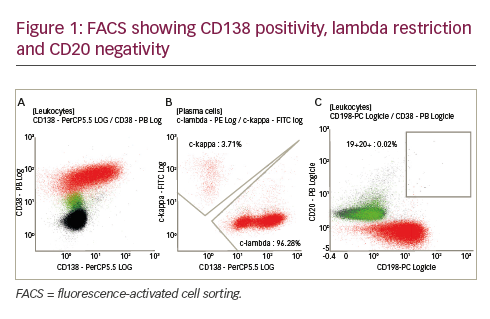
Post-transplant lymphoproliferative disorder (PTLD) is a severe complication of haematopoietic stem cell transplantation (HSCT). Most of the PTLDs originate from B-cells. Overall, 60–80% of PTLDs are associated with Epstein-Barr virus (EBV); this can vary depending on PTLD type and time of ...
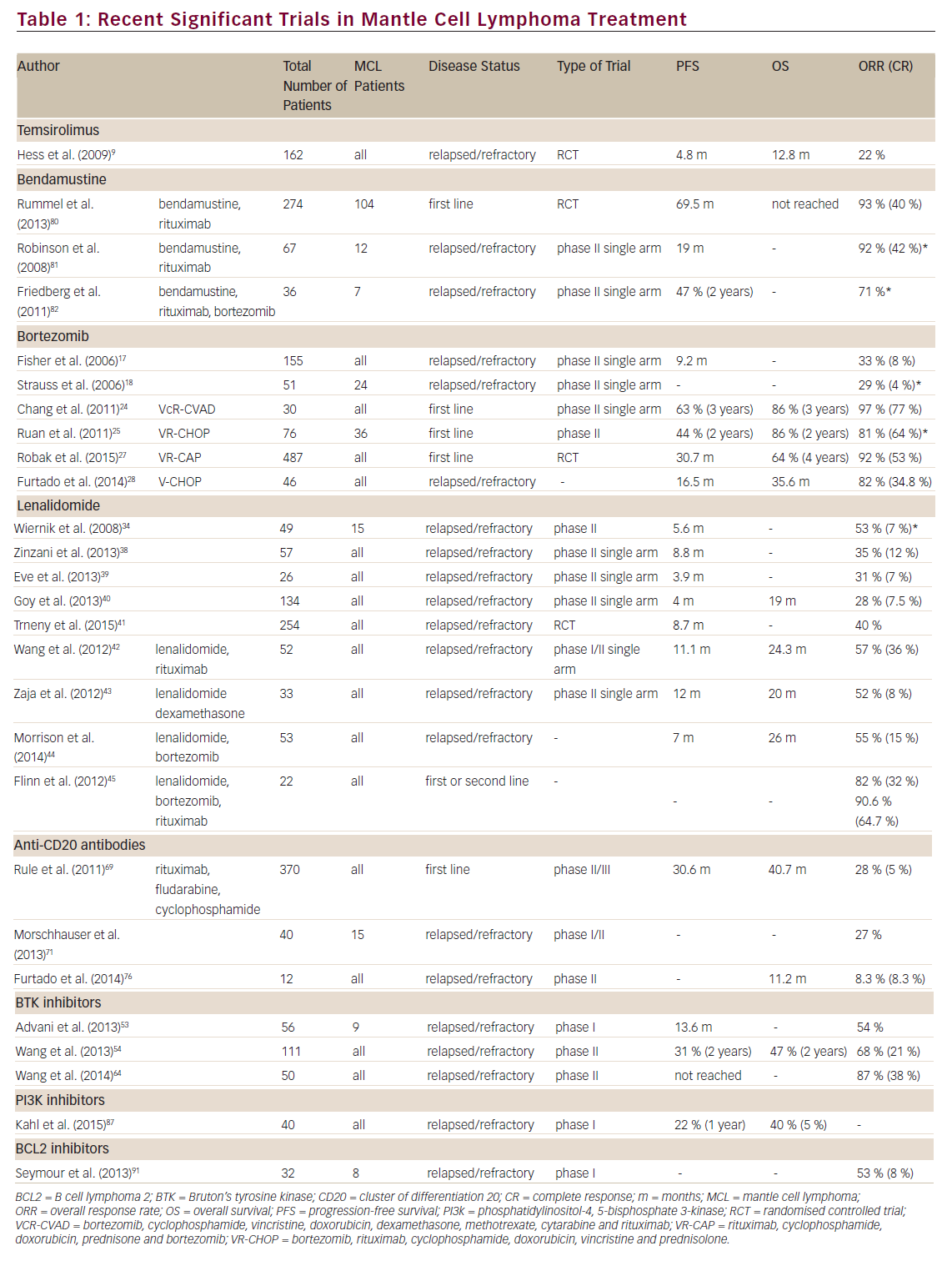
Mantle cell lymphoma (MCL) comprises ~6 % of all Non-Hodgkin lymphoma (NHL) with a median age at presentation of mid-60s. It is characterised by the t(11;14)(q13:32) translocation, which leads to overexpression of cyclin D1 resulting in subsequent dysregulation of the ...
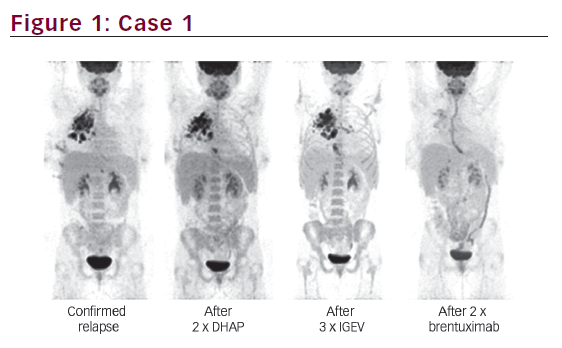
Chemotherapy achieves excellent response rates and long progressionfree survival (PFS) in classical Hodgkin’s lymphoma (cHL) and systemic anaplastic large cell lymphoma (sALCL).1 However, up to 30 % of patients with advanced HL do not achieve remission or relapse within a few ...
Log into your Touch Account
Keep track of your clinical interests and newsletter subscriptions.
Sign up with an Email
Or use a .
Register now for FREE access
Already registered? Login below.
