
Search Results
46 Results Found for “follicular lymphoma”

As 2025 draws to a close, we’re celebrating another remarkable year of growth, collaboration and innovation at touchONCOLOGY. From thought-provoking expert interviews and peer-reviewed research to dynamic conference coverage and an expanding portfolio of medical education, this year has been defined by meaningful conversations and impactful learning. We’ve had the privilege of engaging with leading clinicians, researchers and partner societies across the globe - bringing together diverse voices to support the oncology community with timely, accessible and authoritative content. As we reflect on the past 12 months, we’re proud to highlight the moments, milestones and stories that shaped our year.

We are delighted to present the latest edition of touchREVIEWS in Oncology & Haematology. This issue underscores the evolving landscape of cancer therapeutics, showcasing advances across a wide range of malignancies, from haematologic diseases to solid tumours, through novel mechanisms, ...

Bruton tyrosine kinase (BTK) plays a functional and integral role in B-cell receptor (BCR) signalling and is expressed in normal and malignant B cells. Given BTK’s central role in the survival and proliferation of malignant B cells, BTK inhibitors ...



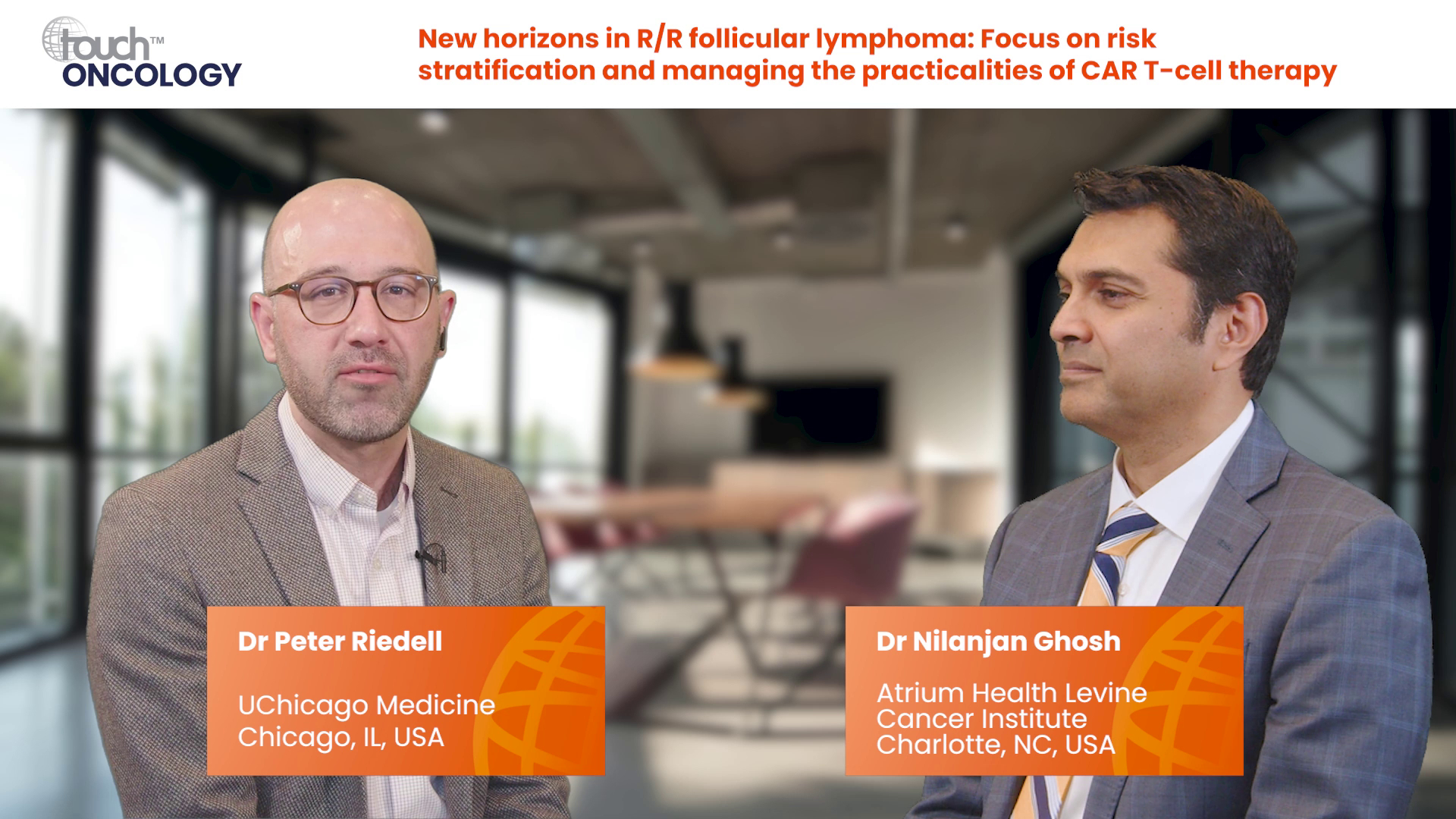

Dr William Townsend shares the latest data from the final analysis of the phase III GALLIUM study, which used the glycoengineered type II anti-CD20 monoclonal antibody obinutuzumab plus chemotherapy to follicular lymphoma. The study compared rituximab-based chemotherapy with obinutuzumab-based chemotherapy ...

In Part Two of this interview, Dr Mazyar Shadman (Fred Hutchinson Cancer Center, Seattle, Was, USA) presents the results of the follicular lymphoma cohort from his ongoing phase I/II clinical trial investigating MB-106 for B-cell lymphoma/CLL. He discusses ...
In part one of this interview, Dr Mazyar Shadman (Fred Hutchinson Cancer Center, Seattle, Was, USA) discusses the challenges of CAR-T therapy for follicular lymphoma and the advantages of MB-106, a third-generation, CD20-targeted, autologous CAR-T cell therapy over earlier ...
Marginal zone lymphoma subtypes Marginal zone lymphoma (MZL) is an indolent non-Hodgkin lymphoma (NHL) that accounts for 5.0%–10.0% of NHLs.1 There are three subtypes of MZL: extranodal (including mucosa-associated lymphoid tissue [MALT]), splenic and nodal.1 Extranodal MZL (EMZL) is the most ...

The addition of rituximab to chemotherapy provides an overall survival benefit in aggressive lymphomas,1 whereas for indolent lymphoma subtypes this addition has resulted in improvements in progression-free survival.2 For more than two decades, immunotherapy with monoclonal ‘naked’ antibodies targeting CD20 ...

Current treatment landscape in Canada Waldenström’s macroglobulinaemia (WM) is a rare haematological disorder with an incidence of about three cases per million, leading to approximately 150 new cases per year in Canada.1,2 WM is characterized by a clonal lymphoplasmacytic ...
Chimeric antigen receptor (CAR) T-cell therapy has been the most important recent breakthrough in the treatment of haematological malignancies. CAR T-cell therapy is a novel adoptive immunotherapy in which T lymphocytes are re-engineered ex vivo to produce CARs that can ...
Large B-cell lymphoma includes diffuse large B-cell lymphomas, primary mediastinal B-cell lymphoma and transformed follicular lymphoma. These have historically been treated with rituximab, cyclophosphamide, doxorubicin, vincristine and prednisone (R-CHOP). High-dose salvage chemotherapy and autologous stem-cell transplantation (SCT) can be used ...
Waldenström macroglobulinemia (WM) is an indolent lymphoma characterized by the presence of a circulating monoclonal immunoglobulin M (IgM) protein of any size and lymphoplasmacytic infiltrate in the bone marrow.1 It lies within a continuous spectrum of disorders associated with ...

Diffuse large B-cell lymphoma (DLBCL) is the most common lymphoid malignancy, and accounts for 30–40% of all cases of non-Hodgkin’s lymphoma.1 Various subtypes of DLBCL have been recognised by the World Health Organization (WHO), including primary mediastinal large B-cell lymphoma, ...

Chronic lymphocytic leukemia, diffuse large B-cell lymphoma, and follicular lymphoma are the three most common lymphoproliferative malignancies.1 All are B-cell malignancies and, although diverse in their underlying pathologies and clinical presentation, until recently have been treated the same way. The ...

Insights into the RELEVANCE study presented at the 23rd Congress of the European Haematology Association, 14–17 June 2018, Stockholm, Sweden Follicular lymphoma (FL) is the most common indolent non-Hodgkin lymphoma and accounts for 15–30% of all lymphomas.1 The disease is characterised by recurrent ...

Editorial board member, Ian W Flinn from Sarah Cannon, Tennesse Oncology, in Nashville, TN, talks to us about risk of relapse and promising treatments for relapsed/refractory CLL and advances in the treatment of DLBCL and follicular lymphoma. 1. What are ...
Log into your Touch Account
Keep track of your clinical interests and newsletter subscriptions.
Sign up with an Email
Or use a .
Register now for FREE access
Already registered? Login below.
