
Search Results
50 Results Found for “factor VIII”

In the latest edition of touchREVIEWS in Oncology & Haematology, we are pleased to present a collection of articles that delve into the latest research and advancements in the field. From innovative therapies and genetic treatments to analyses of digital ...
Severe haemophilia A (HA), defined as baseline factor VIII (FVIII) levels of <1%, results in traumatic and spontaneous bleeding episodes, which occur primarily in the joints, in addition to the muscles, soft tissue and the central nervous system. Prophylactic treatment ...
In December 2019, an outbreak of pneumonia of unknown aetiology was observed in the Chinese city of Wuhan, capital of Hubei province. By January 2020, this outbreak was attributed to a novel virus classified as severe acute respiratory syndrome coronavirus 2 (SARS-CoV-2), the ...
Human epidermal growth factor receptor 2 (HER2) was discovered as a human proto-oncogene in 1985, and was found in around 30% of clinical samples of breast cancers, as well as being associated with aggressive disease and poor survival.1 Since then, the use of ...
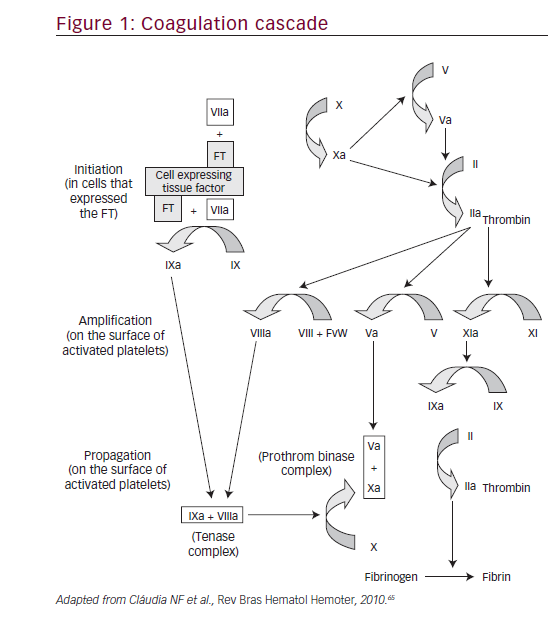
The coagulation cascade The formation of a blood clot inside a blood vessel obstructs the blood flow through the circulatory system. Hemostasis is the process that prevents blood loss after any injury. The coagulation process that directs hemostasis constitutes a ...

Gastrointestinal stromal tumors (GIST) are the most common mesenchymal tumors of the gastrointestinal (GI) tract. Although they have been recognized as a distinct entity for several decades, it has only been over the past 10–15 years that these tumors have been ...
Gastrointestinal stromal tumors (GIST) are the most common mesenchymal tumors of the gastrointestinal (GI) tract. Although they have been recognized as a distinct entity for several decades, it has only been over the past 10–15 years that these tumors have been ...
Gastrointestinal stromal tumors (GISTs) are the most common mesenchymal tumor of the gastrointestinal tract. They are thought to be derived from the interstitial cells of Cajal, the so-called pacemaker cells that regulate gastrointestinal peristaltic function. The annual incidence of GIST ...

Introduction to Decision Analysis Some statisticians might question whether Hamlet could have been saved by clinical decision analysis. In his famous soliloquy, Hamlet pondered: “To be or not to be—that is the question.” With some refinement, this existential questioning ...
Von Willebrand disease is the most common inherited bleeding disorder and is caused by quantitative (VWD1 and VWD3) or qualitative (VWD2) defects of von Willebrand factor (VWF). Inherited by autosomal dominant or recessive patterns, women with mild forms of VWF ...
Von Willebrand disease (VWD) is a common hereditary bleeding disorder that may affect as many as 1% of the general population.1 VWD is classified into three major categories based on the type of defect and degree of deficiency of von Willebrand ...
The X-chromosome-linked condition of haemophilia is a bleeding disorder that impairs the body’s natural control over coagulation. While there is currently no cure for haemophilia, the disorder can be effectively controlled with infusions of the deficient clotting factor, i.
Inherited bleeding disorders are rare in the general population. Nevertheless, the most common bleeding disorders, haemophilia and von Willebrand disease (VWD), occur in one in 5,000 males and 1% of the general population.1 Since fibrin formation or platelet aggregation in these patients ...
Venomous snakebites are still a public health problem in tropical countries. Even in metropolitan areas, such as Bangkok, green pit viper (Cryptelytrops albolabris and C. macrops) bites are still prevalent. As we are invading their territory, they adapt to live ...
Factor VIII (FVIII) and von Willebrand factor (vWF) are glycoproteins that circulate in plasma in a tightly bound complex. Structural defects or deficiencies in either glycoprotein are responsible for the development of the most common inherited bleeding disorders: hemophilia A ...
What should physicians and researchers expect from a professional membership? At the very least, we hope for a venue for peer interaction, opportunities for career development, and a way to maintain quality standards and currency within our chosen fields. Several ...
Pathogenesis of Venous Thromboembolism Pathogenesis of Venous Thromboembolism Venous thromboembolism (VTE) is a significant healthcare problem in the US. It has been estimated that there are >900,000 cases of deep venous thrombosis (DVT) and pulmonary embolism (PE) yearly, with approximately 300,000 deaths.1 ...
Log into your Touch Account
Keep track of your clinical interests and newsletter subscriptions.
Sign up with an Email
Or use a .
Register now for FREE access
Already registered? Login below.
