
Search Results
8 Results Found for “pemigatinib”

Despite being considered a rare type of malignancy, constituting only 3% of all gastrointestinal cancers, the incidence of biliary tract cancers (BTCs) has been increasing worldwide in recent years, with about 20,000 new cases annually only in the USA.1–3 These cancers arise ...
Cholangiocarcinoma (CCA) is a cancer of the epithelial cells lining the biliary tree in the liver and can occur both inside the liver (intrahepatic CCA [iCCA]) and outside the liver (extrahepatic CCA, which includes both perihilar and distal cholangiocarcinoma) (Figure 1). ...
Biliary tract cancers (BTCs) are a heterogeneous group of adenocarcinomas that originate from the epithelial lining of the biliary tree and are classified into cholangiocarcinoma (CCA) and gallbladder cancer. BTC is an aggressive and rare epithelial malignancy that is usually ...

Cholangiocarcinomas (CCAs) are a heterogenous group of cancers arising from the biliary epithelium. While they account for around 3% of all gastrointestinal malignancies, they are the second most common primary liver cancer.1 CCAs tend to metastasize and have early lymph node ...
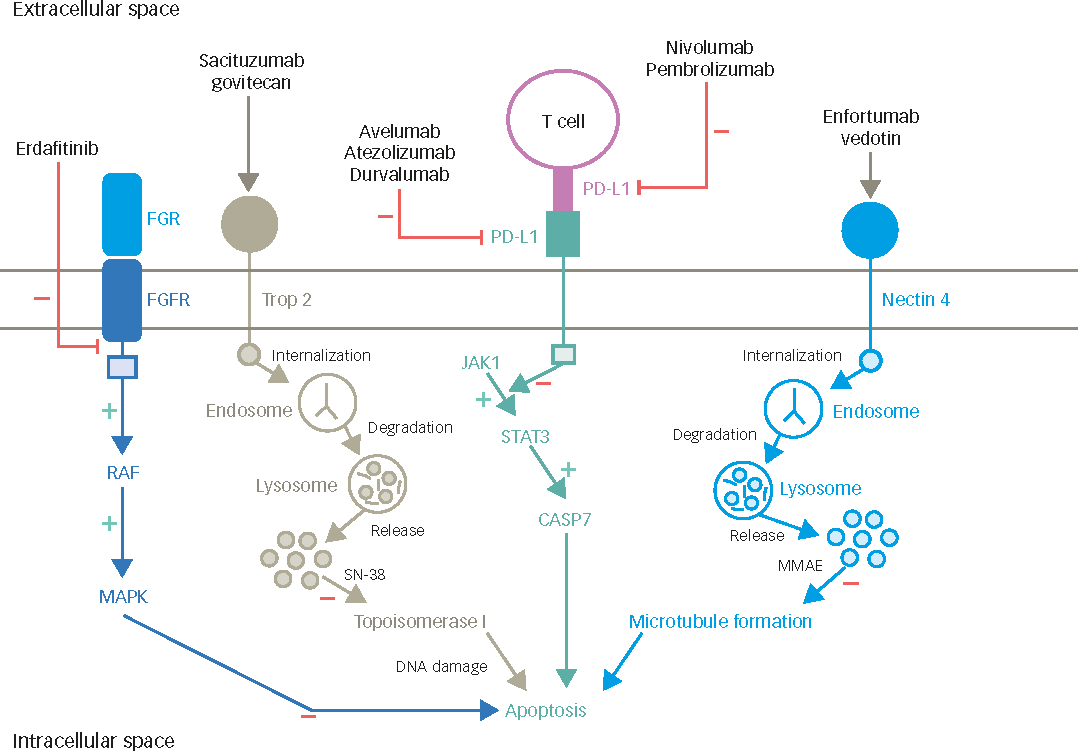
Urothelial carcinoma is the most common histologic type of bladder cancer in the USA and Europe, accounting for 90% of all bladder cancers. It is the sixth most common type of cancer diagnosed in the USA, and the 10th leading cause ...

In 2020, an estimated 147,950 patients will be diagnosed with colorectal cancer (CRC) in the USA, with 53,200 deaths expected.1 While many patients with CRC are cured, metastatic CRC (mCRC) is still a prevalent disease, and systemic therapy options have markedly improved outcomes ...
Cholangiocarcinoma constitutes approximately 3% of all gastrointestinal malignancies, and the incidence is on the rise, especially the intrahepatic subtype. These tumors are anatomically broadly classified into intrahepatic, perihilar, and distal cholangiocarcinoma. Recent understanding of tumorigenesis pathways has shown that there exists ...
Cholangiocarcinoma is an epithelial malignancy of the biliary system characterized by cholangiocyte differentiation, and its incidence is on the rise. Currently, cholangiocarcinomas are classified by their anatomical location in the biliary system as intrahepatic cholangiocarcinoma, distal cholangiocarcinoma, or hilar cholangiocarcinoma. ...
Log into your Touch Account
Keep track of your clinical interests and newsletter subscriptions.
Sign up with an Email
Or use a .
Register now for FREE access
Already registered? Login below.
