
Search Results
11 Results Found for “sickle haemoglobin”
Mutations of the β-globin gene (HBB) cause sickle cell disease and β-thalassaemia, collectively named the β-haemoglobinopathies. As mankind’s most common severe genetic diseases, where they are most prevalent, public health systems can be stressed.1–3 Asymptomatic heterozygous carriers are protected ...
Beta-thalassaemia is a hereditary blood disorder arising from impaired synthesis of beta globin chains, and can result in a range of outcomes from asymptomatic carriers to severe anaemia.1 Symptomatic thalassaemia presents in around 1 in 100,000 people worldwide, and 1 in 10,000 in Europe.1 ...

Sickle cell disease (SCD) encapsulates a group of inherited disorders arising from a single amino acid substitution in the β-chain of haemoglobin. This mutation results in the production of sickle haemoglobin (HbS), which polymerises when deoxygenated and leads to red ...

The European Society for Blood and Marrow Transplantation (EBMT) was established in 1974 to allow scientists and physicians involved in clinical bone marrow transplantation to share their experiences and collaborate in studies. Recently, the scope of the organisation has broadened to ...
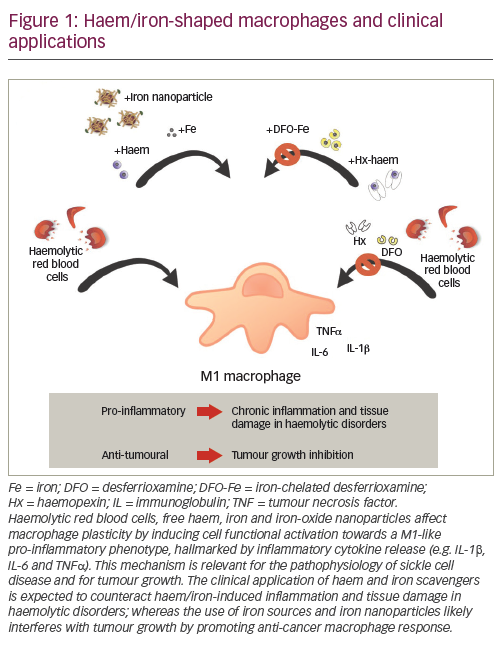
Reticulo-endothelial (RES) macrophages are central for the regulation of iron homeostasis. These cells have the ability to handle a high amount of haemoglobin-derived iron, released after senescent red blood cell phagocytosis. Eventually, iron is exported to the bloodstream through the ...

The symptoms of sickle cell disease (SCD) as well as underlying disease processes affect sleep across development, which has important implications for academic and behavioural functioning and overall health outcomes in children and adolescents with SCD. High frequencies of arousals ...
This issue of European Haematology covers several topics that are of great interest to haematologists because they highlight recent advances in the field or discuss current controversies in the managament of patients. This issue of European Haematology covers several topics ...
Thalassaemias were traditionally believed to occur only in regions of the world where malaria is or was endemic, including the Mediterranean, the Middle East, South and East Asia, the Pacific and South China, with carrier rates varying from 2 to 25%. It ...
Optimal blood cell production and function is critical for healthy life. Too few or too many blood cells or the production of blood cells that do not function normally result in malignant and non-malignant disorders. These disorders can be fatal ...
Polycythaemia vera (PV), essential thrombocythaemia (ET) and primary myelofibrosis (PMF) are classified as Philadelphia-negative chronic myeloproliferative disorders (Ph-MPDs), clonal haematopoietic disorders1,2 that result in overproduction of mature myeloid cells and that are characterised by an increased risk of thrombotic and/...
The symptoms of sickle cell disease (SCD) as well as underlying disease processes affect sleep across development, which has important implications for academic and behavioural functioning and overall health outcomes in children and adolescents with SCD. High frequencies of arousals ...
Log into your Touch Account
Keep track of your clinical interests and newsletter subscriptions.
Sign up with an Email
Or use a .
Register now for FREE access
Already registered? Login below.
