

EUROPEAN ONCOLOGY REVIEW – VOLUME 1 – SUMMER 2005
Foreword
With a population of over 500 million and equal access to excellent healthcare systems in most countries, Europe has enormous potential to lead the world in clinical research programmes in healthcare in general, and in oncology in particular. At the same time, we face some fragmentation and duplication of efforts and witness the effects of […]
Introduction
In Europe, cancer remains the second cause of mortality after cardiovascular diseases. On an annual basis, an average of 2.7 million new cases are diagnosed and 1.7 million of the population in Europe die of cancer. Importance of Academic Clinical Research in Oncology in Europe
Since 1981, the Federation of European Cancer Societies (FECS) has been working to facilitate the representation of the different European organisations of all disciplines involved in cancer research, treatment and care. FECS exists to promote and co-ordinate collaboration between these societies and to promote the implementation of multidisciplinary treatment, in order to enhance access for […]
Introduction Cancer is mainly a disease of the elderly, particularly because other life-threatening diseases have been better managed, allowing people to reach older age. As a result, over 60% of new cancer cases and over 70% of cancer deaths occur in people aged 65 years and older in Europe and the US. Unfortunately, standard cancer […]
Diagnostics & Imaging - Radiation Oncology
Universal Challenge in Oncology
The Role of Radiotherapy in Cancer Management Radiotherapy plays an increasingly dominant role in the comprehensive multidisciplinary management of cancer today. About half of all cancer patients will receive radiotherapy either as a part of the initial treatment with curative intent or as palliative treatment. The need for radiotherapy has been increasing over the last […]
This article outlines the current status of this imageguided intervention for treatment of HCC and introduces some new concepts and advances in the era of minimally invasive therapy of HCC. Chemoembolisation Technique The technique of transcatheter arterial chemoembolisation (TACE) exploits HCC preferential blood supply from the hepatic artery to deliver the anti-tumor therapy, while sparing […]
Diagnostics & Imaging - Ablation
Introduction Hepatocellular carcinoma (HCC) is the fifth most common cancer, and its incidence is increasing worldwide due to the dissemination of hepatitis B and C virus infection. Patients with cirrhosis are at the highest risk of developing HCC and should undergo surveillance programmes to detect the tumour at an early, asymptomatic stage.1
Diagnostics & Imaging - Tumour Markers
From Antigen to Tumour Marker In the 1960s, antigens were characterised in prostate tissue extracts with properties of prostate organ specificity.1 Independently, between 1966 and 1971, the Japanese team of Hara et al. identified a prostatespecific protein in seminal fluid – gamma seminoprotein.2 An assay for gamma seminoprotein was developed for forensic use in rape […]
Bladder Cancer Diagnostics and Onset of New Strategies The diagnosis of bladder cancer is based on the information provided by cystoscopy, the gold standard, in combination with urinary cytology findings. The development of genomic markers is still a matter of research, the assays being time-consuming, expensive and difficult to standardise. Gene profiling could already be […]
The incidence of prostate cancer has increased substantially in many countries over the last few decades. Fifteen to 20 years ago, the probability that a man would be diagnosed with prostate cancer was 4% to 6% in most industrialised countries but, currently, 17% of men in the US and 5% to 10% in Europe are […]
Diagnostics & Imaging - Oncology Imaging
The key to surviving breast cancer, the second most common cancer affecting women, is early detection and treatment. When the cancer is confined to the breast, the five-year survival rate is nearly 100%. Mammography screening is widely regarded as the only proven method for early detection of breast cancer. Large populations can be screened at […]
Radiotherapy planning of tumours in the thorax and upper abdomen is commonly based on the use of a single computed tomography (CT) scan performed during quiet respiration, in contrast to diagnostic CT scans, which are performed during breath-hold. The reason for performing CT scans during quiet respiration is to reproduce the situations during daily treatment […]
Positioning Accuracy The problem of positioning accuracy can be broken down into two major elements immobilisation and localisation. Immobilisation can be considered the process of constraining patient and target motion while treatment is delivered. Localisation describes the processes that ensure the tumour position at treatment matches that intended at the time the treatment was initially […]
Screening for colorectal cancer is worthwhile;1–3 however, the ideal method has not yet been established. Adherence by an asymptomatic patient population to a colorectal cancer screening programme is known to be lower than 50%.4 This lack of patients complying with the existing screening tests is due to pre-, per- and post-procedural inconveniences causing the patients […]
Pharmacological Therapy - Breast Cancer
A completely different additional approach is to use drugs with an effect on a normal host tissue, which could control the development of the cancer. For example, bone, a common site for the development of metastases, is a good potential target because the development of bone metastases depends on the ability of cancer cells to […]
Pharmacological Therapy - Ovarian Cancer
The use of extensive debulking procedures, which may include resections of the gastrointestinal (GI) or urinary tracts, can decrease the tumour burden for cytotoxic chemotherapy and help to prolong survival. The addition of taxanes to platinum-based therapy have led to significant improvement in both progression-free and overall survival in patients with either optimally reduced or […]
Pharmacological Therapy - Lung Cancer
The term lung cancer refers to carcinomas that originate from the respiratory epithelium. Approximately 85 % of all lung cancers are classified as non-small-cell lung cancer (NSCLC), 10 % are small cell lung cancer and other histological variants account for about 5 %.1 Lung cancer represents the second most common type of cancer in both […]
Pharmacological Therapy - GI Cancer
Introduction Neuroendocrine gastroenteropancreatic (GEP) tumours constitute less than 2% of all gastrointestinal (GI) malignancies. The incidence of the largest group of patients, those with small intestinal carcinoid tumours, is two to 2.4 per 100,000 inhabitants. The true incidence is probably underestimated due to sometimes vague clinical presentation and low awareness among physicians. The incidence in […]
Pharmacological Therapy - Lymphomas & Leukaemia
Despite the sensitivity of most lymphomas to initial therapy with chemotherapy or radiotherapy, the majority of patients with advanced non-Hodgkin’s lymphoma (NHL) eventually relapse and die of their disease.1 Furthermore, patients with advanced low-grade lymphomas remain incurable and their survival has not altered since the early 1960s.2 The introduction of antibody (mAb)-based therapy initially with […]
“The continued measurable declines for overall cancer death rates and for many of the top 15 cancers, along with improved survival rates, reflect progress in the prevention, early detection, and treatment of cancer. However, racial and ethnic disparities in survival and the risk of death from cancer, and geographic variation in stage distributions suggest that […]
Reference Section
For decades, the standard treatment has been whole brain radiotherapy (WBRT), resulting in symptomatic improvement in the majority of patients 6 but longterm local control has been poor (0% to 14% at one year).7,8 A review of survival following WBRT in a selected large series of patients reported over the last 30 years indicates little […]
Radiofrequency (RF) is a sinusoidal current with a frequency of 400 to 500KHz. When delivered through electrodes inserted in tissues, it can heat the tissues through ionic agitation and produce coagulation necrosis when temperature rises to 60°C. RF ablation has achieved impressive results in the treatment of unresectable liver primary cancer and metastases. This has […]
Despite the availability of new antifungal drugs, the overall survival for immunocompromised patients with invasive fungal infections remains too low, with large variations according to underlying disease.1–15 Although early diagnosis and subsequent early initiation of therapy improves outcome,16–19 diagnosing invasive fungal infections can be difficult. The purpose of this article is to review the available […]
In the EU (EU-25) there are 269,570 new cases of breast cancer and 87,700 deaths due to breast cancer per year. As the role of patient advocacy groups gains recognition and acceptance, they are increasingly being called upon to participate in a wide variety of activities from providing information and serving on clinical trial committees, […]
Cisplatin-based chemotherapy trials demonstrate a benefit for cisplatin over supportive care alone with a hazard ratio (HR) of 0.73, which translates to a 27% reduction in the risk of death and a 10% improvement in survival at one year.1 Between 1993 and 1999, 1,436 patients with stage IV or IIIB non-small-cell lung cancer (NSCLC) with […]
The incidence of invasive opportunistic fungal infections (IOFIs) has increased substantially over the past 30 years. Currently, IOFIs are important causes of morbidity and mortality among patients with haematological malignancies or those undergoing stem cell transplantation (SCT).1 It is estimated that IOFIs develop in 10% to 25% of patients with acute leukaemia and those receiving […]
To improve early detection of bladder cancer, as well as to monitor treatment response and tumour recurrence, bladder tumour markers are critical. An ideal bladder cancer test would be non-invasive, highly sensitive and specific, inexpensive, easy to perform and yield highly reproducible results. The validity of a tumour marker test can be expressed as sensitivity, […]
Until recently, most breast cancers were detected by palpation, and were often at a late stage in their natural history when they were brought to medical attention. The outcome of these late-stage, advanced breast cancers was equally poor, regardless of the method of therapy chosen, as these large tumours were most likely associated with systemic […]
Trending Topic
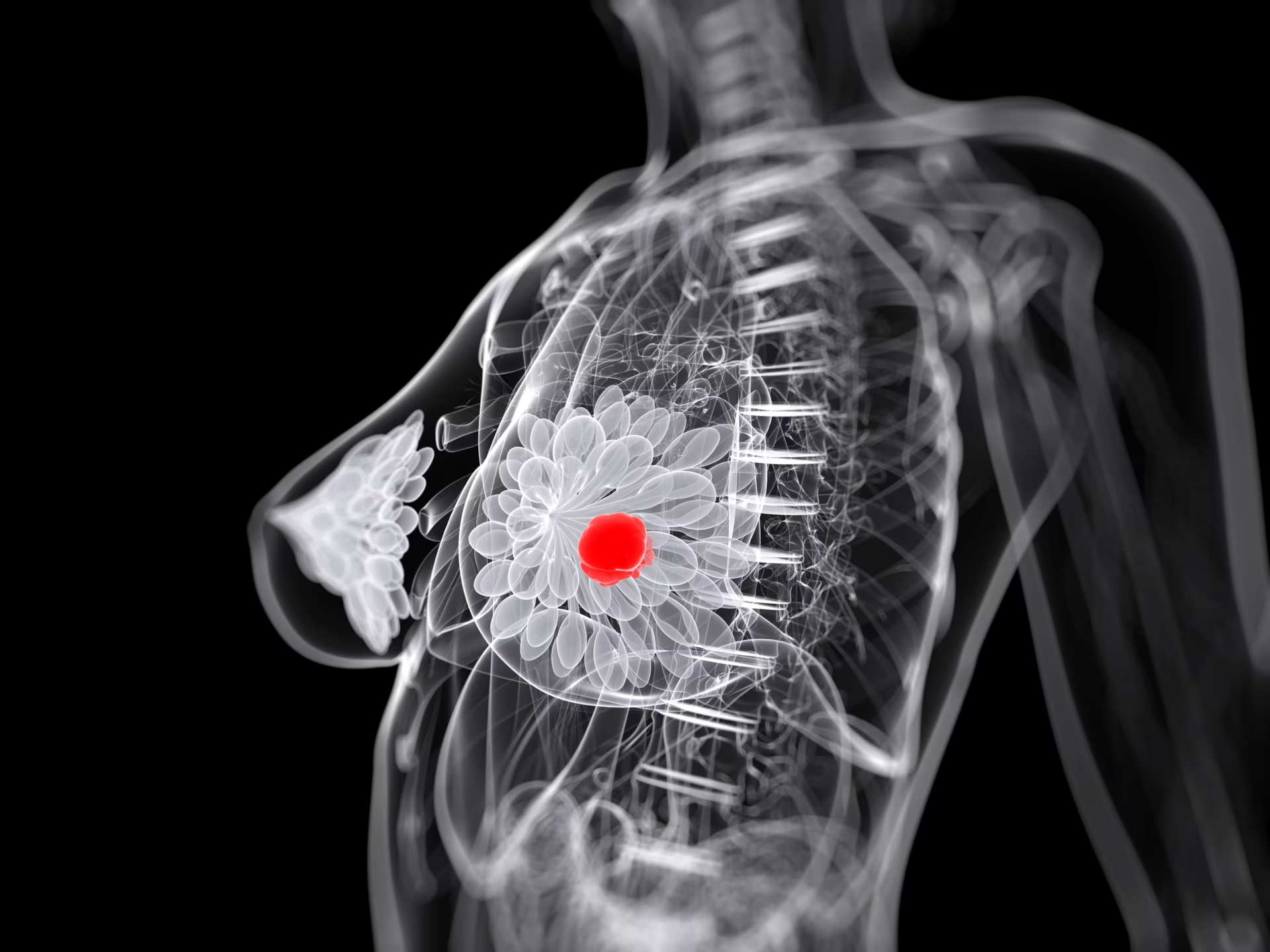
Metastatic triple-negative breast cancer (mTNBC) is a clinically heterogeneous disease, but compared with other breast cancer subtypes, triple-negative breast cancer (TNBC) is generally associated with a poorer prognosis and has historically had limited therapeutic options.1 The 5-year survival rate remains only 14.9%, and some patients are unable to proceed to second-line or later-line therapies because […]
Journal Archive
Comprising articles contributed by renowned thought leaders, European Oncology & Haematology is a peer reviewed, free-to-access, bi-annual journal that aims to disseminate best practice through review articles addressing the most important and salient developments in the Oncological & Haematology field in practical terms.
European Oncology & Haematology
Frequency: Two print issues per year (Summer & Winter); ePub ahead of print throughout the year.
Print ISSN: 2045-5275 Electronic ISSN: 2045-5283
Indexing: EMBASE, Google Scholar, Genamics JournalSeek
Log into your Touch Account
Keep track of your clinical interests and newsletter subscriptions.
Sign up with an Email
Or use a .
Register now for FREE access
Already registered? Login below.