
Leukemia

ESMO 2026 presented new data across multiple myeloma, lymphoma and myeloid malignancies, exploring investigational bispecific antibodies, ADCs and targeted therapies. The studies selected for this round-up examine investigational approaches in relapsed/refractory disease and newly diagnosed settings, including combinations designed to deepen responses and emerging targets in patients with limited treatment options.


With the European Society for Medical Oncology (ESMO) Congress 2026 fast approaching, attention is turning to Madrid, where the meeting is held from 23–27th October. Whether you are joining onsite or via the virtual platform, the three Presidential Symposia are the sessions not to miss. This year they carry 12 late-breaking abstracts (LBAs) spanning melanoma, lung, genitourinary, gastrointestinal, gynecological and rare cancers. With close to 300 scientific and educational sessions to choose from, we know the programme can feel overwhelming. So we have put together a quick guide to the headline sessions: when and where they run, who is presenting, and links to explore each one in the programme planner, so you can decide which to prioritize.

This interactive, patient-focused activity explores key considerations in selecting first-line and subsequent therapies for elderly patients with active CLL.

The AIEOP-BFM ALL 2017 trial represents one of the clearest demonstrations to date that frontline immunotherapy can outperform and out-safeguard conventional chemotherapy in pediatric ALL. Beyond its immediate implications for high-risk disease, the study may provide the framework for broader treatment redesign across ALL risk groups, with future trials now focused on how far chemotherapy exposure can be safely reduced while preserving—and potentially improving—long-term cure. In this exclusive Q&A, Prof Martin Schrappe suggests this may be only the beginning of chemotherapy de-escalation in childhood ALL.

For almost two decades, R-CHOP has remained the established frontline standard for DLBCL, yet approximately 40% of patients are not cured with first-line therapy. At EHA 2026, Prof Georg Lenz presented new phase 3 data from the frontMIND study suggesting that this long-standing backbone may now be open to improvement. The study showed that adding tafasitamab and lenalidomide to R-CHOP significantly improved progression-free survival (PFS) in previously untreated patients with high-risk DLBCL and high-grade B-cell lymphoma (HGBL), marking one of the first positive frontline intensification trials in this setting in recent years.

Late-breaking data from the phase 3 SENTRY trial show that selinexor plus ruxolitinib significantly improved spleen volume reduction in JAK inhibitor–naïve myelofibrosis, with rapid and sustained responses and an early signal for overall survival benefit. While symptom improvement was comparable to ruxolitinib alone, exploratory biomarker findings suggest potential disease-modifying activity, positioning the combination as a possible new frontline strategy.

The European Hematology Association (EHA) 2026 Congress brought together the global hematology community to unveil the latest practice-shaping advances in hematological malignancies and blood disorders. From plenary and late-breaking trial results to prestigious award winners, novel therapeutics, translational science and emerging technologies, the meeting delivered a vast volume of data. In this expert-led round-up, leading specialists distil the most important data and key takeaways from across each disease area, offering an essential guide to the studies set to shape the future of hematology.

These infographics review CLL management, from initial diagnosis and staging through treatment initiation and discontinuation, and assessment of patient risks.


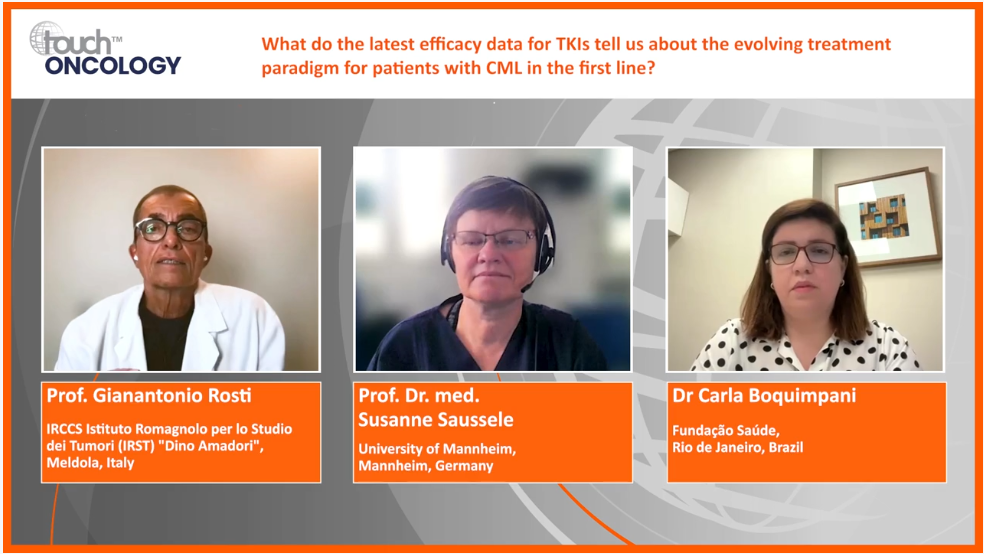
The open-label, single-arm phase Ib/II Felix study (NCT04404660) investigated obecabtagene autoleucel (obe-cel, AUTO1), a novel anti-CD19 autologous CAR-T cell therapy, in adults with relapsed/refractory B-cell acute lymphoblastic leukemia. The results suggest that obe-cel can provide long-term remission without necessarily needing a transplant. touchONCOLOGY spoke with editorial board member, Elias Jabbour (MD Anderson Cancer Center, Houston, TX, USA), who summarized the key take-home messages from his presentation at ASCO 2024. Dr Jabbour also discussed the findings from the ASC4FIRST trial (NCT04971226).

Welcome to the latest issue of touchREVIEWS in Oncology & Haematology. We are honoured to present a series of compelling articles that reflect cutting-edge developments and diverse perspectives in this ever-evolving field. This issue includes a series of editorials and ...

Key points Olutasidenib induces durable responses in patients with relapsed or refractory (R/R) acute myeloid leukaemia (AML) with isocitrate dehydrogenase 1 (IDH1) mutations in the phase I and II clinical trials. The side effects of olutasidenib are well known and ...
Each year, the EHA Board presents the José Carreras Award to honour leaders in haematological research. touchONCOLOGY caught up with Prof Robin Foà (Sapienza University, Rome, Italy) to discuss his receipt of the José Carreras Award and the key take-home ...
Log into your Touch Account
Keep track of your clinical interests and newsletter subscriptions.
Sign up with an Email
Or use a .
Register now for FREE access
Already registered? Login below.
