
Radiotherapy

As EORTC enters a new chapter under the Presidency of Professor Benjamin Besse (Gustave Roussy Institute and Paris-Saclay University, Villejuif, France), the organization is looking to accelerate academic research while keeping patients and scientific independence at its core. In this detailed and in-depth Q&A, Prof Besse shares his priorities for EORTC, from supporting the next generation of investigators and broadening clinical trial populations, to giving greater weight to quality of life and patient perspectives. He also considers how emerging technologies, including artificial intelligence, could reshape the way cancer research is conducted.

The 38th Annual Congress of the European Association of Nuclear Medicine (EANM) in Barcelona brought together over 9,400 participants, marking a major milestone. The meeting highlighted major advances in oncologic imaging and theranostics, with a strong emphasis on precision medicine and combination treatment strategies. Across plenary sessions, debates, and late-breaking discussions, the meeting underscored how nuclear medicine is increasingly central to cancer diagnosis, treatment selection, and therapeutic delivery.


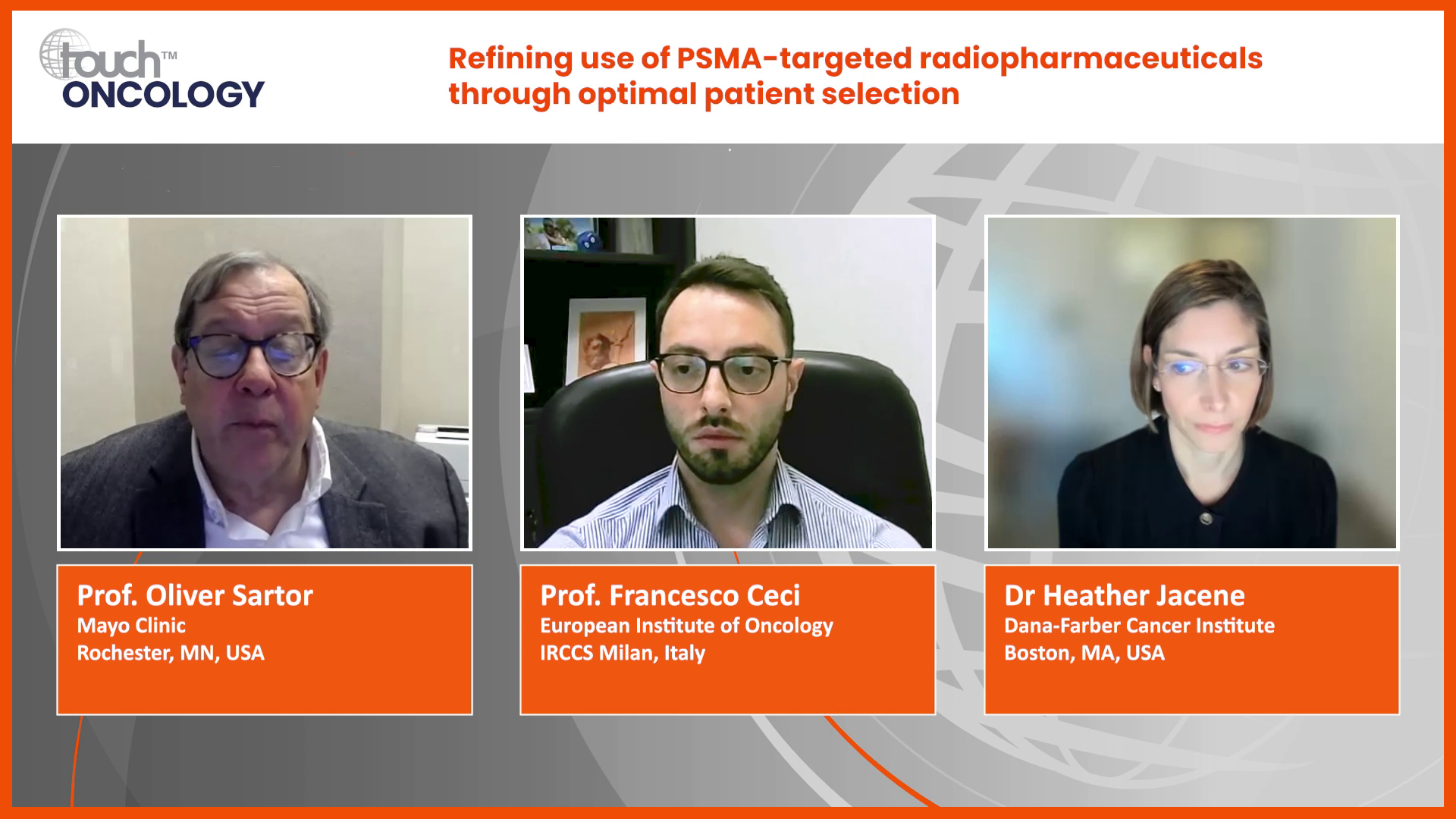

Following a scientific primer, the role of radiopharmaceuticals in the management of neuroendocrine tumours and prostate cancer, alongside approaches to support clinical implementation, are explored by leading experts.

During the past half century, an ongoing technological revolution in cancer imaging and radiation treatment has taken us ever closer to the goal of treating localised tumours without harming normal tissues. In his visionary 1946 paper,1 Harvard physicist Robert Wilson suggested ...
Computed tomography (CT) utilizing kilovolt (kV) X-rays was not developed until the early 1970s. For the first time this imaging modality provided three-dimensional (3-D) information about tumor location and at the same time about the electron density distribution required to ...
Log into your Touch Account
Keep track of your clinical interests and newsletter subscriptions.
Sign up with an Email
Or use a .
Register now for FREE access
Already registered? Login below.
