
“Detection of ctDNA at the end of neoadjuvant therapy identifies patients at high risk of relapse”
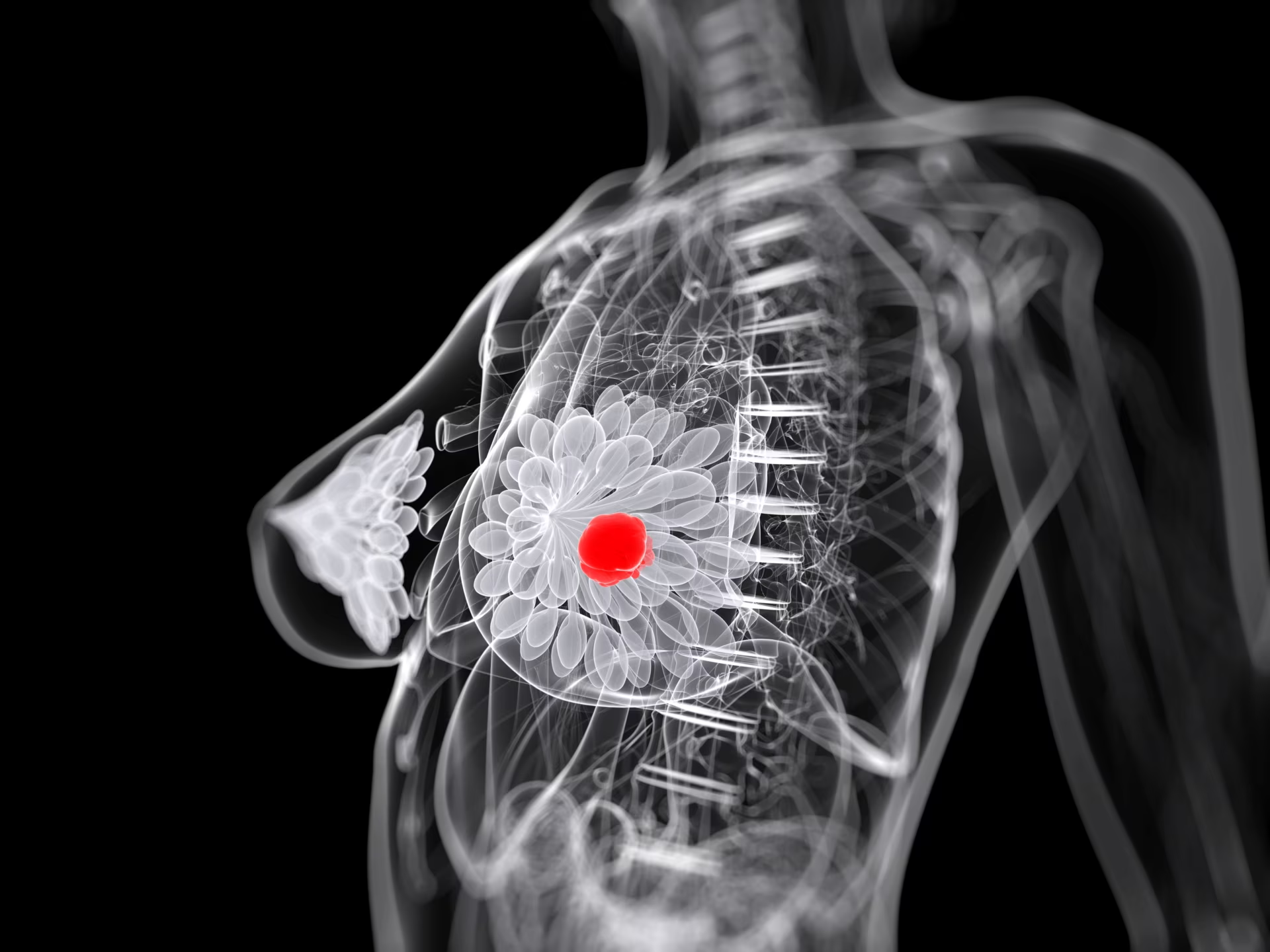
At the 15th European Breast Cancer Conference (EBCC15) Dr Elisa Agostinetto (Institut Jules Bordet–Université Libre de Bruxelles in Brussels, Belgium) presented compelling evidence that circulating tumor DNA (ctDNA) at completion of neoadjuvant therapy could be a game-changer biomarker for predicting breast cancer relapse. The pooled analysis of two prospective neoadjuvant cohorts shows that the presence of ctDNA at the end of treatment strongly predicts relapse, potentially opening the door to more personalized post-surgical surveillance and therapy strategies.
In the Q&A below, Dr. Agostinetto discusses the implications of her findings and the path toward integrating ctDNA into routine clinical practice.
ctDNA in breast cancer has prognostic relevance, as its detection is consistently associated with higher risk of recurrence and worse survival, often anticipating clinical relapse by months. In our work, we aimed at evaluating the association between detection of ctDNA and breast cancer relapse in an individual patient-level pooled analysis of two prospective neoadjuvant cohorts from the Institut Jules Bordet (Brussels) and Fondazione IRCCS Istituto Nazionale dei Tumori (Milan), with ctDNA assessed at predefined key timepoints, using tumor-informed assays.
We analysed 81 patients treated with neoadjuvant treatment for early breast cancer as per standard of care. Most of them had nodal involvement at diagnosis, and approximately 60% had a triple-negative breast cancer subtype.
In general, after neoadjuvant therapy, ctDNA levels tend to be lower in patients who achieve a complete response than in those with residual disease, and these patients also typically show a greater decline in ctDNA during treatment. Overall, these findings suggest that ctDNA assessment before surgery or during follow-up may help predict relapse.
In this large pooled analysis, ctDNA detection was associated with a higher risk of breast cancer recurrence, particularly when ctDNA was identified at the end of treatment. These findings suggest that ctDNA may help identify patients at increased risk after neoadjuvant therapy and could potentially inform additional treatment strategies, when appropriate.
What is needed now is a shift from prognosis to action: ctDNA should be tested in prospective clinical trials where treatment decisions are informed by ctDNA findings, in order to establish whether early intervention in ctDNA-positive patients can improve outcomes. Moving the field forward will require standardization of assays and sampling time points, validation of ctDNA as a marker of minimal residual disease across subtypes, and incorporation of ctDNA-guided escalation and de-escalation strategies into post-neoadjuvant and follow-up trials so that it can be safely integrated into routine clinical care.
Already registered? Login below.
Cite: EBCC15: ctDNA detection after neoadjuvant therapy predicts breast cancer relapse. touchONCOLOGY. 2nd April, 2026
Disclosure: Elisa Agostinetto has received grant/research support from Gilead BeLux; she is a member of the Advisory Board for AstraZeneca; She has received honoraria/honorarium from Eli Lilly, AstraZeneca, Bayer, Abscint, Gilead, Novartis. She has received meeting/travel grants from: Novartis, Roche, Eli Lilly, Daiichi Sankyo, AstraZeneca, Abscint, Menarini, Gilead. This short article was prepared by touchONCOLOGY in collaboration with Elisa Agostinetto. Views expressed are the author’s own and do not necessarily reflect the views of Touch Medical Media.
Editor: Sophie Nickelson (Editorial Director)
Related content
- Breast cancer 2025: A year in review
- SABCS 2025: Breast cancer highlights & key take-aways
- A year in review: Expert voices on the developments that defined 2025