EAU

Abderrahim Oussalah discusses findings from the SEPT9_CROSS study evaluating circulating methylated SEPT9 as a blood-based biomarker for HCC detection in cirrhosis. “These findings support a two-tier surveillance framework in which mSEPT9 and AFP work together to improve both the ...

At ASCO 2026 several neuro-oncology presentations focused less on introducing entirely new paradigms and more on defining where existing and emerging therapies may best fit. Across brain metastases and glioma, phase 3 data addressed longstanding practical questions around radiation delivery, chemotherapy duration, and local therapies, while updated targeted therapy data in IDH-mutant glioma continued to mature. In this piece, Dr Rimas Lukas highlights four main abstracts from ASCO 2026, discussing their take-aways and considering their potential relevance for clinical practice.

New clinical data presented at the 2026 International Kidney Cancer Symposium (IKCS) Europe supports the potential of next-generation FTI darlifarnib, alone and in combination with cabozantinib, to overcome resistance and resensitize tumors to VEGFR TKI therapy in clear cell renal cell carcinoma (ccRCC)

In this Future Leaders interview, Dr Gómez Rivas discusses the mentors who shaped his career, the values that sustain a life in surgery and research, and the importance of mentorship, teamwork and resilience for the next generation of urologists.

At EAU26, Dr Juan Gómez Rivas reflected on a period of rapid transformation in the field. Across mentorship, technology and precision medicine, Dr Gómez Rivas believes the field is entering a new era. For urologists, he says, the message is simple: embrace innovation, collaborate widely and keep patients at the centre of every advance.
Prof Bertrand Tombal reflected on how advances in imaging, evolving treatment strategies and persistent evidence gaps are reshaping the management of oligometastatic prostate cancer. In the conversation below, he discusses why the concept remains controversial, the promise and limitations of metastasis-directed therapy and how clinicians should navigate an increasingly complex treatment landscape.

At EAU26, Dr Karen Buch-Olsen and Professor Mads Hvid Aaberg Poulsen shared early insights from the PRISMA PET trial, a randomized study comparing conventional sodium fluoride PET CT with PSMA PET CT in newly diagnosed, high-risk prostate cancer patients.

At EAU26, Dr Kevin Keane presented early results from the G-DISCO trial, the first-in-human study exploring a streamlined intravesical approach for patients with BCG-unresponsive non–muscle-invasive bladder cancer.

At #EAU26, Professor Dickon Hayne presented early findings from the ZiPUP study. This is a phase I trial exploring a novel PET imaging approach in urothelial cancer. In this interview, he discusses the unmet need in staging, the study’s design and what the preliminary data might mean for clinical practice.

At EAU26, Prof Dickon Hayne presented findings from the ANZUP 1301 (BCG+MM) trial. With global BCG shortages and ongoing challenges around tolerability, the study offers timely insights into how combination intravesical strategies may deliver comparable efficacy while improving patient experience and resource utilisation.
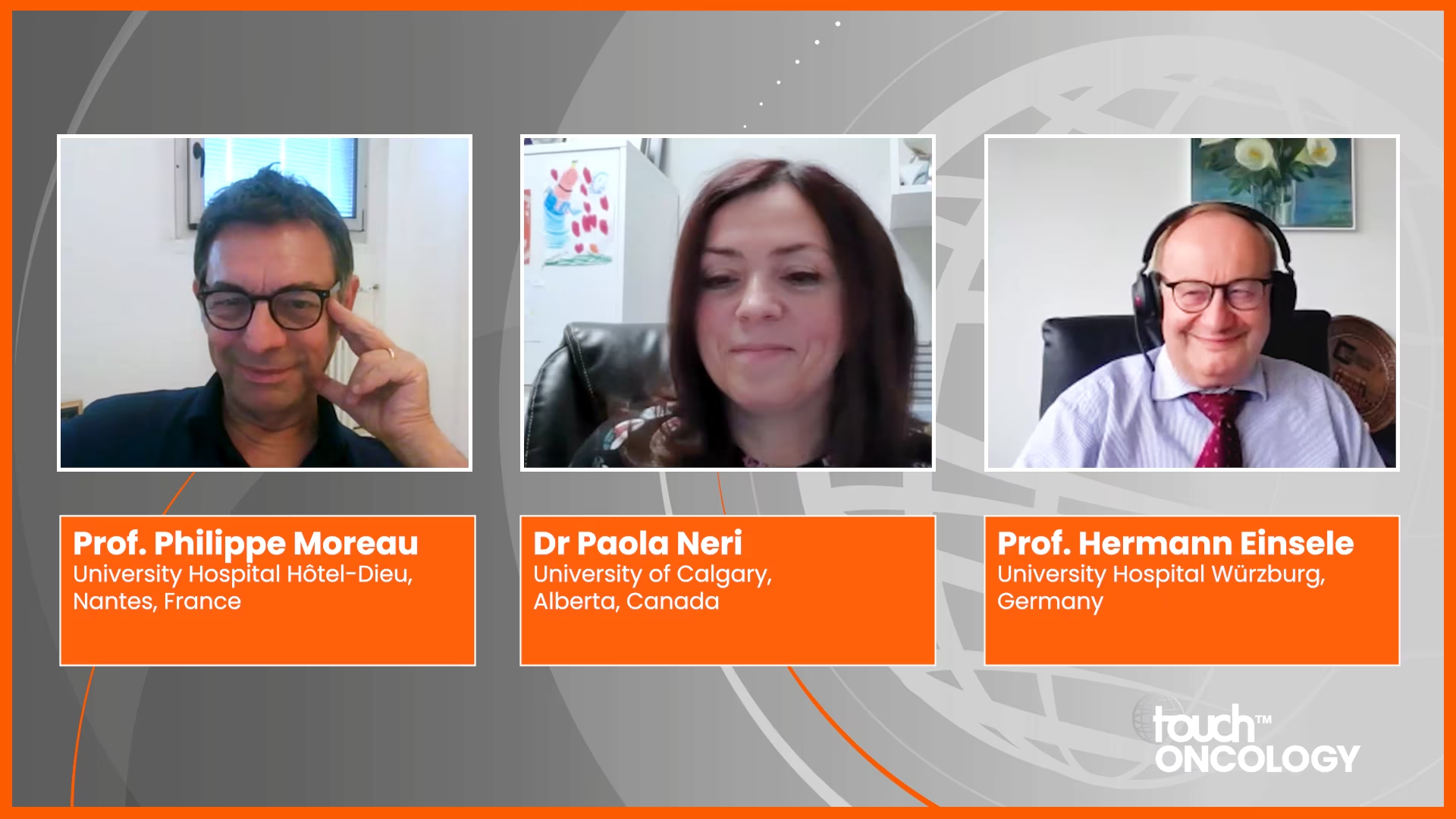
In this interview, we speak with Prof. Domenica Lorusso (Humanitas Hospital San Pio X, Humanitas University, Rozzano, Milan) about the latest ROSELLA findings, their implications for clinical practice, the next steps in this research and other key data presented at this year’s meeting.

Dr Rimas Lukas highlights early-stage neuro-oncology research presented at ANA 2025. Key approaches targeting CNS tumours include immune checkpoint inhibition, patient-derived glioblastoma vaccines, focused ultrasound, and cGAS–STING pathway therapies. The session showcased innovative strategies aiming to harness immunity in the fight against these difficult-to-treat cancers.







Dr Domenica Lorusso reviews key ovarian cancer studies from ASCO 2025, including new data on immunotherapy combinations, survival benefit in platinum-resistant disease, and surgical outcomes in newly diagnosed patients. While not practice-changing, the results add to the evidence base and may guide more tailored decision-making in clinical practice.

At ASCO 2025, cervical cancer took centre stage in gynecologic oncology with data showing how immunotherapy is redefining the treatment landscape. Trials such as KEYNOTE-826 and KEYNOTE-A18 demonstrated meaningful gains in survival, while emerging antibody–drug conjugates point to a new wave of personalised therapy for this historically underserved disease.

At #ASCO25, key neuro-oncology presentations explored focused ultrasound to enhance drug delivery, the benefits of maximal surgical resection in IDH-mutant gliomas, and final CATNON data supporting adjuvant temozolomide. Other highlights included improved cognitive outcomes with stereotactic radiosurgery for brain metastases and early results from a novel gamma delta T cell therapy.
At #ASCO25, Professor Dickon Hayne presented results from the ANZUP 1301 trial showing that adding mitomycin C to BCG may offer a well-tolerated, effective option for high-risk NMIBC. The combination reduced BCG use by 40% – a significant finding amid global shortages – with encouraging efficacy and safety signals.

 touchONCOLOGY
Register Now!
Explore the latest in medical education and stay current in your field. Create a free account to track your learning.
- Save your progress for video
- Keep track of your CME credits
- Add personalised learning notes
- Receive updates from course leaders and faculty
- Be the first to hear about new and exciting interactive learning opportunities
Log into your Touch Account
Keep track of your clinical interests and newsletter subscriptions.
Sign up with an Email
Or use a .
Register now for FREE access
Already registered? Login below.