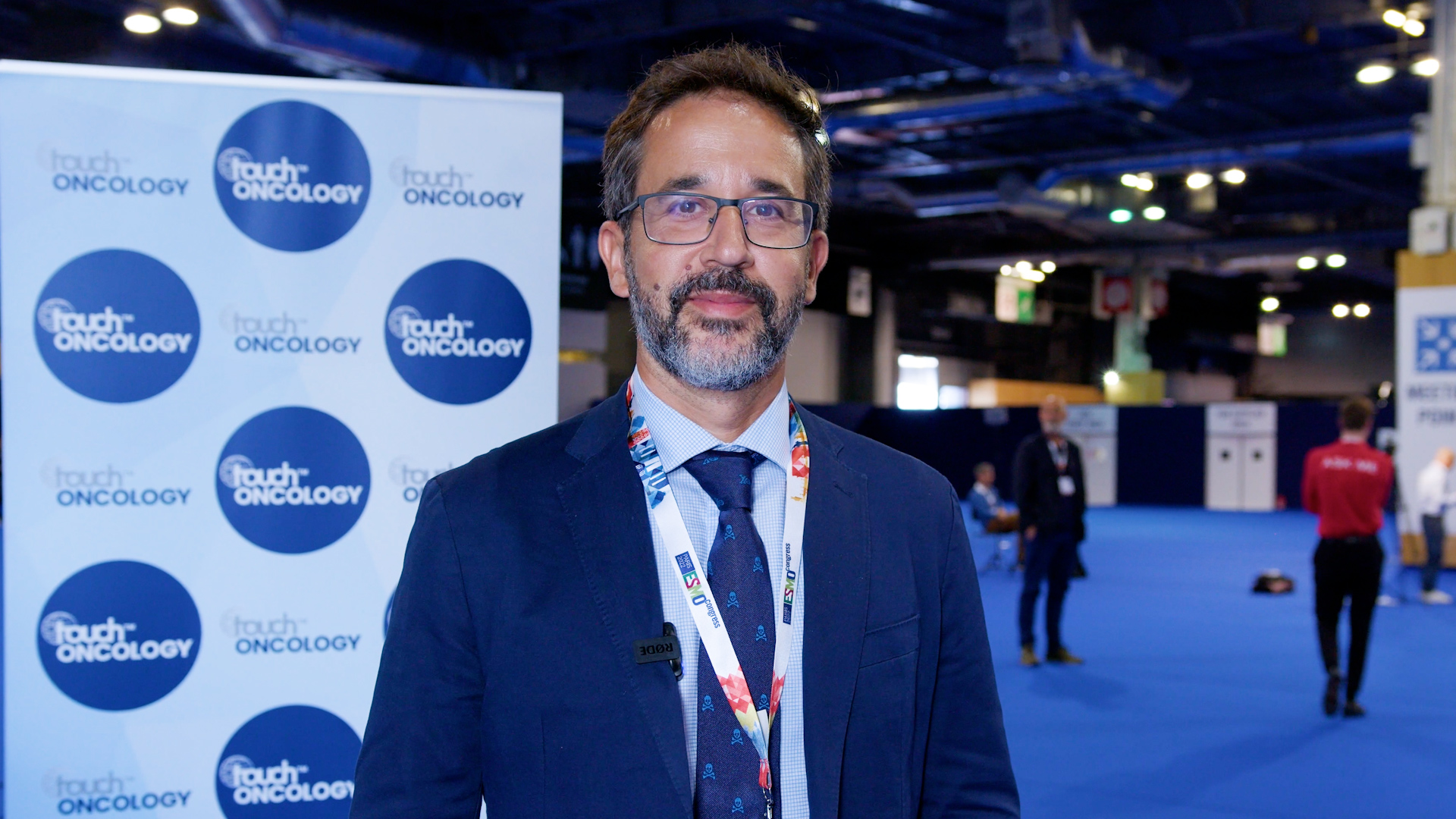
Abderrahim Oussalah discusses findings from the SEPT9_CROSS study evaluating circulating methylated SEPT9 as a blood-based biomarker for HCC detection in cirrhosis.

At the European Association for the Study of the Liver (EASL) Congress 2026, Prof. Abderrahim Oussalah (University Hospital of Nancy, France), presented findings from the SEPT9_CROSS study (NCT03311152), a prospective, cross-sectional, diagnostic accuracy study evaluating circulating methylated SEPT9 (mSEPT9) as a biomarker for hepatocellular carcinoma (HCC) detection in patients with cirrhosis.1 The study explored the diagnostic performance of mSEPT9 alone and in combination with alpha-fetoprotein (AFP), with a particular focus on improving early-stage HCC detection. In this interview, Prof. Oussalah discusses the rationale behind the study, the key efficacy findings and the potential role of mSEPT9 in future HCC surveillance strategies.
touchONCOLOGY coverage of EASL 2026
Could you give us a brief overview of the current surveillance paradigm for hepatocellular carcinoma in patients with cirrhosis, and what limitations remain with existing approaches such as alpha-fetoprotein for early-stage detection?
So, to set the stage, HCC is the third leading cause of cancer-related death worldwide, with approximately 866,000 new cases and 759,000 deaths in 2022. Current guidelines recommend surveillance with abdominal ultrasound every 6 months, with or without AFP, to detect HCC at curative stages. The problem is that ultrasound alone achieves an early-stage sensitivity of only 47%, and even when combined with AFP this rises to just 63%, at the cost of reduced specificity. But perhaps the most important point is that surveillance adherence in community practice is estimated at approximately 25%, which compounds these performance limitations considerably. So when you combine the insufficient sensitivity of current tools with the low adherence to imaging-based programs, the case for complementary blood-based biomarkers that could both improve early-stage detection and facilitate broader uptake of surveillance becomes very clear.
What were the aims, design, and eligibility criteria of this prospective, cross-sectional, diagnostic accuracy study, and what was the rationale for evaluating methylated SEPT9 using different replicate positivity thresholds?
Studies of hepatic carcinogenesis have shown that SEPT9 encodes a tumor suppressor silenced by aberrant promoter hypermethylation; this gene is therefore considered an HCC epidriver gene. This methylation signature is detectable in circulating cell-free DNA. In a previous retrospective study, our group reported promising diagnostic accuracy of mSEPT9 for HCC detection in patients with cirrhosis, and the SEPT9_CROSS study was designed to validate these findings prospectively.
The study was a blinded, prospective, cross-sectional, diagnostic accuracy study (STARD 2015), conducted at two French centers from February 2018 through October 2024. The primary objective was to compare the diagnostic accuracy of mSEPT9 with AFP for HCC detection and to assess whether mSEPT9 could complement the biomarker component of current surveillance. Secondary objectives addressed BCLC 0-A disease specifically. Exploratory objectives included evaluation of combination strategies integrating both biomarkers and development of risk stratification algorithms for clinical implementation. Eligible patients had cirrhosis of any etiology and were undergoing routine surveillance. Key exclusions included previously treated HCC, other cancers within 5 years, and hematological malignancies. The index test used three independent biological replicates analyzed by duplex real-time PCR, blinded to clinical data; the reference standard was HCC diagnosis per EASL/AASLD criteria with centralized LI-RADS review.
The biological triplicate design enables graded classification: single-positive (at least 1/3), double-positive (at least 2/3), and triple-positive (3/3). Raising the positivity threshold increases specificity at the expense of sensitivity, which formed the basis for prespecified tiered combination strategies with AFP using a disjunction logic (mSEPT9 OR AFP) to maximize sensitivity or a conjunction logic (mSEPT9 AND AFP) to maximize specificity.
What were the primary findings in terms of diagnostic accuracy, and how did circulating mSEPT9 perform compared with AFP alone and in the different combination strategies?
Among 574 patients analyzed (118 HCC, 456 controls; median age 63 years; 72.1% male; 43.2% BCLC 0-A among HCC cases), mSEPT9 achieved an AUROC of 0.79 versus 0.71 for AFP >20 ng/mL (P = 0.002; posterior probability of superiority >99.8%).
In terms of sensitivity, mSEPT9 single-positive reached 82.2% versus 44.3% for AFP. Tier 1a (mSEPT9 single-positive OR AFP >20 ng/mL) achieved 87.8% sensitivity; Tier 2 (mSEPT9 triple-positive AND AFP >20 ng/mL) achieved 99.6% specificity with a diagnostic odds ratio of 112.1 and a positive likelihood ratio of 76.0. What is particularly striking is that among 64 HCC cases missed by AFP, Tier 1a recovered 50, that is 78.1%. All results were highly concordant across Bayesian analyses and composite outcome definitions.
The combination approach appeared to substantially improve detection of early-stage HCC. What do these findings suggest about the potential clinical utility of mSEPT9 in surveillance algorithms for patients with cirrhosis?
This is really where the clinical relevance becomes most apparent. In BCLC 0-A disease, AFP >20 ng/mL achieved only 23.5% sensitivity. Tier 1a improved this to 74.5%, a 3.2-fold increase corresponding to an absolute gain of 51.0 percentage points. Tier 2 maintained 99.6% specificity even in early-stage patients.
These data support a two-tier framework with complementary functions. Tier 1a (LR- = 0.2) serves as a rule-out strategy, optimizing disease exclusion when both biomarkers are negative. Tier 2 (LR+ = 76.0) serves as a rule-in strategy, optimizing disease confirmation when both are positive. We also developed a multivariable nomogram integrating mSEPT9 replicate count and AFP concentration, which achieved an AUROC of 0.87 after bootstrap validation; among patients with AFP <20 ng/mL, estimated HCC probabilities increased from 15-27% with single-positive mSEPT9 to 44-63% with triple-positive. This framework is intended to complement ultrasound-based surveillance by guiding patient selection for cross-sectional imaging.
What questions remain unanswered before mSEPT9 can be incorporated into routine clinical practice, and what will be the next steps in its clinical validation and implementation?
That is an important question. The SEPT9_CROSS study established diagnostic accuracy in a cross-sectional design, but prospective outcome studies are now needed to determine whether the improved detection translates into a survival benefit. To address this, we have designed the SEPT9_SuRV trial (NCT06778317), a prospective multicenter cohort study currently recruiting 400 HCC-free patients with cirrhosis followed every 6 months for 60 months, which will evaluate the association between mSEPT9 test conversion and subsequent HCC occurrence. Recruitment was launched in June 2025.
References
- Oussalah A, Silva Rodriguez M, Conroy G, Bensenane M, et al. SEPT9_CROSS Study Group. Circulating Methylated SEPT9 for Detection of Hepatocellular Carcinoma in Cirrhosis. JAMA Oncol. 2026 Jul 2:e262157. Epub ahead of print. https://doi: 10.1001/jamaoncol.2026.2157.
This content has been developed independently by Touch Medical Media for touchONCOLOGY. It is not affiliated with the European Association for the Study of the Liver (EASL). Views expressed are the speaker’s own and do not necessarily reflect the views of Touch Medical Media.
Disclosures: Professor Abderrahim Oussalah is a consultant for Mirum, Dexter, and Atheneum Partners and a Speaker’s Bureau participant with Bayer Healthcare and Mirum. He has received travel support from Bayer Healthcare, Gilead Sciences, Mirum, AstraZeneca, Pfizer, and Thermo Fisher Diagnostics.
Cite: Abderrahim Oussalah. Circulating methylated SEPT9 and early HCC detection: Findings from SEPT9_CROSS. touchONCOLOGY. July 2026.
Interviewer: Caroline Markham.
Editor: Carla Junkier.