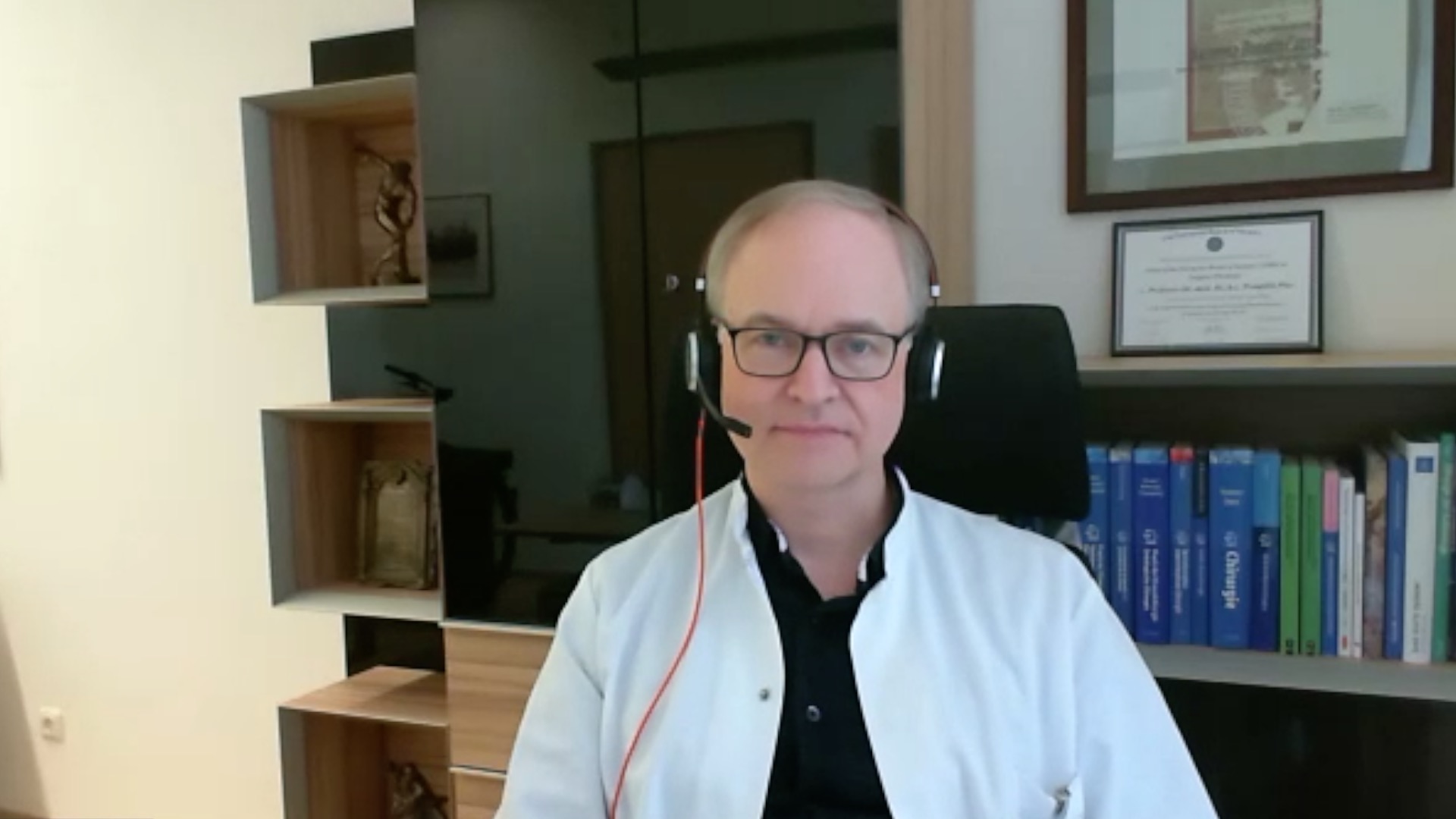
Europe has made important progress in cancer care and policy, but the work is far from over. Professor Mark Lawler explores the challenges ahead, from cancer system resilience to long-term investment and survivorship protections.

As Europe’s Beating Cancer Plan approaches its 2027 milestone, attention is increasingly turning to how progress can be sustained and translated into meaningful improvements for patients. At the European Cancer Summit 2026, Professor Mark Lawler (Professor of Digital Health, Queen’s University Belfast; Co-Chair, European Cancer Organisation’s Emergencies and Crises Focused Topic Network), discusses the priorities facing Europe’s cancer community. From strengthening the security and resilience of cancer services to maintaining investment beyond 2027 and addressing financial discrimination against cancer survivors, he emphasizes why continued action and implementation are essential to building on Europe’s progress.
Q. Please provide a short summary of the session you are co-chairing, and the key take-home message for oncologists across Europe
I’m particularly excited about the session I’m co-chairing at this year’s Summit. We’re addressing a major challenge facing countries across Europe: security and resilience within cancer services.
This encompasses the physical security of cancer centres and facilities, particularly in countries such as Ukraine, as well as the growing threat of cyberattacks. Over the past year, for example, we’ve seen cybersecurity incidents that have disrupted radiotherapy delivery, alongside attacks targeting French blood banks.
These developments highlight the vulnerabilities within our healthcare systems and the importance of being prepared. We’ve therefore developed a new report addressing the broader issues of cancer, security and resilience. We believe this is an increasingly important area that demands greater attention from the cancer community, particularly in the challenging geopolitical and digital environment in which we operate today.
The ‘Cancer, Security & Resilience: A European agenda for preparedness and response’ report is available here.
Q. What have been the most significant milestones and developments in Europe’s Beating Cancer Plan over the past year?
I think one of the most important developments has been the renewed focus on how we drive innovation, but, crucially, how we translate that innovation into effective implementation. I’ve often said that Europe is excellent at innovation. That’s not our problem. Our challenge is implementation.
As we approach the final stages of Europe’s Beating Cancer Plan, we’re beginning to see a greater capacity to deliver on the commitments we’ve made. That’s an important milestone, because ultimately, the success of the Plan will be measured by what we’re able to achieve in practice.
However, there’s still a considerable amount of work to do. I wouldn’t want to give the impression that we’ve overcome all the challenges or reached the finish line. We need to maintain that focus and ensure that the ambitions we’ve set out translate into meaningful progress for people affected by cancer across Europe.
Europe’s Beating Cancer Plan is available here.
Q. What are the most important upcoming milestones or policy developments that the cancer community should be watching over the next 12 months?
I think the most important consideration is what comes next. Both Europe’s Beating Cancer Plan and the EU Cancer Mission run until 2027, but we cannot assume that the challenge of cancer will be resolved by then.
We cannot simply reach 2027, reflect on the funding we’ve provided through the Cancer Mission and the achievements of Europe’s Beating Cancer Plan, and consider the job done. We need to sustain that commitment over the next decade. Otherwise, we risk losing the momentum we’ve worked so hard to build.
It’s important that we recognise and celebrate what we’ve achieved, while remaining realistic about the substantial work that lies ahead. Above all, we need to translate our commitments into continued action.
That requires sustained financial backing. Cancer must remain a major priority for Europe, with continued investment and political commitment over the next two to five years and beyond. We cannot afford to allow cancer to slip down the political agenda just as we’re beginning to see the benefits of our collective efforts.
Q. Where is further action and advocacy needed, and where is progress still falling short?
I think one of the areas requiring considerably greater attention is cancer survivorship. We now have millions of cancer survivors across Europe, but we need to ask ourselves whether we’re doing enough to support them. I believe we can and must do better.
We need a comprehensive cancer survivorship plan that addresses the challenges people face after cancer treatment. These include financial discrimination, particularly when cancer survivors seek access to mortgages or insurance.
One area we’ve been advocating strongly for is the Right to Be Forgotten. This is about ensuring that cancer survivors are not discriminated against on the basis of a previous cancer diagnosis. The principle is that, following a defined period – typically five years after successful treatment, subject to the relevant criteria – a previous cancer diagnosis should no longer need to be declared for certain insurance purposes.
Twelve countries in Europe have now introduced legislation in this area, which is a significant achievement. Having a proper legal framework is essential to ensuring that these protections are established and upheld.
Ireland was the most recent country to introduce this legislation, and I was delighted to be involved in that process. I’ve been working closely with the Irish Cancer Society and the Department of Finance in Dublin, and I’m pleased to say that the legislation was signed into law by the Irish President in October this year.
We’re already seeing encouraging results, with cancer survivors testing the system and securing substantially lower insurance premiums – in some cases, reductions of up to 85%. That’s a tremendous success and demonstrates the tangible difference these protections can make to people’s lives.
However, our work doesn’t stop there. We want to see other countries across the European Union, as well as those outside it, including the United Kingdom, introduce similar protections. We’re beginning a campaign in the UK to advance this agenda.
Ultimately, this is about ensuring that people across Europe are not subjected to financial discrimination because of a previous cancer diagnosis. Cancer survivors should be able to move forward with their lives without continuing to face barriers as a consequence of their illness. That’s a fundamental principle of fairness, and one that we need to continue fighting for.
Note: This transcript has been lightly edited to ensure clarity.
Cite: Prof Mark Lawler on addressing Europe’s cancer challenges through action, investment and advocacy. touchONCOLOGY. 26th November, 2026.
Disclosure: Mark Lawler has no actual or potential conflicts of interest in relation to this interview, or in connection with the (EFPIA) HCP Code.
Interviewer: Caroline Markham
touchONCOLOGY coverage of the European Cancer Summit 2026. This content has been developed independently by Touch Medical Media for touchONCOLOGY. touchONCOLOGY was an official supporter of the European Cancer Summit 2026. Views expressed are the speaker’s own and do not necessarily reflect the views of Touch Medical Media.