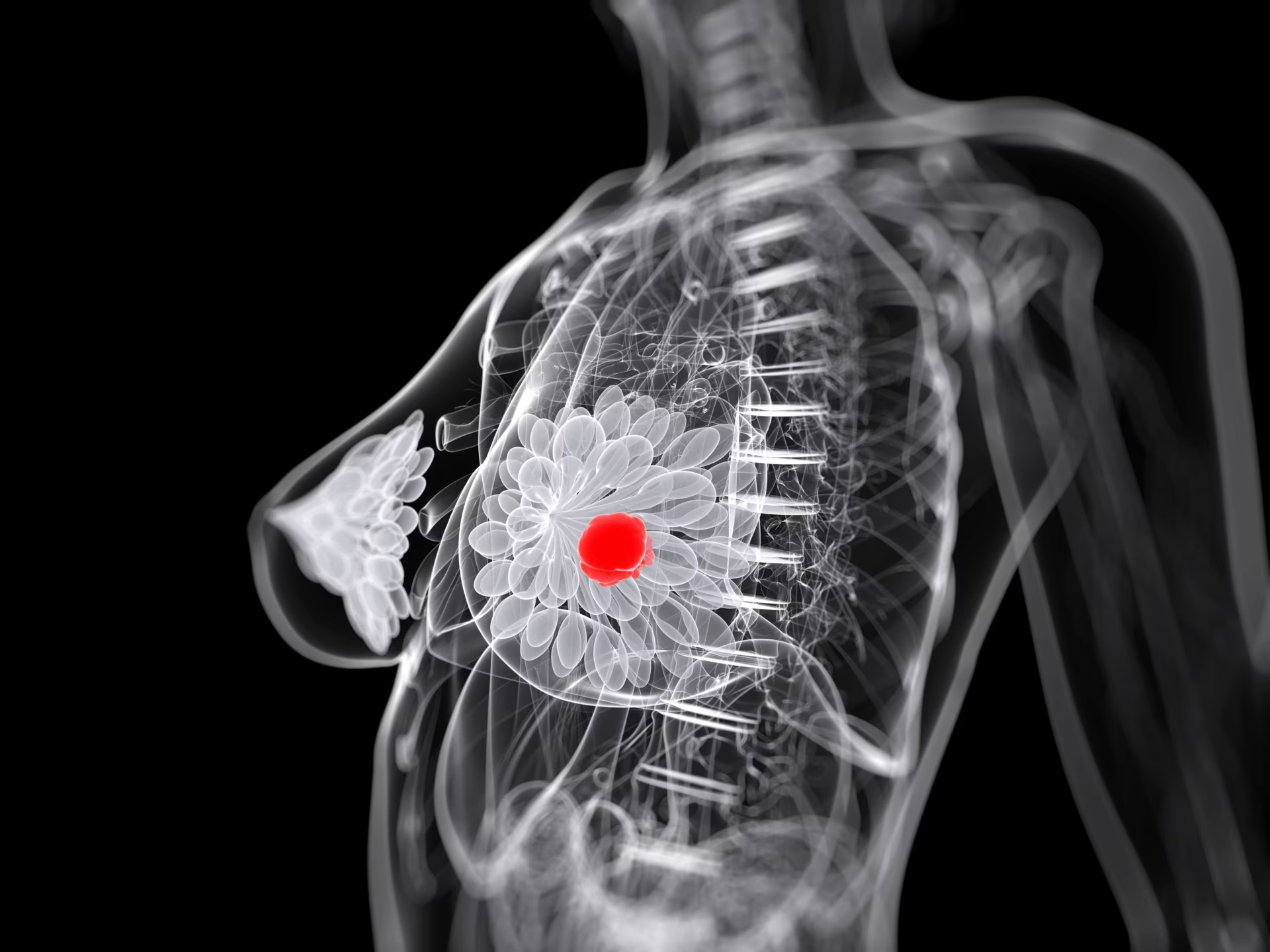

VIKTORIA-1 evaluated gedatolisib in HR+/HER2–, PIK3CA wild-type advanced breast cancer after prior CDK4/6 therapy. At the European Society for Medical Oncology (ESMO) 2025 congress, Prof Sara A. Hurvitz (Fred Hutch Cancer Center, Seattle, WA, USA) discussed topline results from the late-breaking abstract. Gedatolisib is an IV inhibitor of all three class-I PI3K isoforms and of mTORC1/2; the trial compared a triplet (gedatolisib + fulvestrant + palbociclib) and a doublet (gedatolisib + fulvestrant) against fulvestrant alone. Both combinations significantly improved progression-free survival, with encouraging response rates and a manageable safety profile. Results may inform regulatory review and sequencing after CDK4/6 inhibitors.
The late-breaking abstract, ‘Gedatolisib (geda) + fulvestrant ± palbociclib (palbo) vs fulvestrant in patients (pts) with HR+/HER2-/PIK3CA wild-type (WT) advanced breast cancer (ABC): First results from VIKTORIA-1’ (LBA17) was presented at the European Society for Medical Oncology (ESMO) congress on 17th-21st October 2025 in Berlin, Germany.
Q1. What is the current standard of care for patients with HR+/HER2-/PIK3CA wild-type advanced breast cancer?
Until the VIKTORIA-1 results were reported, the standard approach for treating HR-positive PIK3CA wild-type advanced disease has been either single-agent endocrine therapy or endocrine therapy plus everolimus (an mTOR inhibitor). We also now have two oral selective oestrogen receptor degraders (SERDs) available for patients whose tumours harbour ESR1 mutations – these mutations are present in up to ~40% of patients. For PIK3CA wild-type disease, options have therefore typically been endocrine monotherapy or endocrine therapy combined with everolimus.
Q2. What was the rationale behind exploring the triplet (gedatolisib + fulvestrant + palbociclib) and doublet (gedatolisib + fulvestrant) combinations in the VIKTORIA-1 trial?
The VIKTORIA-1 study was designed to evaluate a novel targeted agent, gedatolisib, a highly potent intravenous inhibitor of all three class I PI3K isoforms as well as mTORC1 and mTORC2. This dual PI3K/mTOR inhibition provides a comprehensive blockade of a key signaling pathway involved in tumour growth and endocrine resistance, making it a strong candidate for combination with endocrine and CDK4/6 inhibitor therapy in HR+ advanced breast cancer.
In a prior phase I/Ib study in HR+ advanced breast cancer, gedatolisib was combined with fulvestrant and palbociclib; that early work showed clinical benefit across patients regardless of PIK3CA mutation status. Because those phase I findings suggested activity whether or not tumours harboured PIK3CA mutations, VIKTORIA-1 tested gedatolisib in larger randomized cohorts to validate whether the signal would hold in a phase III setting – both as a triplet (gedatolisib + fulvestrant + palbociclib) and as a doublet (gedatolisib + fulvestrant). The concept was that combined PI3K and mTOR blockade, paired with endocrine therapy (and with CDK4/6 inhibition in the triplet), might overcome resistance mechanisms after prior CDK4/6 inhibitor exposure.
Q3. Can you summarize the design, endpoints and key efficacy findings from the VIKTORIA-1 trial?
We presented results from Study 1 of the VIKTORIA-1 trial, which enrolled patients with hormone receptor–positive, HER2-negative, PIK3CA wild-type advanced breast cancer. All participants had previously received a CDK4/6 inhibitor and had received no prior chemotherapy for advanced disease.
Patients were randomized to one of three treatment arms:
- a triplet of gedatolisib + fulvestrant + palbociclib,
- a doublet of gedatolisib + fulvestrant, or
- single-agent fulvestrant
The primary endpoint was progression-free survival (PFS). Secondary endpoints included response rate, duration of response, clinical benefit and overall survival (OS). A unique feature of this study was that patients receiving fulvestrant alone were allowed to cross over to either the triplet or doublet at the time of disease progression. When analyses were censored at crossover, there appeared to be a greater OS benefit for the gedatolisib combinations, although the data remain immature and further follow-up is ongoing.
The study demonstrated a statistically significant improvement in median PFS with the triplet compared with fulvestrant alone, with a hazard ratio of 0.24, corresponding to an approximately 7.3-month PFS gain. The doublet also significantly improved PFS versus fulvestrant, with a hazard ratio of 0.33.
Objective response rates were around 30% in both gedatolisib arms compared with ~1% for fulvestrant monotherapy. The gedatolisib combinations were also associated with longer duration of response and a higher clinical benefit rate, as well as a trend toward improved OS.
The safety profile of both the triplet and doublet regimens was favorable, with manageable toxicity and no unexpected signals.
Q4. What are the next steps in the research, and how do you see this therapy fitting into the treatment landscape for this subset of patients?
Study 2 of the VIKTORIA program is currently evaluating the gedatolisib triplet and doublet combinations in patients with PIK3CA-mutated HR+/HER2– advanced breast cancer, compared with alpelisib plus fulvestrant. The VIKTORIA-2 trial is also underway, exploring gedatolisib in the earlier-line setting. These ongoing studies will help define the optimal positioning of this agent within the treatment sequence.
Clinically, I believe this could be an appropriate option – either as a triplet (gedatolisib + fulvestrant + palbociclib) or doublet (gedatolisib + fulvestrant) – for patients following CDK4/6 inhibitor–based therapy. In practice, the decision between triplet and doublet therapy may depend on the biologic behaviour of the disease. For example, if a patient’s cancer demonstrates features of endocrine resistance, such as a short time to progression on prior therapy, a triplet regimen may offer greater benefit. Conversely, patients with more indolent disease might be well suited to the doublet combination.
Looking ahead, it will be important to see whether the current results lead to regulatory approval. If approved, gedatolisib would become the second-line therapy targeting the PI3K pathway available for patients with PIK3CA wild-type disease. Overall, these results represent an important step toward expanding treatment options for this population and refining how we individualize therapy after CDK4/6 inhibition.
Disclosure: Sara Hurvitz discloses research grants from: Astra Zeneca/Daiichi-Sankyo (B12), Novartis (PHASE I) and Stemline/Menarini (ELEVATE); Advisory/Consultant for Briacell, Beigene, BridgeBio, Blueprint, Embiosys, Luminate, Gilead breast cancer council, Daiichi Sankyo, Novartis (unpaid), Roche global, BMS, Jazz, Mersana, Bayer, Akari Therapeutics, Boundless Bio, Myricx, Luminate, ALX Oncology, Eli Lilly Oncology, Prelude Therapeutics, Gilead; Data Safety Board: Quantum Leap, InClin/Atossa trial, Alliance Foundation, Roche-paid to UW; royalties from: Wolters Kluwer (UpToDate), McGraw Hill (Current Diagnosis and Medical Treatment textbook), Elsevier (Cancer Treatment Reviews editorial services), SAGE Publications (Therapeutic Advances in Medical Oncology editorial services); stocks: ROMTech (Stocks) – Orthopedic device for postop pts (not cancer related); Steering Committee Role (unpaid): Daiichi Sankyo Jazz, Seagen/Pfizer Gilead, Novartis Genentech/Roche, Eli Lilly, Celcuity.
This content has been developed independently by Touch Medical Media for touchONCOLOGY. It is not affiliated with the European Society for Medical Oncology (ESMO). Views expressed are the speaker’s own and do not necessarily reflect the views of Touch Medical Media.
Cite: ESMO25 Late-breaker: VIKTORIA-1 triplet and doublet combinations improve PFS in HR+/HER2– PIK3CA wild-type breast cancer. touchONCOLOGY. October 22nd, 2025
Related content
- ESMO25 Late-breaker: ENGOT-ov65/KEYNOTE-B96 shows survival benefit in platinum-resistant ovarian cancer
- #ASCO25: SERENA-6, DESTINY-Breast09, ASCENT-04 – top breast cancer breakthroughs you need to know!
- #ASCO25 late-breaker: How vepdegestrant could reshape ER+ breast cancer