“Without international collaboration, most studies on rare cancers would be impossible to conduct”Rare gynaecological cancers encompass a diverse group of malignancies that pose unique challenges in diagnosis, treatment and research. We were honoured to speak with Prof. Isabelle Ray-Coquard (Léon Bérard Center and Claude Bernard University Lyon, France), a world leading expert in this field. In this Q&A, she shares her insights into the current unmet needs, challenges and future opportunities in this complex and often under-recognized area of oncology.

- What are some of the rarer gynecological cancers, and how do they differ from more common types?
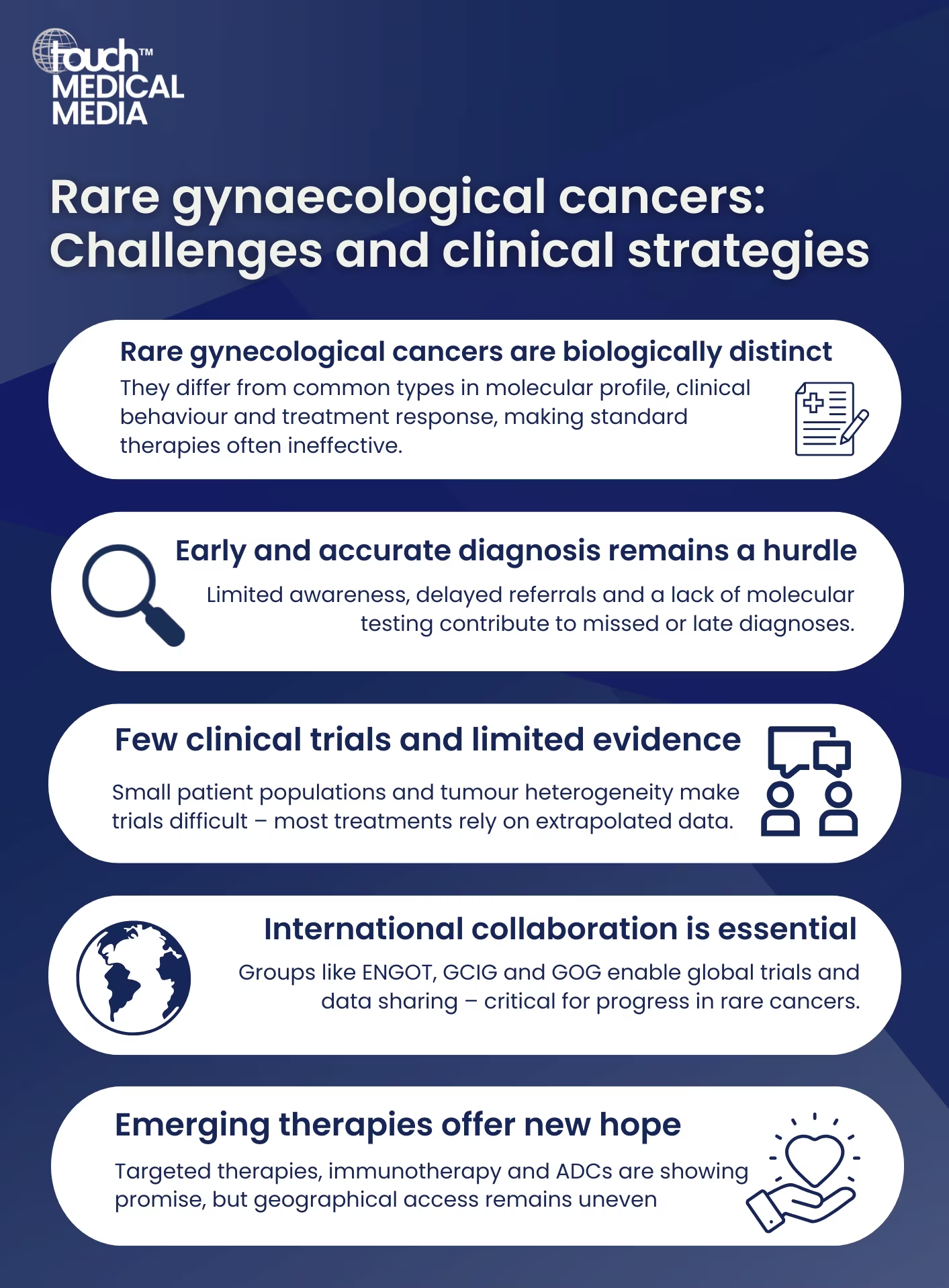
Rare gynecological cancers include histological subtypes such as clear cell, mucinous, low-grade serous and small cell carcinomas of the ovary, uterine sarcomas and vulvar or vaginal melanomas. These cancers often differ from more prevalent types – such as high-grade serous ovarian or endometrioid endometrial cancers – not only in their clinical behaviour but also in their molecular characteristics. They are typically more aggressive, harder to diagnose accurately and less responsive to standard therapies. Their rarity can lead to diagnostic uncertainty, and treatment is often based on limited evidence or extrapolated from more common tumours.- What are some of the most pressing unmet needs in the diagnosis and treatment of rare gynaecological cancers?
The foremost unmet needs include earlier and more accurate diagnosis, which is often a challenge due to non-specific symptoms and limited awareness. Treatment pathways are rarely biomarker-driven due to insufficient data, and there is a critical lack of randomized clinical trials specific to these subtypes. As a result, treatment decisions are often made without robust evidence. Moreover, clinical guidelines are underdeveloped, and access to expert centers or appropriate therapies may be limited, particularly in non-urban or underserved regions.- Given the rarity of these cancers, what are the main research challenges?
The small number of patients affected by each rare histological subtype presents a major obstacle to conducting large, adequately powered clinical trials. Tumour biology is highly heterogeneous, making generalizable conclusions difficult. Furthermore, these cancers often attract limited commercial interest, which can hamper drug development and trial funding. As a result, generating high-level evidence that can lead to changes in clinical practice takes significantly more time than for more common cancers. There are also few systemic treatment options with proven efficacy, further limiting therapeutic innovation.- What is the current standard-of-care for these cancers, and what are the biggest barriers to diagnosis and treatment?
Current standards of care are frequently based on extrapolation from more common gynaecological malignancies or on retrospective studies rather than robust prospective trials. This can lead to suboptimal treatment choices. Major barriers include delays in diagnosis due to limited recognition, lack of routine molecular profiling and a general shortage of expertise in managing rare histologies. Additionally, patients may not have access to specialized cancer centres or be enrolled in clinical trials due to geographic, logistic or regulatory limitations.- Are you seeing improvements in access to innovative therapies for rare gynecological cancer patients?
Yes, there is increasing interest in developing and testing innovative therapies such as targeted agents, immune checkpoint inhibitors and antibody–drug conjugates (ADCs). Some of these approaches have shown encouraging early results in specific rare subtypes. However, access to these treatments remains inconsistent, varying widely by region, healthcare system and clinical trial infrastructure. Moreover, regulatory pathways are often not well-adapted to the challenges of studying rare cancers, which can delay the approval and implementation of new therapies.- Given the rarity of these cancers, how important is international collaboration in research and clinical trial design?
International collaboration is absolutely essential. Networks such as the European Network for Gynaecological Oncological Trial groups (ENGOT), the Gynecologic Oncology Group (GOG), and the Gynecologic Cancer InterGroup (GCIG) enable pooling of resources, harmonization of trial protocols and accelerated patient recruitment. Without these collaborative frameworks, it would be nearly impossible to complete clinical studies in a timely manner. Collaboration also facilitates data sharing and helps build consensus around treatment standards and research priorities.- What areas of research do you believe hold the most promise for transforming the management of rare gynecological cancers in the next 5–10 years?
Several research areas offer promising potential. Precision medicine approaches, driven by comprehensive molecular profiling, are likely to expand treatment options tailored to specific tumour biology. Immunotherapy, particularly in combination with other agents, and ADCs could significantly improve outcomes for select subtypes. Organ-sparing strategies may also become viable in early-stage disease with favorable profiles. Additionally, advances in early detection methods, real-world data platforms and liquid biopsy techniques may facilitate earlier diagnosis and better monitoring, ultimately improving both survival and quality of life.Disclosure: Isabelle Ray-Coquard has received grant/research support from MSD and GSK. She is a member of the Advisory Board for AstraZeneca, BMS, MSD (all to Inst), AbbVie/ImmunoGen, Adaptimmune, Agenus, Amgen, BMS, Clovis, Daiichi Sankyo, Deciphera, Eisai, Genmab, GSK, Incyte, Lilly/Loxo Oncology, MacroGenics, Merck Serono, Mersana Therapeutics, Oxcia, Novartis, Pharma&, Roche, PMV Pharma, Regeneron, Revolution/EQRx, Seagen and Sutro. She has received honoraria/honorarium from AbbVie, Agenus, Advaxis, BMS, PharmaMar, Genmab, Pfizer, AstraZeneca, Roche, GSK, MSD, Deciphera, Mersana, Merck Sereno, Novartis, Amgen, Tesaro and Clovis.
Cite: Spotlighting rare gynaecological cancers: Best practice, barriers and clinical strategies. touchONCOLOGY. July 31st, 2025
SIGN UP to touchONCOLOGY!
Join our global community today for access to thousands of peer-reviewed articles, expert insights, and learn-on-the-go education across 150+ specialties, plus concise email updates and newsletters so you never miss out.
Rare gynecological cancers remain an underfunded and understudied group of diseases. Prof. Isabelle Ray-Coquard discusses the diagnostic and therapeutic gaps, barriers to clinical trial participation, and the importance of international cooperation to advance care for these patients. Promising developments include immunotherapy, targeted approaches, and data-driven personalized strategies.