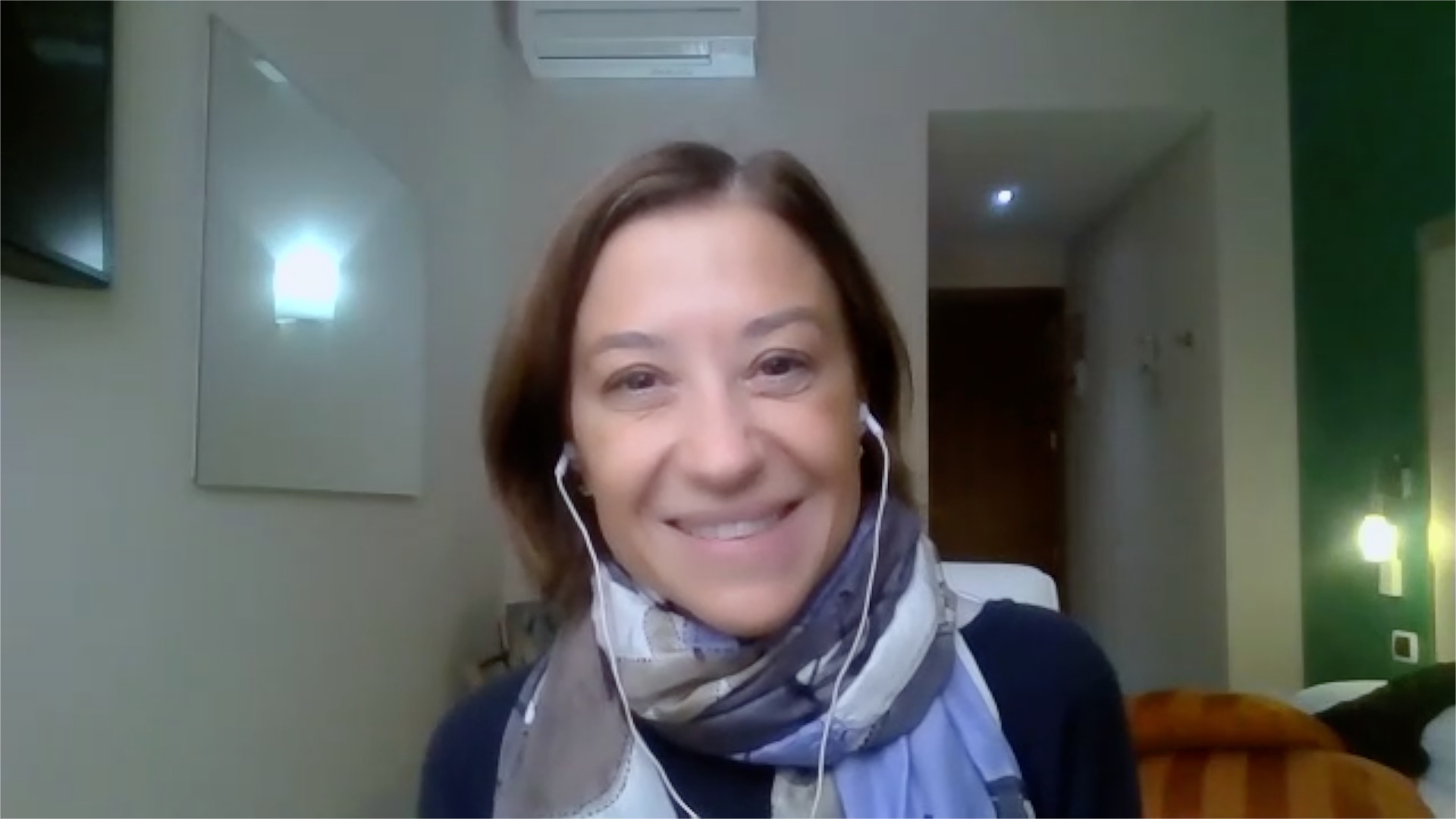

Platinum-resistant recurrent ovarian cancer remains one of the most challenging areas in gynecologic oncology, with limited treatment options and poor survival outcomes. At the European Society for Medical Oncology (ESMO) 2025 congress, Professor Nicoletta Colombo (Director, Gynecologic Oncology Program, European Institute of Oncology, Milan, Italy) discussed significant findings from the randomized double-blind phase III ENGOT-ov65/KEYNOTE-B96 study, evaluating pembrolizumab combined with weekly paclitaxel, with or without bevacizumab. The study demonstrated an improvement in progression-free and overall survival, suggesting this regimen could represent a new standard of care for patients with platinum-resistant disease.
The Presidential Late-breaking Abstract, ‘Pembrolizumab vs Placebo Plus Weekly Paclitaxel ± Bevacizumab in Platinum-Resistant Recurrent Ovarian Cancer: Results from the Randomized Double-Blind Phase 3 ENGOT-ov65/KEYNOTE-B96 Study’ (LBA3) was presented at the European Society for Medical Oncology (ESMO) congress on 17th-21st October 2025 in Berlin, Germany.
Q1. To start, could you outline the current challenges in treating patients with platinum-resistant recurrent ovarian cancer?
Platinum-resistant ovarian cancer remains a major unmet clinical need. Unfortunately, most patients eventually develop platinum resistance, except those cured with frontline therapy. Current treatment options are limited and generally provide modest response rates, short progression-free survival (PFS) and minimal impact on overall survival (OS). There is an urgent need for more effective therapies.
Q2. What was the rationale for combining pembrolizumab with paclitaxel, with or without bevacizumab, in this setting?
Paclitaxel can enhance antitumour immunity by promoting antigen presentation and modulating the tumor microenvironment. When administered weekly – essentially in a metronomic fashion – it can further potentiate immune effects. Combining weekly paclitaxel with pembrolizumab was therefore logical, and the addition of bevacizumab was also supported by evidence of its benefit in platinum-resistant disease and its potential to enhance immune response.
Q3. Can you summarize the design, eligibility criteria, and primary endpoints?
Eligible patients had epithelial ovarian cancer with one or two prior lines of therapy and platinum-resistant disease, defined as progression within six months of the last platinum-based regimen. Those with primary platinum-refractory disease were excluded. Stratification factors included bevacizumab use (at investigator’s discretion), geographic region and PD-L1 expression, assessed by combined positive score (CPS). Patients were randomized 1:1 to receive pembrolizumab or placebo, each combined with weekly paclitaxel, with or without bevacizumab. The primary endpoint was PFS, with OS as a key secondary endpoint.
Q4. What were the safety and efficacy findings for this combination therapy?
At the first interim analysis, we observed a statistically significant improvement in PFS in both the CPS ≥1 population and the overall intention-to-treat group. The hazard ratios were 0.72 and 0.70, respectively. Median PFS reached 8.3 months in the pembrolizumab arm compared with 7.2 months (CPS ≥1) and 6.4 months (ITT) for placebo. More notably, OS improved, with a hazard ratio of 0.76 and a four-month increase in median OS in the pembrolizumab arm. This represents one of the longest overall survival outcomes reported in platinum-resistant ovarian cancer – particularly given the strong performance of the control arm, which achieved 14 months.
Q5. What might these results mean for future clinical practice?
These results are clinically very meaningful. They suggest that pembrolizumab plus weekly paclitaxel, with or without bevacizumab, could become a new standard of care for platinum-resistant ovarian cancer. Importantly, recent data indicate the OS benefit extends to the intention-to-treat population, meaning this regimen could be applicable to most patients. While new agents such as antibody–drug conjugates are emerging, expanding our therapeutic options is crucial. Having additional effective treatments – especially those that improve survival – marks an important step forward for our patients.
Disclosure: Nicoletta Colombo discloses Financial Interests, Personal, Advisory Board, Various: Roche, AstraZeneca, MSD/Merck, GSK, Immunogen; Financial Interests, Personal, Invited Speaker, Congress, Symposia, Lectures: AstraZeneca; Financial Interests, Personal, Advisory Board, Lectures: Eisai; Financial Interests, Personal, Advisory Board, Advisory Role: Onxerna; Financial Interests, Personal, Invited Speaker: MSD/Merck; Financial Interests, Personal, Invited Speaker, Speaker: GSK; Financial Interests, Personal, Advisory Board: Novocure, BioNTech, Gilead, AbbVie; Financial Interests, Institutional, Research Grant: AstraZeneca, GSK; Non-Financial Interests, Leadership Role, Chair, Scientific Committee: ACTO (Alleanza contro il tumore ovarico).
This content has been developed independently by Touch Medical Media for touchONCOLOGY. It is not affiliated with the European Society for Medical Oncology (ESMO). Views expressed are the speaker’s own and do not necessarily reflect the views of Touch Medical Media.
Cite: ESMO25 Late-breaker: ENGOT-ov65/KEYNOTE-B96 shows survival benefit in platinum-resistant ovarian cancer. touchONCOLOGY. October 24th, 2025
Related content
- #ASCO25: Dr Domenica Lorusso on TRUST, ROSELLA & precision medicine in ovarian cancer
- Spotlighting rare gynaecological cancers: Best practice, barriers and clinical strategies
- Niraparib as first-line maintenance treatment in ovarian cancer