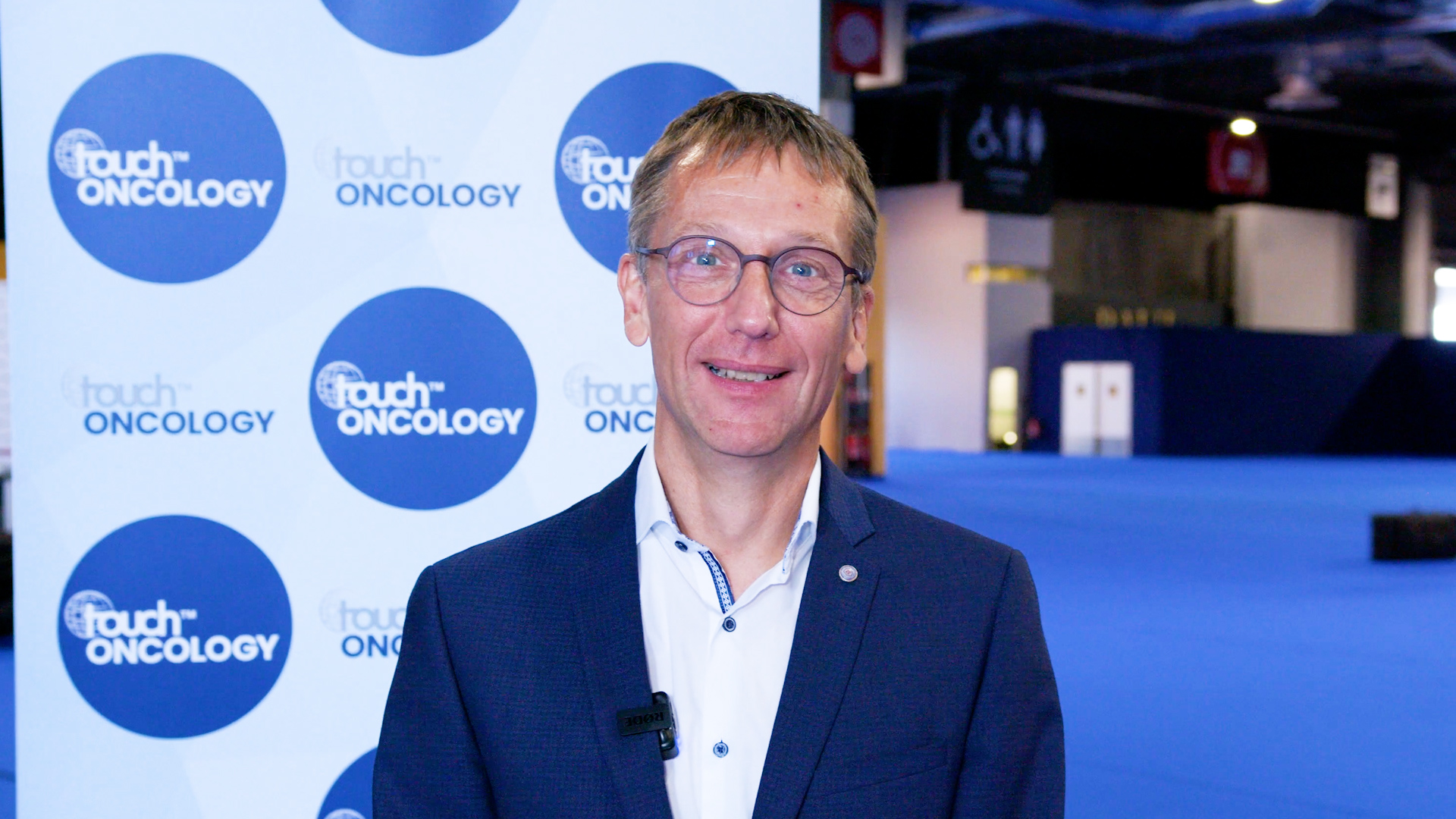

Recent clinical investigations in head and neck squamous cell carcinoma (HNSCC) and HPV-positive oropharyngeal cancer (OPSCC) are exploring more personalized and less toxic approaches. In this article, Dr Ari Rosenberg (University of Chicago, Chicago, IL, USA) shares his highlights and key take-aways from the Multidisciplinary Head and Neck Cancer Symposium 2026 (MHNCS26), held on 19th-21st February in Palm Desert, CA, USA. Together, these studies illustrate the potential of molecular-guided, targeted, and de-escalated strategies to refine therapy and improve tolerability in head and neck cancers.
Presented by: Ari Joseph Rosenberg (University of Chicago, Chicago, IL, USA)
Presented by: Alan Ho (Memorial Sloan Kettering Cancer Center, New York, NY, USA)
A phase II, multicenter, single-arm trial evaluated ozuriftamab vedotin (Oz-V), a conditionally binding ROR2-targeting antibody–drug conjugate, in patients with recurrent or metastatic HPV-positive oropharyngeal squamous cell carcinoma (OPSCC) previously treated with anti–PD-1 therapy. ROR2 is overexpressed in HPV-associated malignancies, and Oz-V is engineered to preferentially bind in the acidic tumor microenvironment, with the goal of limiting off-tumor toxicity.
As of June 14, 2025, 20 patients were enrolled, including 12 with p16-positive OPSCC who had received a median of three prior lines of therapy. Among 11 evaluable patients, the objective response rate was 45%, including one confirmed complete response and two confirmed partial responses; the disease control rate was 100%. Median progression-free survival was 4.7 months and median overall survival was 11.6 months.
Most adverse events were grade 1–2. Three grade 3 treatment-related events were reported, with no grade 4 or 5 toxicities. These findings support further evaluation in a randomized phase III trial.
Presented by: Michael Wotman (MD Anderson Cancer Center, Houston, TX, USA)
The Quarterback (QB) de-escalation trials evaluated long-term outcomes in patients with locally advanced, HPV-positive oropharynx cancer treated with induction chemotherapy followed by reduced-dose chemoradiation (rdCRT). In 47 patients with ≤20 pack-year smoking history and no metastases, clinical responders received rdCRT (5600 cGy) with weekly carboplatin, while non-responders received standard-dose CRT. After a median follow-up of 88.5 months, 3- and 5-year locoregional relapse-free survival were 89.3% and 86.6%, progression-free survival 87.2% and 84.6%, and overall survival 91.5% and 89.1%, respectively. Treatment failures were concentrated in patients with high-risk features, especially extracapsular extension. These results suggest that, in carefully selected patients, sequential induction chemotherapy and de-escalated radiotherapy can maintain durable disease control while potentially reducing long-term toxicity. The findings support further study of molecular biomarkers and immunotherapies to refine patient selection and improve outcomes.
Already registered? Login below.
Disclosure: Ari Rosenberg has nothing to disclose in relation to this interview. This short article was prepared by touchONCOLOGY in collaboration with Dr Ari Rosenberg. Views expressed are the author’s own and do not necessarily reflect the views of Touch Medical Media.
Editor: Sophie Nickelson (Editorial Director).
Cite: Top Takeaways from MHNCS26. touchONCOLOGY. March 10th, 2026
Related content
- 5 exciting developments in oncology to watch in 2025 and beyond
- 5 key developments that have changed oncology in 2025
- Introducing the touchONCOLOGY Future Leaders 2025