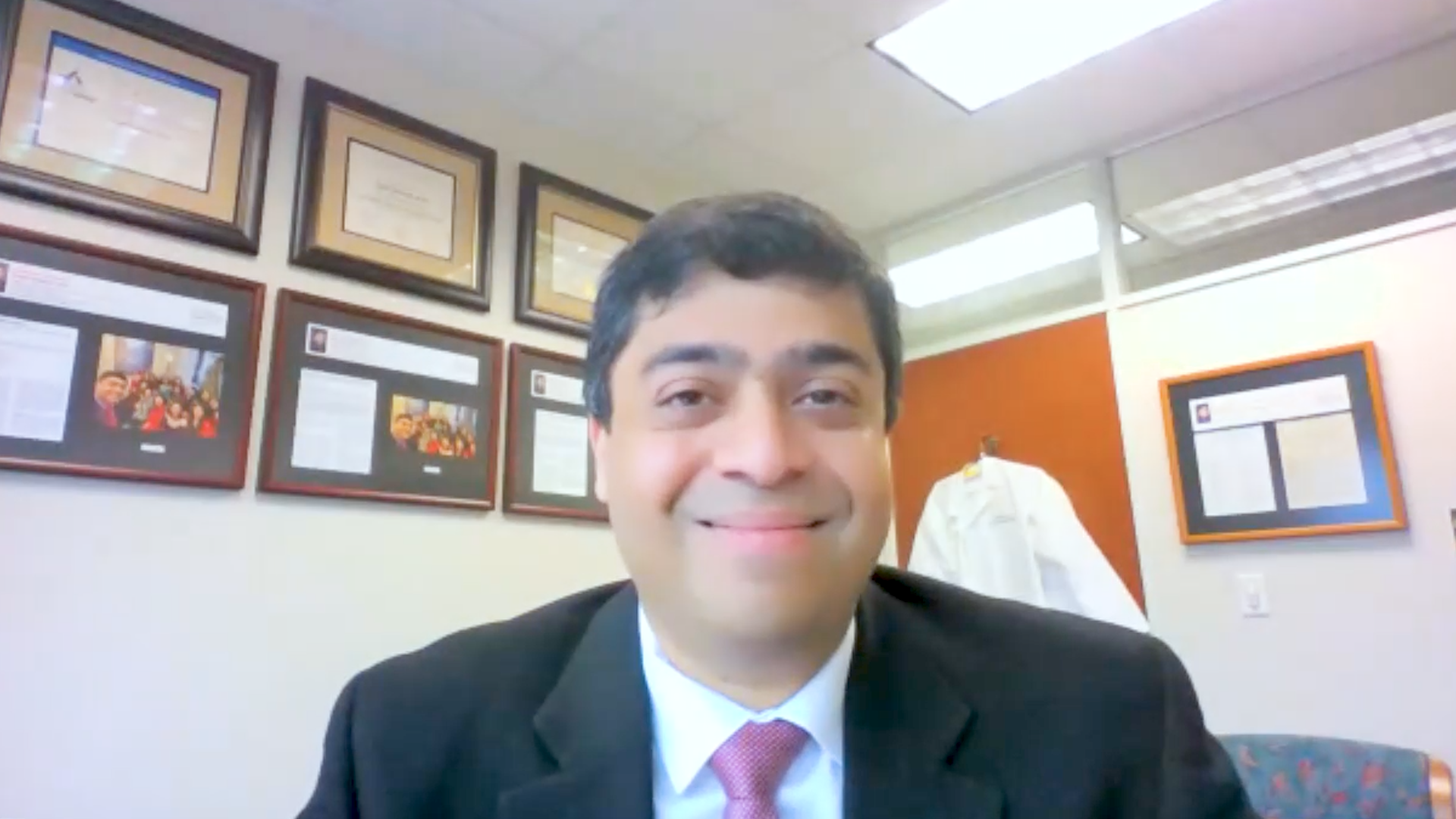
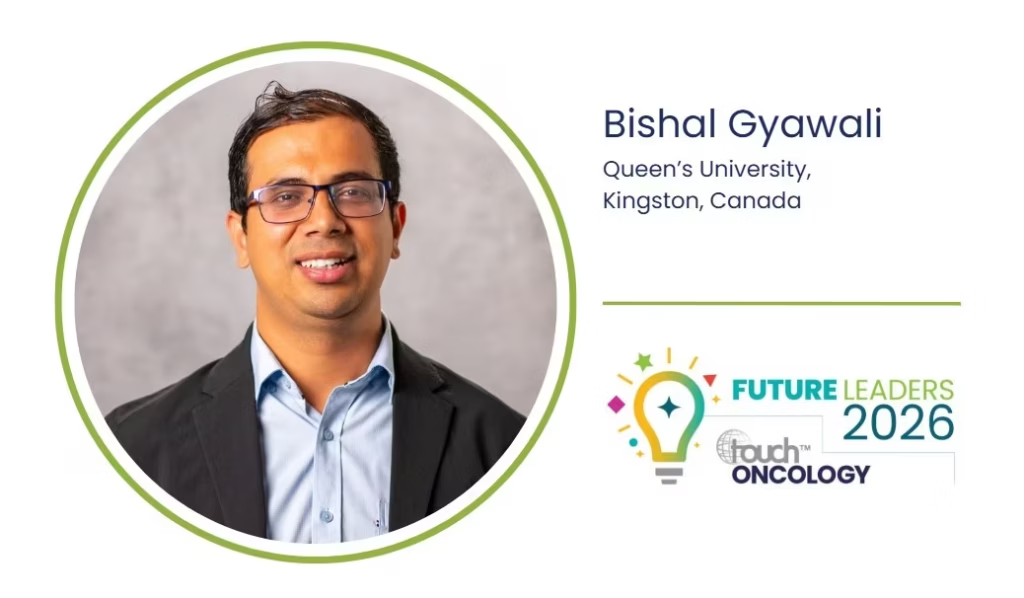
We are delighted to announce Dr Bishal Gyawali as a touchONCOLOGY Future Leader 2026, selected as a rising star poised to shape the future of policy and gastrointestinal oncology.
Dr Gyawali is a medical oncologist, researcher and Associate Professor at Queen’s University, Kingston, Canada. He leads the BG Lab, focusing on gastrointestinal malignancies, cancer policy, evidence-based oncology and global oncology. Dr Gyawali has authored over 220 peer-reviewed articles, with more than half of recent publications led by trainees, reflecting his passion for mentorship. He co-founded Common Sense Oncology, hosts the ‘Grounded in Groundshot’ podcast and serves on multiple international oncology committees, including the WHO Essential Medicines List Expert Panel. Recognized for his work with awards like FASCO 2025 and Canadian Cancer Society Excellence in Research, he combines clinical care, research and mentorship to advance patient-centered oncology.
In this Future Leaders interview, Dr Gyawali discusses how patient-centered care, evidence-based practice and mentorship have shaped his career, and why curiosity, resilience and purpose are essential for the next generation of oncologists.

“A patient remembers not just the facts, but how those facts were delivered – communication can change everything”
Q: What aspects of your work do you find the most fulfilling?
I wear several hats, and I find all of them rewarding. As a clinician, I consider it a big privilege to be entrusted with caring for patients at their most difficult times, including drawing the fine balance between keeping hope alive but also keeping it honest and realistic. As a researcher, I enjoy conducting meaningful research that is patient-centric and important to clinical practice and policymaking, although not very likely to be funded. As a mentor – and probably this is the role that I enjoy the most – I absolutely love helping shape the career and future of the next generation oncologists and researchers, enabling them to do practice-changing meaningful research. As a mentor, I find it most rewarding when I can teach them the skillset that enables them to achieve higher and greater things. When I see my mentee publish big papers or win an award, it gives me the highest pleasure.
Q: Is there a particular moment or experience in your career that reinforced your passion for your specialty?
I think communication skills are one of the most important skills of a medical oncologist. In my trainee days, I observed several mentors approach ‘breaking bad news’ in their own unique different styles. It had an impression on me; I used to think, if I was a patient or a family of the patient, would I have loved this person as an oncologist or I would have hated to be told it like that? One day, when I was caring for a patient, as a trainee, and the cancer had progressed on second-line therapy, I discussed the prognosis and third-line treatment plan and outcomes with the patient and her family. I stayed empathetic, but realistic. The patient and her family really appreciated my approach. Apparently, they had already had a similar discussion with another physician. They said, “We wish you were available yesterday and we wish you were the one who broke this news to us”. I realized that the facts were the same, but the way I delivered them was different. That is when I realized that our specialty demands so much more than mere knowledge of matching a drug to a biomarker, or management of side effects. It also entails proper communication skills. Same facts delivered in one way versus another can make patients feel differently, and these are also the moments patients’ families will continue to remember even after the patient has passed away.
Q: What advice would you offer to those just beginning their journey in your specialty?
Be curious. Learn from the best mentors in your field. Take the good from everyone, leave the bad. Don’t trust ‘experts’ simply because they are experts. Trust the evidence. Learn how to critically appraise the evidence. And never forget that what ultimately matters are the patients. Our goal is to make our patients live longer and better. Anything else – publications, citations, awards, social media following, money, length of “conflicts of interest” paragraph – are all poor surrogates of true success. They are vain metrices.
Don’t forget your own personal happiness. Families and friends matter. We all die one day anyway – so make sure that at your deathbed, you can look back upon a life well-lived and well-loved and say goodbye to the world in peace and satisfaction.
Disclosures: This short article was prepared by touchONCOLOGY in collaboration with Dr Gyawali. No fees or funding were associated with its publication.
Citation: Dr Bishal Gyawali on curiosity, communication and global oncology: touchONCOLOGY Future Leaders 2026. touchONCOLOGY. 14th April 2026.
Register now to receive the touchONCOLOGY newsletter!
Don’t miss out on hearing about our latest peer reviewed articles, expert opinions, conference news, podcasts and more.