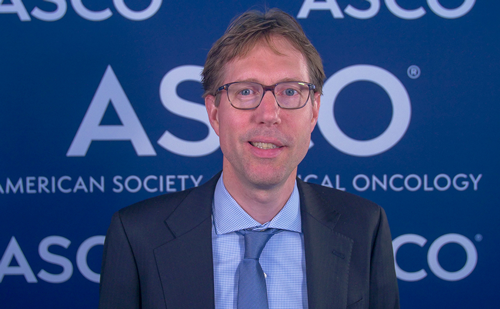
At SIOPE 2026, Prof Cornelis van Tilburg discusses how adaptive and innovative trial design, precision oncology infrastructure and global collaboration are reshaping early phase paediatric oncology research

At the 7th SIOP Europe Annual Meeting, discussions around early-phase clinical development highlighted both the scientific advances and structural challenges shaping modern paediatric oncology. Prof Cornelis van Tilburg (Hopp Children’s Cancer Center Heidelberg (KiTZ), Heidelberg, Germany) is closely involved in both areas through his leadership of the clinical trials unit and multiple studies in paediatric neuro-oncology. In this interview, he discusses the barriers affecting European early-phase research, evolving paediatric trial methodologies and the importance of international collaboration in precision oncology.
touchONCOLOGY coverage of SIOP Europe 2026
What are the principal challenges currently facing early-phase paediatric oncology trials in Europe?
One of the biggest challenges is the prolonged timeline for trial activation in Europe compared with other regions, particularly the USA. Much of this delay stems from contracting procedures between academic institutions and pharmaceutical partners, which are often slowed by regulatory requirements, intellectual property negotiations and administrative complexity.
At the same time, the European reimbursement environment is becoming less attractive for pharmaceutical companies. Germany is frequently used as a reference market for international drug pricing, making some companies more cautious about pursuing European submissions. This has direct consequences for paediatric oncology because early-phase academic trials rely heavily on industry collaboration and access to investigational compounds.
What are the challenges in translating adult oncology clinical trial frameworks into paediatric development?
An important recent development is the revised Declaration of Helsinki, which now recognises participation in clinical research as a right for vulnerable groups. Historically, paediatric patients were often excluded from early-phase development pathways until substantial adult data were available. The updated framework acknowledges that children should also have timely access to innovative therapies.
Another major issue is that many drugs developed for adult cancers will ultimately demonstrate limited efficacy in paediatric malignancies. Nevertheless, these agents still need to be evaluated because some may prove highly relevant. Traditional paediatric phase one designs are often slow because they focus heavily on cohort-based dose escalation before early efficacy signals are identified. To address this, we are increasingly using intraindividual dose-escalation strategies, where patients begin at a common starting dose followed by personalised escalation or de-escalation according to tolerability. This allows patients to reach their own maximum tolerated dose more efficiently and accelerates assessment of biological activity. If a drug demonstrates insufficient activity, development can be discontinued earlier; if early efficacy signals emerge, subsequent optimisation can proceed more rapidly.
How is KiTZ adapting its infrastructure to support precision oncology approaches?
At KiTZ, we have established several molecular profiling platforms to support precision medicine strategies. INFORM is one of the largest initiatives, integrating next-generation sequencing technologies across multiple European countries to identify actionable molecular alterations and facilitate enrolment into biomarker-driven trials. Our focus is increasingly expanding toward immunotherapeutic target identification, reflecting the growing importance of immuno-oncology within paediatric cancer research. Emerging technologies such as functional drug sensitivity profiling are also likely to become increasingly relevant for future patient stratification.
How important is international collaboration in paediatric early phase trials?
International collaboration is essential because these studies frequently involve very small, molecularly defined patient populations. No single country can recruit sufficient numbers independently. Our studies are currently active across several Western European countries and Australia, with expansion into Eastern Europe ongoing. We are also strengthening collaborations with North American academic trial networks to facilitate reciprocal opening of investigator-initiated studies.
What single change would most improve paediatric early-phase clinical development?
The greatest opportunity remains improving contracting and regulatory efficiency. European trial activation pathways remain excessively bureaucratic and slow, particularly within Germany. For paediatric oncology — a highly specialised field with limited patient numbers — delays in contracting and study activation have a disproportionate impact. Streamlining these processes would substantially strengthen Europe’s competitiveness in paediatric drug development and accelerate access to innovative therapies for children with cancer.
This content has been developed independently by Touch Medical Media for touchONCOLOGY in collaboration with SIOP Europe and Cornelis van Tilburg. Views expressed are the speaker’s own and do not necessarily reflect the views of Touch Medical Media.
Disclosure: Cornelis van Tilburg discloses grant/research support from Biomed Valley Discoveries, Day One Biopharmaceuticals and Oncoheroes Biosciences.
Cite: Advancing early-phase paediatric oncology drug development in Europe. touchONCOLOGY. 12th May 2026.
Interviewer: Caroline Markham