
ONCOLOGY & HEMATOLOGY REVIEW – VOLUME 14 – ISSUE 2 – FALL 2018
Welcome to the fall edition of Oncology and Hematology Review, which features a wealth of topical and practical content for oncologists and hematologists, as well as being of interest to the wider medical community.
Our expert interviews continue to be popular, providing concise snapshots of hot topics in medicine. Among the expert interviews in this issue, Ian Flinn highlights the exciting recent developments that are improving outcomes in patients with B-cell malignancies, Wadie Bahou describes the role of platelets in cancer progression and metastasis, as well as their potential role as biomarkers, and Stephen Chun highlights the disparities in access to combined chemotherapy and radiotherapy for patients with small cell lung cancer across the US.
We also feature a review article by Das and Gibson on recent advances in metastatic esophageal and gastroesophageal junction adenocarcinoma. The incidence of these devastating malignancies is rising in the US, and treatment is challenging, but new therapeutic options are improving outcomes. The incidence of hepatocellular carcinoma also continues to increase. In another review, Chen, Lopez, and Vaccaro describe the current approach to the diagnosis, staging, and management of this condition, with a focus on evolving approaches to systemic treatment. Oncology and Hematology Review would like to thank all expert authors who contributed towards this edition.
A special thanks goes to our Editorial Board for their continuing support and guidance. Thanks also go to all organizations and media partners for their ongoing support. We hope that all our readers will find plenty of interest among these timely and thought-provoking articles.
Welcome to the fall edition of Oncology and Hematology Review, which features a wealth of topical and practical content for oncologists and hematologists, as well as being of interest to the wider medical community. Our expert interviews continue to be popular, providing concise snapshots of hot topics in medicine. We are entering a transformative […]
Expert Interviews
Over recent years we have seen an increasing number of global clinical trials, with nearly 31% of the world’s clinical trials being conducted outside the US and 25% of new drug applications including data from international sites.1 In addition, clinical trial protocols have increased in complexity, with increased numbers of endpoints, procedures, eligibility criteria, and […]
Chronic lymphocytic leukemia, diffuse large B-cell lymphoma, and follicular lymphoma are the three most common lymphoproliferative malignancies.1 All are B-cell malignancies and, although diverse in their underlying pathologies and clinical presentation, until recently have been treated the same way. The standard first-line therapy is rituximab and combination chemotherapy, usually the CHOP (cyclophosphamide, doxorubicin, vincristine, and […]
Until recently, the standard of care for patients with stage III (locally advanced), unresectable non–small cell lung cancer (NSCLC) was platinum-based, doublet chemotherapy together with radiotherapy (chemoradiotherapy).1 However, long-term outcomes for these patients is poor, with 5-year survival rates ranging between 15–25%, while long-term survival data are rarely reported.2 Immune checkpoint inhibitors targeting programmed […]
Immune checkpoint inhibitors have established themselves as bona fide practice-changing agents in the management of several cancers including melanoma and lung cancer. However, selection of individual regimens appropriate for first-line treatment of different subsets of patients with lung cancer remains in flux, and is subject to a number of competing predictive biomarkers. In an […]
Lung cancer accounts for the greatest proportion of cancer deaths in the US. Small cell lung cancer (SCLC) accounts for around 10–15% of all lung cancers.1 It is a highly aggressive malignancy, characterized by a high proliferation rate and early metastasis, for which the most effective first-line treatment modality is combined chemotherapy and radiation therapy.2 […]
The development of precision medicine relies on the identification of biomarkers for monitoring and detecting disease. Current studies of biomarker identification have focused on serum and plasma, but in doing so, they have missed a rich source of biomarkers: platelets.1 In addition to their functions in coagulation and maintaining hemostasis following mechanical injury of the […]
In recent years, personalized therapies have transformed the management of many advanced malignancies. However, despite advances in targeted therapy and immunotherapy that have expanded the treatment options for patients with metastatic kidney cancer, we are unable to predict which patients are most likely to respond to individual treatments.1 With a number of highly effective […]
Reviews
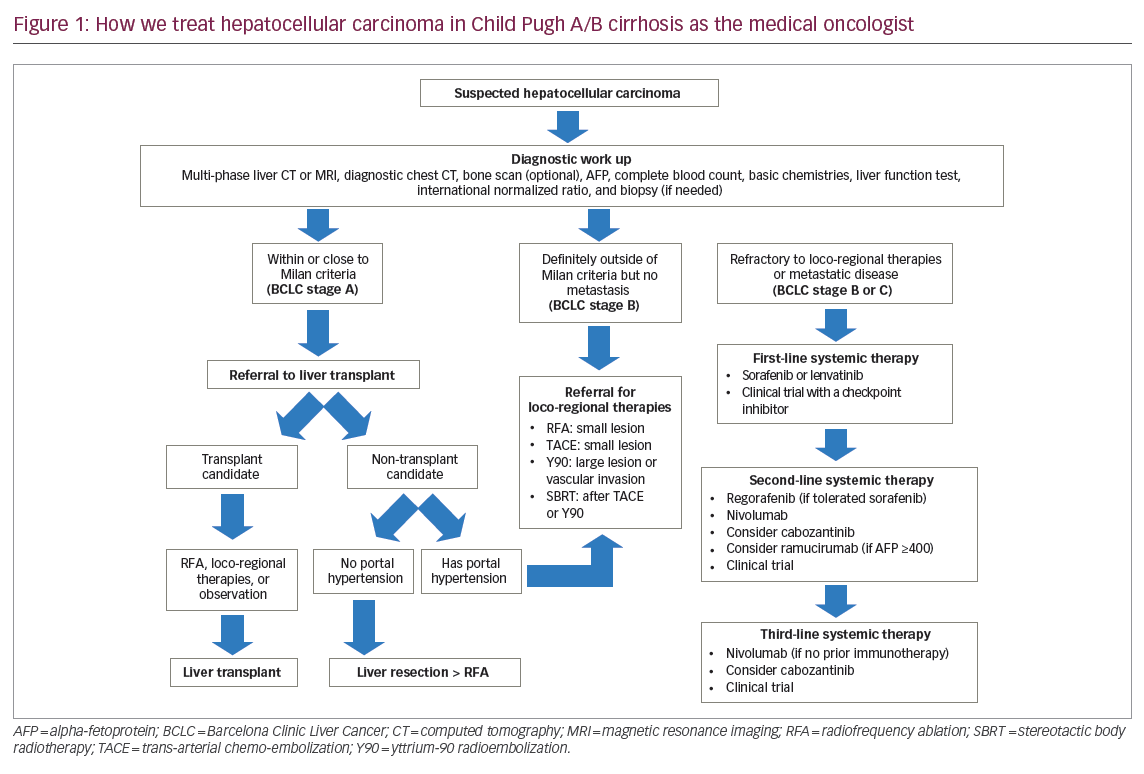
Liver cancer has contributed to an annual 30,200 deaths in the US so far in 2018.1 An overwhelming majority is due to hepatocellular carcinoma (HCC) in the setting of advanced liver disease.2 While chronic hepatitis C and alcoholic liver disease traditionally have been the most common etiologies of cirrhosis in the US, the prevalence of […]

Esophageal cancer remains a devastating malignancy with an anticipated 15,850 deaths out of 17,290 new cases in the US in 2018.1 Forty percent of patients with esophageal cancer are diagnosed with metastatic disease and carry an even more dismal prognosis, with 5-year survival rates of <5%.1 The two predominant esophageal cancer histologic subtypes, comprising over […]

Trending Topic
Esophageal cancer (EC) is a major global health concern, ranking as the 11th most commonly diagnosed cancer and the seventh leading cause of cancer-related deaths worldwide, with an estimated 494,320 new cases and 441,994 deaths in 2024.1 Esophageal squamous cell carcinoma (ESCC) remains the predominant subtype globally (84% of new cases), while esophageal adenocarcinoma (EAC) […]
Journal Archive



Log into your Touch Account
Keep track of your clinical interests and newsletter subscriptions.
Sign up with an Email
Or use a .
Register now for FREE access
Already registered? Login below.