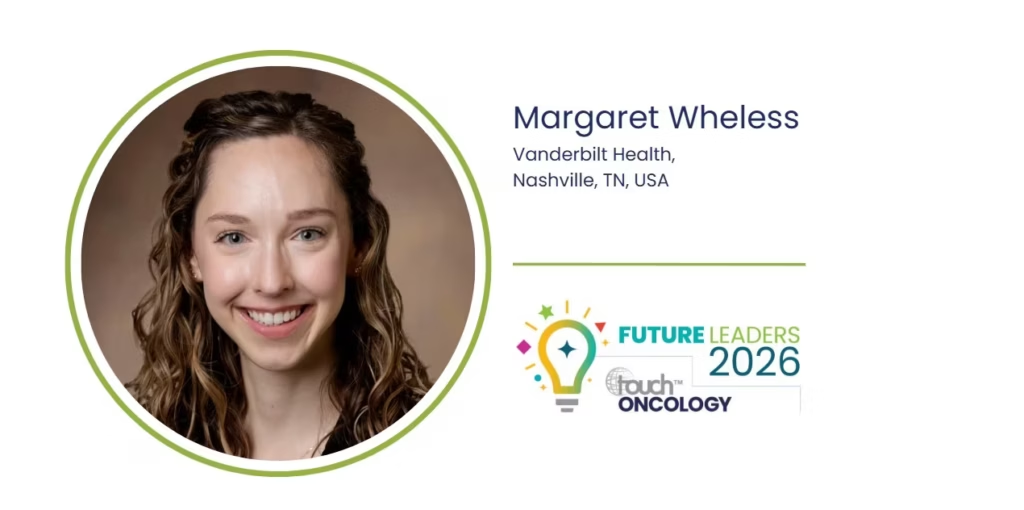
We are delighted to announce Dr Margaret Wheless as a touchONCOLOGY Future Leader 2026, selected by her peers as a rising star poised to shape the future of gastrointestinal and haematology oncology.
Dr Margaret Wheless is in the last year of her clinical haematology oncology fellowship at Vanderbilt Health and will join the faculty at the University of Colorado as a gastrointestinal (GI) medical oncologist in the fall of 2026. Her research focus during fellowship has been in GI cancers, including clinical trial design and incorporating novel treatments and combination therapies to improve outcomes for people with GI malignances. She enjoys partnering with translational scientists to develop a strong rationale for novel treatments that can be pursued in the clinical setting. Margaret also focuses on cancer related symptoms and quality of life in patients with GI malignancies to improve and inform supportive and end-of-life care.
In this Future Leaders interview, Margaret Wheless reflects on the mentors who shaped her career, the fulfillment she finds in patient care and teaching, and the importance of empathy, collaboration, and intentional mentorship for emerging oncologists.

“The privilege of walking alongside patients through their most defining moments is profoundly humbling and rewarding”
Q: Can you tell us about mentors who significantly impacted your career, and the most valuable lesson they have shared with you?
I have been extraordinarily fortunate throughout my training to be guided by mentors who have shaped my career trajectory in GI oncology and my identity as an academic physician. Each has taught distinct lessons that collectively inform my commitment to patient-centered, research-driven, and thoughtful academic practice.
Dr Kristen Ciombor, a nationally recognized leader in colorectal cancer, has modeled intentional and successful mentorship through consistent, structured meetings and deliberate engagement in research projects at various stages to ensure I gained broad experience through my training. From her, I learned the value and importance of effective mentorship and hope to model that mentorship in my career by making space for creativity and growth in others. Dr Mike Gibson, an MD/PhD with a commitment to bridging translational and clinical science, uses his background to incorporate translational research in the clinical setting. He emphasizes the value of true collaboration between clinicians and scientists and introduced me to my physician scientist mentor, Dr Yash Choksi, whose lab welcomed me as a partner and collaborator. That experience profoundly shaped my understanding of bidirectional research and the importance of bridging scientific discovery with clinical application. My clinical mentor, Dr Rajiv Agarwal, integrates oncology and palliative care in a way that has allowed me to reframe how I think about patients’ treatment course. He has taught me how to partner with patients when making clinical decisions to include their goals and values, prioritize quality of life, and thoughtfully incorporate these outcomes in research design. From him, I learned that excellence in oncology extends to encompass whole-person care.
Finally, my father who is also a physician, has been a constant source of encouragement and mentorship throughout my life. He has instilled in me the courage to pursue unfamiliar or challenging opportunities and view them as a catalyst for growth. His example has reinforced the importance of humility, resilience, and lifelong learning. Together, these mentors have played a vital part in the physician I am today by providing nuanced and collaborative mentorship. As I advance in my career, I hope to embody the same intentionality, intellectual curiosity, and generosity that they have shown me.
Q: What aspects of your work do you find the most fulfilling?
One of the aspects I find most fulfilling about my work is the intersection of education, mentorship, and patient care within academic medicine. Training in an academic center has allowed me the privilege of learning from incredible physicians who dedicated their time and expertise to my development. As those who have been through medical training understand, a great teacher can fundamentally transform the experience of training. Not only do they cultivate curiosity, but they also teach how to think critically, integrate evidence into clinical decision making, and build confidence in making complex decisions. As I have gone through training, I find passing knowledge down through dedicating time to teaching and molding professional identities very rewarding.
An equally fulfilling aspect of my work is caring for patients. In oncology, we are invited into patients’ lives during what may be their most difficult, defining, or vulnerable moment. Walking alongside individuals through serious illness – through their resilience and confrontation with mortality, through discovering what matters most to them, and by building a treatment plan incorporating all these factors so patients can live longer and live well is profoundly humbling and rewarding.
Q: What advice would you offer to those just beginning their journey in your specialty?
To those beginning their journey in oncology, I would first encourage you to protect your empathy. The work can be emotionally demanding and over time it is easy to become guarded in the face of suffering and loss. The ability to remain compassionate is one of the most important qualities an oncologist can foster through their career. The privilege of caring for patients through serious illness, advancing research that hopefully expands treatment options, and ultimately seeing research discoveries make their way into clinical trials to improve outcomes is profoundly rewarding.
The last piece of advice is to pursue mentorship intentionally. Find mentors you respect not only for their accomplishments, but also for their character. Once you find them, fully commit to the relationship. The mentee-mentor partnership is a two-way investment that can thrive when both are successfully engaged, communicative, and mutually accountable. When approached with purpose and dedication, these relationships can not only shape your career trajectory, but also the kind of physician and future colleague you become.
Disclosures: This short article was prepared by touchONCOLOGY in collaboration with Dr Wheless. No fees or funding were associated with its publication.
Citation: Dr Margaret Wheless on empathy, guidance and the rewards of academic oncology: touchONCOLOGY Future Leaders 2026. touchONCOLOGY. 14th April 2026.
Register now to receive the touchONCOLOGY newsletter!
Don’t miss out on hearing about our latest peer reviewed articles, expert opinions, conference news, podcasts and more.