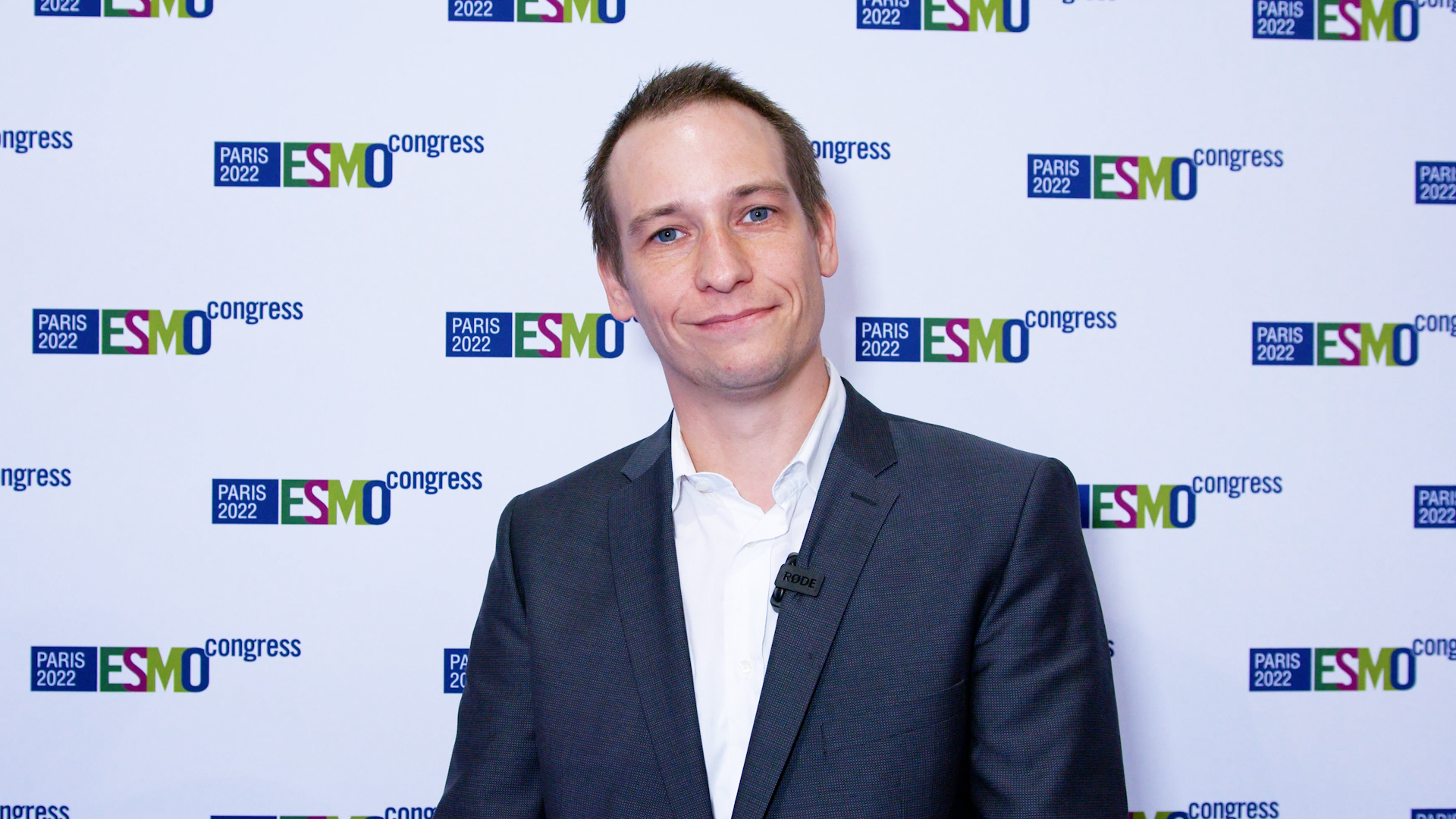

The KEYNOTE-905 study addresses a critical unmet need in muscle-invasive bladder cancer (MIBC). Results were presented as a Presidential late-breaker at the European Society for Medical Oncology (ESMO) 2025 congress by Prof Christof Vulsteke (Head, Integrated Cancer Centre Ghent, Ghent University Hospital, Belgium).
For patients ineligible for cisplatin-based chemotherapy due to frailty, comorbidities or renal impairment, standard upfront surgery often leads to recurrence and poor five-year outcomes. The phase III KEYNOTE-905 trial tested perioperative enfortumab vedotin plus pembrolizumab in a randomized three-arm design, demonstrating significant event-free and overall survival benefits, with a notable proportion of patients achieving complete pathological response. These results may reshape future treatment algorithms and enable surgery-free approaches for eligible patients.
The Presidential Late-breaking Abstract, ‘Perioperative (periop) enfortumab vedotin (EV) plus pembrolizumab (pembro) in participants (pts) with muscle-invasive bladder cancer (MIBC) who are cisplatin-ineligible: The phase 3 KEYNOTE-905 study’ (LBA2) was presented at the European Society for Medical Oncology (ESMO) congress on 17th-21st October 2025 in Berlin, Germany.
Q1. For patients with MIBC who are ineligible for cisplatin-based chemotherapy, what are the main limitations of current treatments, and how did this shape the rationale for KEYNOTE-905?
Patients who are ineligible for cisplatin typically present with multiple comorbidities and frailty, including renal impairment, cardiovascular disease, poor performance status and hearing deficits. Standard chemotherapy is often not feasible, leaving upfront surgery as the primary option. Unfortunately, surgery alone carries a high recurrence rate – up to 70% – and poor five-year survival. This unmet medical need motivated the design of KEYNOTE-905, aiming to explore effective perioperative systemic therapy for this vulnerable population.
Q2. Could you walk us through the trial design and key inclusion criteria for the KEYNOTE-905 trial?
KEYNOTE-905 initially enrolled cisplatin-ineligible patients, later expanding in 2022 to include patients who declined neoadjuvant chemotherapy, given its modest benefit of roughly 5%. Eligible patients had clinical stage cT2–T4a, N0–N1 disease, with centrally reviewed pathology and imaging to ensure rigorous staging.
The trial featured three arms: the control arm received upfront surgery followed by observation; the pembrolizumab monotherapy arm was stopped in 2022 due to evolving standards; and the experimental arm combined three cycles of enfortumab vedotin pre-surgery, six cycles post-surgery and one year of pembrolizumab. The data presented focused on the comparison between the control and this perioperative combination arm.
Q3. What were the primary and key secondary endpoints, and key results from the KEYNOTE-905 trial?
The primary endpoint was event-free survival (EFS), defined as recurrence post-surgery, progression precluding surgery, persistent MIBC in patients opting out of surgery, or unresectable disease at surgery. At two years, 75% of patients in the experimental arm were event-free, versus 39% in the control arm, translating to a hazard ratio of 0.4.
The key secondary endpoint, overall survival (OS), was also met, with 80% alive at two years in the experimental arm compared with 63% in the control arm, hazard ratio 0.5. Notably, 57% of patients in the experimental arm achieved a complete pathological response, with no detectable cancer at surgery, highlighting the potential for bladder preservation strategies in future trials.
Q4. What were the safety and tolerability findings, and were there any notable toxicities?
Overall, the combination of perioperative enfortumab vedotin plus pembrolizumab was well tolerated. Most adverse events were consistent with the known profiles of the individual agents. Most common side effects included anaemia, pruritus, hair loss, fatigue and gastro-intestinal symptoms, but were mostly mild, while immune-related events such as thyroid dysfunction or mild pneumonitis were also observed but manageable with standard interventions.
Toxicities of special interest related to enfortumab vedotin were primarily peripheral neuropathy and skin toxicities, also mostly mild but occasionally requiring dose adjustments or treatment delays. Importantly, surgical outcomes were not adversely affected, supporting the feasibility of perioperative therapy in this patient population. Overall, the safety profile was considered manageable and acceptable, balancing efficacy with tolerability for cisplatin-ineligible MIBC patients.
Q5. How do you envision perioperative enfortumab vedotin plus pembrolizumab integrating into future treatment algorithms for MIBC?
While it is early to declare a new standard, these results represent a substantial advance for cisplatin-ineligible patients. For this population, perioperative enfortumab vedotin plus pembrolizumab should be considered. Looking forward, ongoing studies in cisplatin-eligible patients may expand applicability. The trial also opens the door to surgery-free approaches, a promising concept for select patient populations in future research.
Disclosure: Christof Vulsteke discloses consultancy for Merck, Janssens Cilag, GSK, Astellas, BMS, Leo Pharma, Bayer, Astrazeneca and Pfizer.
This content has been developed independently by Touch Medical Media for touchONCOLOGY. It is not affiliated with the European Society for Medical Oncology (ESMO). Views expressed are the speaker’s own and do not necessarily reflect the views of Touch Medical Media.
Cite: ESMO25 Presidential Late-breaker: KEYNOTE-905 delivers breakthrough results in cisplatin-ineligible MIBC. touchONCOLOGY. October 22nd, 2025
Related content
- ESMO25 BladderPath: Early MRI cuts time-to-treatment and relapse risk in muscle-invasive bladder cancer
- Introducing the touchONCOLOGY Future Leaders 2025
- #ASCO25 highlights: Q&A with Prof Dickon Hayne: Can mitomycin boost BCG in high-risk NMIBC?