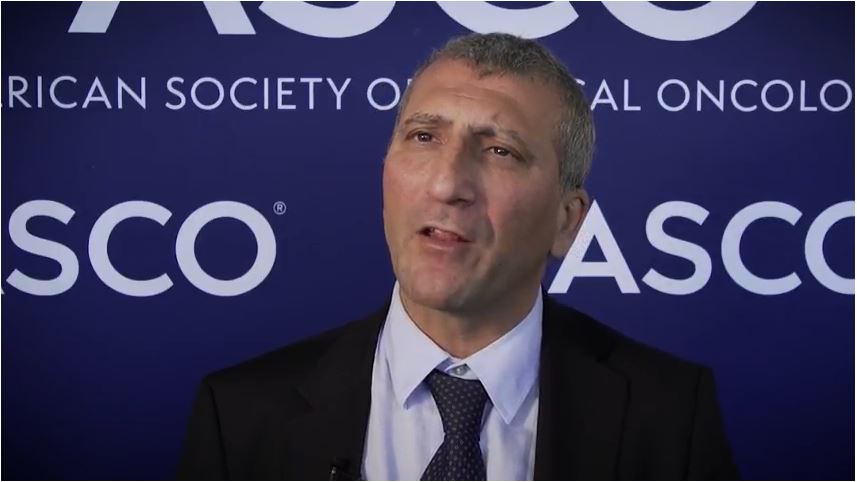

Prof Axel S Merseburger (University Hospital Schleswig-Holstein, Germany)
From adjuvant immunotherapy to microbiome-driven precision medicine, the biggest renal cell carcinoma abstracts presented at the 2026 American Society of Clinical Oncology (ASCO) Annual Meeting in Chicago highlight where the field is heading next, and what may change first. In this round-up, we discuss the key data from four of the meeting’s most important studies, from investigational to late-phase: RAMPART, KEYNOTE-564, CaboNivo in patients with nccRCC and microbiome-based predictive biomarker development in mRCC.
touchONCOLOGY coverage of ASCO 2026
RAMPART
→ LBA4511: Larkin JM, Powles T, Frangou E, et al. Durvalumab monotherapy versus active monitoring for resected primary renal cell carcinoma in RAMPART: An international, phase 3, randomized controlled trial. Presented at: ASCO, Chicago, IL, USA. May 29 to June 2, 2026
The phase 3 RAMPART trial evaluated one year of adjuvant durvalumab versus active monitoring in patients with intermediate- or high-risk RCC following nephrectomy, or after complete resection of limited metastatic disease (M1 NED). Between October 2018 and June 2023, 790 patients were randomised across three arms. In the durvalumab monotherapy arm (n=225), treatment was associated with a 26% relative reduction in the hazard of disease recurrence or death compared with active monitoring (DFS HR = 0.74; 95% CI 0.53–1.04; 1p=0.041), although the prespecified threshold for conventional statistical significance was not met. Disease-free survival at 3 years was 78% versus 72%, respectively. No evidence of treatment-by-risk subgroup interaction was observed.
Key clinical takeaways
These findings suggest single-agent durvalumab may have potential in the adjuvant setting, but the lack of statistical significance limits interpretation. Importantly, this contrasts with the previously reported positive disease-free survival result for durvalumab plus tremelimumab within the same trial, suggesting that dual checkpoint inhibition may be required to achieve a measurable adjuvant benefit. At present, these data are unlikely to alter standard adjuvant practice but contribute to the broader discussion around optimal perioperative immunotherapy intensity.
KEYNOTE-564
→ Abstract 4502: Choueiri TK, Tomczak P, Haas NB, et al. ctDNA analysis in participants with renal cell carcinoma treated with adjuvant pembrolizumab or placebo in the KEYNOTE-564 trial. Presented at: ASCO, Chicago, IL, USA. May 29 to June 2, 2026
A translational analysis from the phase 3 KEYNOTE-564 trial assessed ctDNA dynamics in patients receiving adjuvant pembrolizumab or placebo after nephrectomy for clear cell RCC. Of 994 randomised patients, baseline ctDNA was analysed in 736 using both 16-plex and 64-plex Signatera assays. ctDNA positivity at baseline was low—5.4% with the 16-plex assay and 8.2% with the 64-plex assay—but was associated with worse disease-free survival across both treatment arms (P’s < 0.05). ctDNA clearance by cycle 5 day 1 occurred in 6 of 10 patients receiving pembrolizumab versus 3 of 14 receiving placebo (16-plex), and 10 of 18 versus 9 of 25, respectively (64-plex).
Key clinical takeaways
The analysis reinforces ctDNA positivity as a prognostic marker for recurrence risk in RCC, but also highlights important technical limitations. Sensitivity remained low despite the use of a higher-sensitivity assay, meaning many patients who recurred were ctDNA-negative at baseline. This limits immediate clinical applicability for treatment selection or de-escalation. For now, ctDNA remains investigational in RCC, and its role may depend on improved assay performance or integration with clinicopathologic risk models.
CaboNivo in non–clear cell RCC
→ Abstract 4521: Feldman DR, Voss MH, Carlo C, et al. Final results of a phase 2 trial of cabozantinib plus nivolumab (CaboNivo) in patients with non–clear cell renal cell carcinoma (nccRCC). Presented at: ASCO, Chicago, IL, USA. May 29 to June 2, 2026
Final results from this phase 2 study of cabozantinib plus nivolumab in advanced nccRCC included 60 patients, with 53 evaluable in the efficacy cohort comprising papillary, unclassified, FH-deficient, and translocation-associated RCC. The objective response rate (ORR) was 43% (95% CI 30–58), with particularly high activity in FH-deficient RCC, where ORR reached 88%. Median progression-free survival was 11 months (95% CI 8–14), and median overall survival was 28 months (95% CI 21–37), after a median follow-up of 50 months for survivors. In chromophobe RCC (n=7), no objective responses were observed, although five patients achieved stable disease.
Key clinical takeaways
These longer-term data support cabozantinib plus nivolumab as an active regimen across several nccRCC subtypes, particularly papillary and FH-deficient disease, where prospective data remain limited. The differential activity by histology is notable, especially the lack of objective responses in chromophobe RCC, reinforcing the biological heterogeneity of nccRCC. These findings support histology-specific treatment considerations and may strengthen the case for CaboNivo as a reference option in selected nccRCC populations.
CBM588 and microbial dysbiosis
→ Abstract 4519: Winayak R, Qi X, Moradi A, et al. Microbial dysbiosis as predictor of benefit from CBM588 as an adjunct to immune checkpoint blockade (ICB)–based first line therapies in metastatic renal cell carcinoma (mRCC). Presented at: ASCO, Chicago, IL, USA. May 29 to June 2, 2026
This pooled analysis examined whether baseline gut microbial dysbiosis influenced outcomes with the live biotherapeutic CBM588 when added to first-line immune checkpoint inhibitor-based therapy. Fifty-nine treatment-naïve patients with metastatic RCC were included. ORR was 66.7% in the SOC+CBM588 arm versus 20.0% in the SOC arm (p = 0.001), while median PFS was 32.1 months (95% CI 16.6-NR) versus 3.7 months (95% CI 2.6-17.0), respectively (HR 0.36 [95% CI 0.19, 0.67], p = 0.001). In patients with a dysbiotic stool phenotype (SIG1+), median PFS was 24.9 versus 2.8 months (HR 0.19 [95% CI 0.07-0.53], p < 0.001).
Key clinical takeaways
These data provide further hypothesis-generating evidence that microbiome composition may influence immunotherapy outcomes in RCC and that microbiome-targeted interventions could enhance efficacy in selected patients. However, the analysis is based on small phase I cohorts and pooled exploratory biomarker data, which limits generalisability. The ongoing phase III BIOFRONT study will be important in determining whether CBM588 has reproducible clinical benefit and whether TOPOSCORE can be validated as a predictive biomarker.
This content has been developed independently by Touch Medical Media for touchONCOLOGY. This article was created by the editorial team utilizing AI as an editorial tool (ChatGPT 5.5 [Large language model]. https://chat.openai.com/chat.) The content was developed and edited by human editors. No funding was received in the publication of this article.
Cite: Kidney cancer at ASCO 2026: The studies redefining the field. touchONCOLOGY. 17th June 2026.
Editor: Sophie Nickelson.
Already registered? Login below.