“From diet to stress management, everyday choices shape long-term cancer prevention”
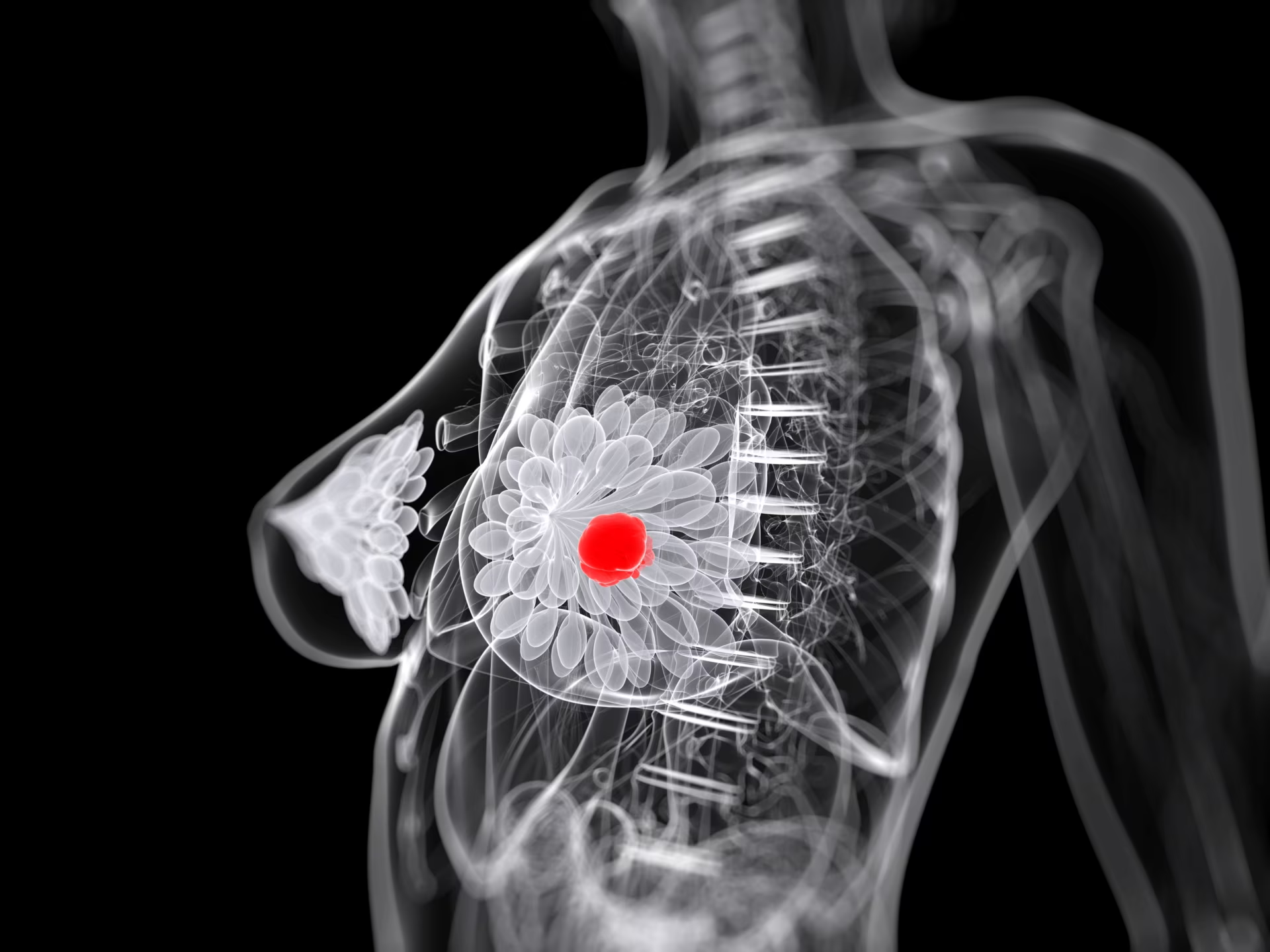
Cancer is a leading cause of death worldwide, accounting for nearly 10 million deaths in 2020 or nearly one in six deaths.1 There are some cancers that are more common than others, including breast, lung, colon, rectum, and prostate cancers.1 Cancer is a chronic disease state that has various outcomes including cure, remission, recurrence, progression, and death. The defining feature of cancer is the uncontrolled proliferation and growth of abnormal cells.1,2
There are some deaths from cancers due to tobacco use, high body mass index, alcohol consumption, low fruit and vegetable intake and lack of physical activity.3 There are even cancer-causing infections that exist, which include human papillomavirus (HPV) and hepatitis.3 As one might gain fear from reading those statistics, it is shown that 100% of these habits are modifiable and preventable.3
Just as with any disease state you think about prevention and what measures can be taken to avoid certain outcomes. The longevity habits for cancer prevention ultimately can fall under having a healthy lifestyle. A healthy lifestyle includes the 6 pillars of lifestyle medicine:5
- Healthy eating
- Physical activity
- Avoidance of risky substances
- Stress management and good mental health
- Restorative sleep
- Positive family and social connections
The concept of Blue Zones originates from demographic research identifying regions where individuals live longer and healthier lives. The article by Kucuk and Master (2024) discusses the importance and the role of physical activity, diet and lifestyle in promoting longevity and preventing chronic diseases such as cancer.4 This article highlights that physical activity has a strong inverse association with all-cause mortality, and when combined with a healthy diet it significantly contributes to longer life expectancy.2,4 Historically, the importance of exercise has long been recognized, even Hippocrates incorporated exercise over 2,000 years ago, showing that movement has always been tied to health and aging well. The Blue Zones Project which was developed by Dan Buettner in partnership with the National Geographic Society to analyze cultural and lifestyle traits to reveal patterns that contributed to longevity and an exceptional lifespan. The Blue Zones Model demonstrates sustainable habits which form a biological and social foundation for healthy aging and extended life expectancy.2,4
The components of a healthy lifestyle from longevity include regular physical exercise, plant-based nutrition, stress reduction and strong connection which will together result in healthy aging and disease prevention.
There’s a growing body of evidence showing that a significant proportion of cancer risk is modifiable through lifestyle choices. Specifically, strategic interventions in nutrition, physical activity and the broader environmental and social context can substantially contribute to cancer prevention and support healthier aging.
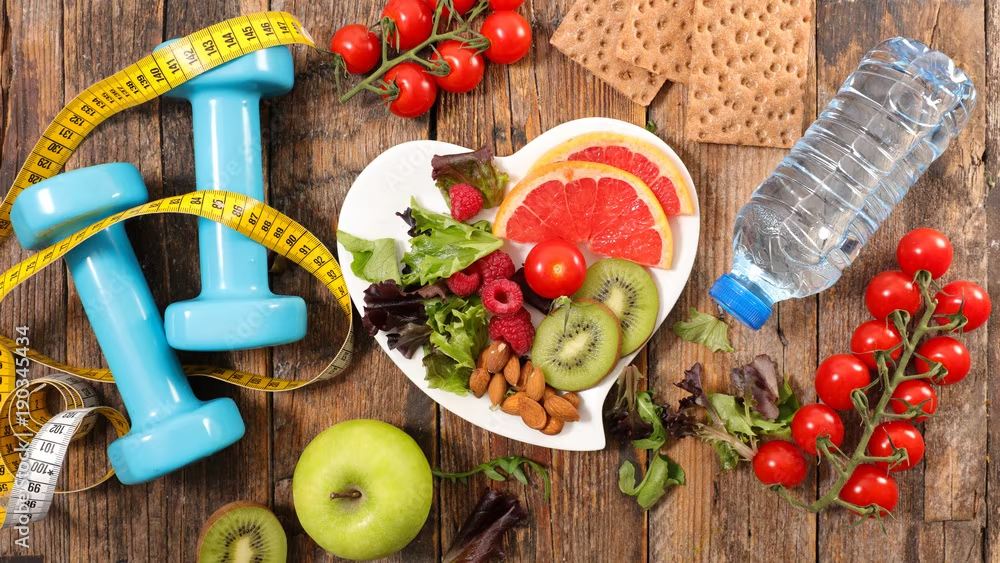
Nutrition plays a foundational role, with the Mediterranean diet (MedDiet) emerging as a particularly effective model.5 This dietary pattern, rich in fruits, vegetables, legumes, whole grains and olive oil, with limited red and processed meats, is inversely associated with the risk of numerous cancers.5 The protective mechanisms work in several distinct biological ways at the same time. Components of the MedDiet, such as unsaturated fats and polyphenols from olive oil and nuts, possess potent antioxidant and anti-inflammatory properties, countering the oxidative stress and chronic inflammation that are intertwined with cancer pathogenesis. Furthermore, this diet favorably modulates the GI microbiome, increasing the production of protective short-chain fatty acids and reducing pro-inflammatory cytokines, which is especially beneficial for preventing gastrointestinal cancers.2 The emphasis on plant-based foods, a common thread in longevity “Blue Zones,” further supports this approach, as such diets are linked to favorable epigenetic changes and reduced inflammation.6
In addition to nutrition, physical activity is a powerful, independent factor in reducing cancer risk and all-cause mortality. Regular exercise helps maintain muscle mass, which is important for metabolic health and preventing sarcopenia and frailty in later life, conditions that can exacerbate health decline.4 The benefits extend to the cellular level, where physical activity has been shown to improve endothelial function and increase total antioxidant capacity, thereby decelerating processes like atherosclerosis that are linked to a higher risk of chronic diseases Moreover, physical activity is a key tool in preventing overweight and obesity, which are themselves significant risk factors for several cancers.4,6
Beyond diet and exercise, broader environmental and social factors are critical. The Blue Zones model highlights that a supportive environment and strong social connections are pillars of longevity. Principles such as “keep strong family ties,” “stimulate strong community support,” and “have a purpose in life” contribute to lower stress levels and better mental health. Chronic psychological stress can lead to hypercortisolemia, which promotes inflammation, insulin resistance, and obesity that can also increase cancer risk. Therefore, stress management through mind-body practices, restorative sleep, and fostering positive social relationships is an essential, though often overlooked, component of cancer prevention.4,6
In conclusion, cancer prevention is not attributable to a single intervention, but on a synergistic combination of lifestyle factors. Adopting an anti-inflammatory diet like the MedDiet, engaging in regular physical activity to maintain metabolic and muscular health, and cultivating a low-stress environment rich in social support create a powerful, multi-faceted defense against cancer and pave the way for healthy aging.
References
- Cohen, M. (2022). Integrative medicine considerations in cancer survivorship care. Journal of Evidence-Based Integrative Medicine, 27, 15598276221118494. https://doi.org/10.1177/15598276221118494
- Monllor-Tormos, A., García-Vigara, A., Morgan, O., García-Perez, M.-Á., Mendoza, N., Tarín, J. J., & Cano, A. (2023). Mediterranean diet for cancer prevention and survivorship. Maturitas, 178, 107841. https://doi.org/10.1016/j.maturitas.2023.107841
- World Health Organization. (2024, February1). Cancer. https://www.who.int/news-room/fact-sheets/detail/cancer
- Kucuk, O., & Master, V. A. (2024). Recommendations for healthy lifestyle for cancer prevention and healthy aging. Journal of Cancer Prevention, 29(3), 55–57. https://doi.org/10.15430/JCP.24.018
- Buettner D. The Blue Zones: Lessons for Living Longer From the People Who’ve Lived the Longest. National Geographic; 2010.
- Kreouzi, M., Theodorakis, N., & Constantinou, C. (2022). Lessons learned from Blue Zones, lifestyle medicine pillars and beyond: An update on the contributions of behavior and genetics to wellbeing and longevity. American Journal of Lifestyle Medicine. https://doi.org/10.1177/15598276221118494
Disclosures: Sonia Thomas, Jaelyn Benyard and Soloman Agyemang have no financial or non-financial conflicts of interest to declare in relation to this article.
Cite: Longevity habits for cancer prevention. touchONCOLOGY. November 20th, 2025
Related content
- ESMO25 breast cancer round-up: What’s new and what matters?
- ESMO25 Late-breaker: VIKTORIA-1 triplet and doublet combinations improve PFS in HR+/HER2– PIK3CA wild-type breast cancer
- ESMO25: Five-year NATALEE trial data confirm lasting benefit with adjuvant ribociclib in HR+/HER2− early breast cancer