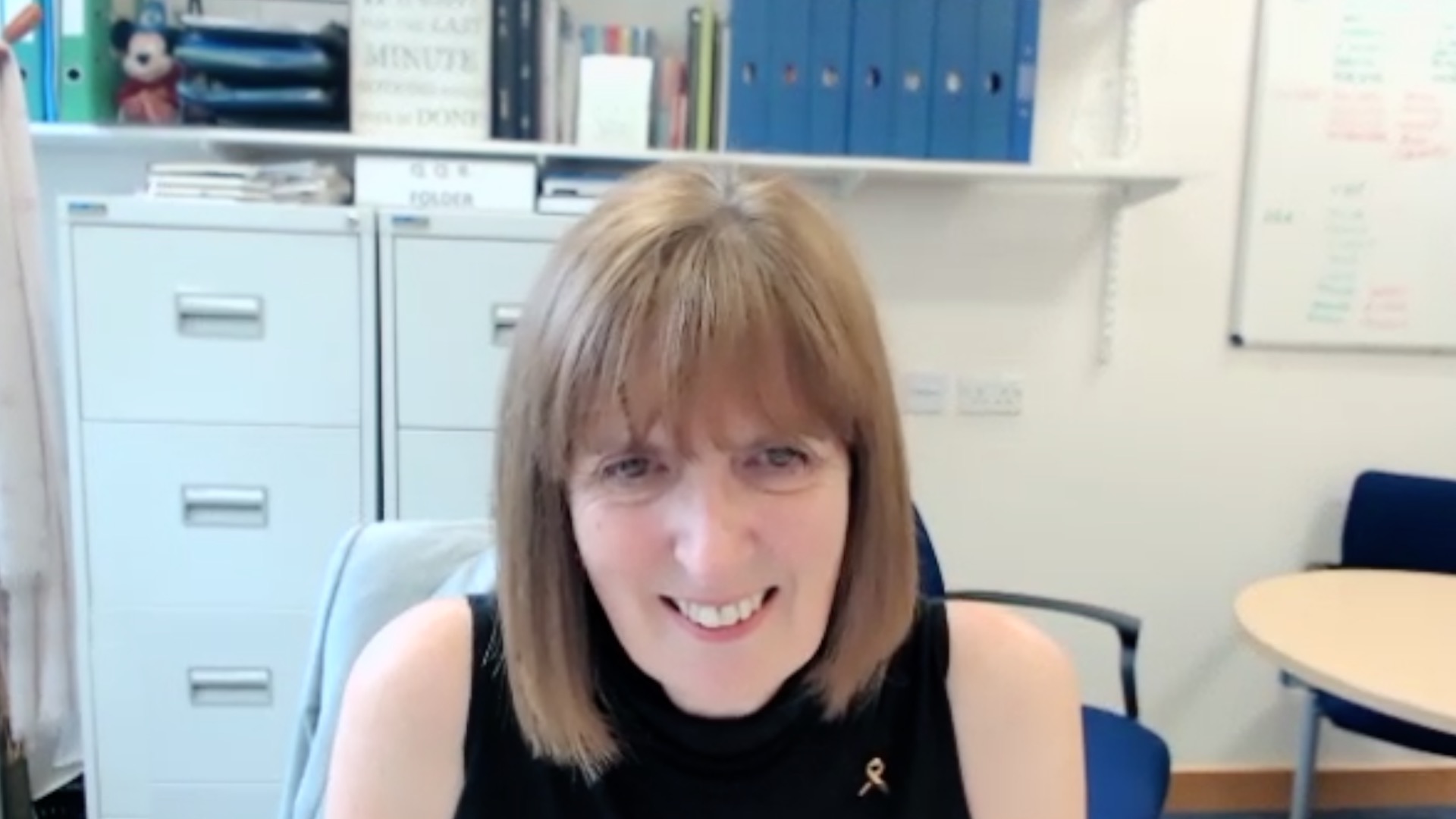
 Professor Pamela Kearns discusses the key points from her Plenary presentation on how the ITCC is expanding access to innovative therapies, harnessing precision data and reshaping Europe’s paediatric oncology clinical trial landscape.

At the 7th SIOP Europe Annual Meeting, Professor Pamela Kearns (Emeritus Professor of Paediatric Oncology, University of Birmingham, UK and President, Innovative Therapies for Children and Adolescents with Cancer [ITCC]) discusses how the ITCC consortium is reshaping access to cutting-edge treatments for children and adolescents across Europe and beyond. Prof Kearns leads a network spanning dozens of specialist centres, working to accelerate clinical trials, embed precision medicine and reduce inequities in access to innovation.
touchONCOLOGY coverage of SIOP Europe 2026
As President of ITCC, what are the consortium’s main priorities, and how does collaboration translate into real-world access to innovative trials for children and adolescents?
The mission of ITCC is to advance innovative therapies for children and young people with cancer. We’re a consortium of 69 specialist paediatric oncology centres across 18 European countries, with collaborations extending to Australia, New Zealand, Japan and the USA. Our focus is delivering innovation through well-conducted clinical trials, both academically driven and in partnership with industry. That allows us to bring promising therapies from academic laboratories or industry-led drug development pipelines into trials that children with the greatest need can actually access.
Personalised medicine is central to ITCC’s work. How are you advancing biomarker-driven and targeted therapies, and which current initiatives best illustrate that progress?
Precision cancer medicine has become a major focus. Across Europe, national programmes are already profiling the molecular characteristics of childhood cancers, but they vary significantly in scope and depth. At ITCC, we’re working to bring these efforts together through the ITCC paediatric cancer data portal, from a Dietmar Hopp foundation-funded initiative. The aim is to integrate molecular and clinical data into a federated system that can be analysed across borders. It’s a very exciting resource that will fundamentally improve how we understand these diseases.
Access to early-phase trials and novel treatments remains uneven across Europe. How is ITCC addressing these disparities between countries and centres?
Geographical disparity is a real challenge. Early phase trials require specialist expertise, so they cannot realistically be opened in every treatment centre. Our Patient Access to Innovation programme brings together clinicians and patient advocates to address this. We’re mapping where trials should be delivered at a national level, and reviewing whether trial eligibility criteria are as inclusive as safely possible. We’re also working on decentralising aspects of trial delivery, bringing elements such as blood tests or follow-up closer to home, and using digital tools like video consultations for safety monitoring. This work is being done internationally, including with partners in North America and Australia, through collaboration with organisations such as ACCELERATE. Finally, we are addressing cross-border access. Current EU legislation allows patients to travel for healthcare, but not for clinical trials. We are working with European partners to explore how regulatory mechanisms could be adapted so children could access trials abroad with appropriate reimbursement.
What are the most important implications of the new EU pharmaceutical regulation for pediatric oncology research and drug development?
It is potentially transformative. Historically, incentives for paediatric drug development have not been sufficient, particularly in oncology where adult markets dominate industry priorities. The new regulation shifts focus from disease-specific indications to molecular mechanisms. If a drug targets a pathway relevant to a childhood cancer, there may now be an obligation to conduct paediatric investigation. That is a major change. It also strengthens engagement with expert networks. ITCC is already part of the EMA expert ecosystem and European research infrastructures, so we are well placed to provide guidance. Importantly, we also bring patient advocates into that dialogue, which strengthens the relevance of regulatory decisions.
Looking ahead, how do you see pediatric oncology research and treatment options evolving over the next decade?
We’ve already seen the impact of targeted therapies, but the next major shift is immunotherapy. We are beginning to understand how to harness the immune system in childhood cancers, including cellular therapies like CAR-T, antibody–drug conjugates and next-generation immune modulators. Cancer vaccines are also an emerging frontier; still early, but increasingly realistic. In time, we may even move toward prevention strategies for certain childhood cancers. That remains some way off, but the direction of travel is becoming clearer.
This content has been developed independently by Touch Medical Media for touchONCOLOGY in collaboration with SIOP Europe and Professor Kearns. Views expressed are the speaker’s own and do not necessarily reflect the views of Touch Medical Media.
Disclosure: Pamela Kearns is a member of the Paediatric Oncology Development Team Steering Committee for Astra Zeneca.
Cite: Beyond borders: How ITCC is accelerating paediatric cancer trials across Europe. touchONCOLOGY. 12th May 2026.
Interviewer: Caroline Markham