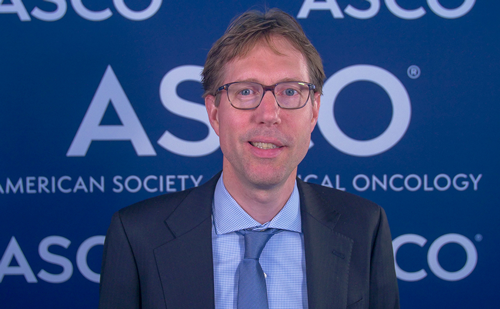
Putting families and survivors at the centre of Europe’s evolving childhood cancer agenda. Psychosocial care, equity and survivor voices are defining the next era in paediatric oncology.
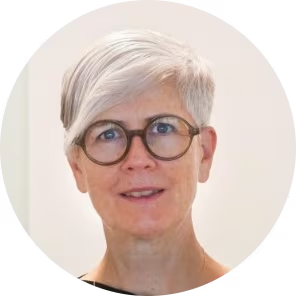
At the 16th CCI Europe Conference, held alongside the 7th SIOP Europe Annual Meeting, Anita Kienesberger (Chair, Childhood Cancer International Europe [CCI Europe]), discusses the evolving landscape of paediatric oncology advocacy. She shares insights on the critical importance of psychosocial support, the necessity of collaborative research and the ongoing challenge of health inequalities across Europe. As CCI Europe transitions into an independent legal entity, Anita Kienesberger highlights the organisation’s strategic shift toward empowering survivors and standardising long-term care.
touchONCOLOGY coverage of SIOP Europe 2026
From a patient and parent perspective, what are the key themes at this year’s meeting?
Each year, the programme evolves based on what our members tell us they need most. We actively involve them in shaping the agenda, and this year there has been a particularly strong focus on psychosocial care. Families are looking for more structured, meaningful support throughout the entire cancer journey, from diagnosis through treatment and into long-term follow-up.
Another major theme is organisational: CCI Europe is transitioning into an independent legal entity. For our members, it’s important to understand what that means in practice; how we will operate, where we are in the process and how they can contribute. Alongside this, we’ve developed a new set of strategic objectives. For the first time, these are clearly defined and visible, reflecting both our growth as an organisation and the feedback we gathered directly from our community.
Survivorship is also central. Around 30% of attendees from CCI Europe at the conference are survivors, and their needs are increasingly shaping the agenda. Living beyond childhood cancer brings complex long-term challenges, particularly late effects, and there is a strong emphasis on improving long-term follow-up care and quality of life.
How does collaboration with SIOP Europe help ensure that patient voices are meaningfully integrated?
Collaboration is essential. Childhood cancer cannot be addressed in silos. What makes this partnership work is a genuine commitment, particularly from clinical leaders, to engage with patients and families, not just speak on their behalf. Historically, CCI Europe organised its own meetings and invited clinicians to contribute. Over time, this evolved into a true partnership, with joint meetings and shared goals. Today, this collaboration enables open dialogue on research, clinical trials and care pathways. We are aligned in what we want to achieve and that shared purpose, improving outcomes for children, makes this a very strong and productive relationship.
What are the biggest challenges in addressing inequalities across Europe?
Inequality remains one of the most pressing issues. Survival rates vary significantly between regions, particularly between Western and Eastern Europe, and the reasons are complex.
Access is not just about having the right drugs available. It includes how healthcare systems are organised, the number and distribution of treatment centres and broader political and structural factors. In some cases, having too many centres can actually dilute expertise and create disparities in care quality. We’ve worked closely with international organisations to map these gaps and understand where interventions are needed. Advocacy plays a key role here. Parents and survivors can be powerful voices in pushing for change, especially when it comes to ensuring that healthcare systems are designed around patient needs, not institutional convenience.
Looking ahead, what are CCI Europe’s top priorities?
First, we need a better understanding of existing data; why disparities persist and how to address them. Second, there is a growing recognition of the importance of specialised, high-quality centres of care, although this remains a sensitive and politically complex issue. Equally important is the development of standards for psychosocial care, ensuring that support is not optional but embedded in treatment pathways. Initiatives like the EU-funded projects we’re involved in are helping to move this forward. Ultimately, while improving survival remains crucial, the focus is shifting. Most children now survive cancer, but many live with significant long-term effects. Our priority is to improve quality of life; reducing late effects through better treatments and ensuring survivors receive the care and support they need throughout their lives. A key part of this is representation. CCI Europe is no longer just a parent-led organisation; survivors are equally involved in leadership and decision-making. Their lived experience is essential in shaping the future; and encouragingly, a new generation of advocates is already stepping forward, bringing fresh energy, insight and expertise.
This content has been developed independently by Touch Medical Media for touchONCOLOGY in collaboration with SIOP Europe and Anita Kienesberger. Views expressed are the speaker’s own and do not necessarily reflect the views of Touch Medical Media.
Disclosure: Anita Kienesberger is a member of the Advisory board for Ipsen and Norgine.
Cite: Listening to lived experience: How patient voices are reshaping paediatric oncology in Europe. touchONCOLOGY. 13th May 2026.
Interviewer: Caroline Markham