
Endocrine Cancers

With the European Society for Medical Oncology (ESMO) Congress 2026 fast approaching, attention is turning to Madrid, where the meeting is held from 23–27th October. Whether you are joining onsite or via the virtual platform, the three Presidential Symposia are the sessions not to miss. This year they carry 12 late-breaking abstracts (LBAs) spanning melanoma, lung, genitourinary, gastrointestinal, gynecological and rare cancers. With close to 300 scientific and educational sessions to choose from, we know the programme can feel overwhelming. So we have put together a quick guide to the headline sessions: when and where they run, who is presenting, and links to explore each one in the programme planner, so you can decide which to prioritize.




Rare gynaecological cancers remain an underfunded and understudied group of diseases. Prof. Isabelle Ray-Coquard discusses the diagnostic and therapeutic gaps, barriers to clinical trial participation, and the importance of international cooperation to advance care for these patients. Promising developments include immunotherapy, targeted approaches, and data-driven personalized strategies.

What if your medical degree could launch more than a clinical career? In this candid and compelling read, Dr Jon Edelson shares his lessons for early-career clinicians ready to think beyond the bedside and explore the business of medicine.

This year, we are celebrating our inaugural touchONCOLOGY Future Leaders to recognize the outstanding talent that has entered our field in recent years. These individuals are set to innovate and transform oncology and haematology in the years to come.

In our latest episode, we delve into the world of space medicine to explore how drug crystallization in microgravity could revolutionize biologic drug administration. Joining us is Dr Katie King, CEO of BioOrbit, to discuss the science, challenges, and technological advancements that could make space-based drug production a reality.

Prof. John Marshall (Ruesch Center for the Cure of Gastrointestinal Cancer, and, Georgetown University Hospital, Washington, DC, USA) joins us to discuss the major highlights neuroendocrine cancers presented at ASCO 2022. Prof. Marshall discusses new findings from the ECOG-ACRIN E2211 trial, ...
Neuroendocrine neoplasms (NENs) comprise a heterogenous group of malignancies with diverse clinical behaviour determined by tumour characteristics such as grade, differentiation and primary tumour origin.1 While neuroendocrine carcinomas are poorly differentiated aggressive malignancies, well-differentiated neuroendocrine tumours (NETs) tend to be ...


TouchONCOLOGY got the chance to catch up with Rocio Garcia-Carbonero on the unmet needs and the emerging therapeutics in the treatment of NETS. The abstract ‘A phase II/III randomized double-blind study of octreotide acetate with axitinib versus octreotide acetate ...
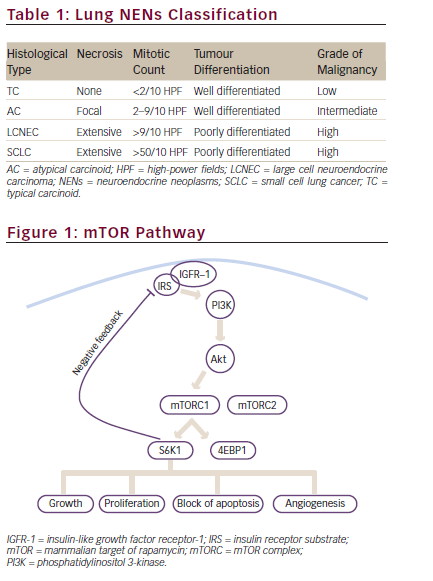
Neuroendocrine neoplasms (NENs) are a group of rare and heterogeneous malignancies that arise from neuroendocrine cells in most organs of the body. The presence, rather than absence of symptoms due to neuropeptides or hormones hypersecretion, distinguishes NENs in functioning and ...

Neuroendocrine tumours (NETs) is a collective term for a diverse range of neoplasms that arise from cells that originate in the endocrine and nervous systems and share common morphological and immunohistochemical features, including the presence of secretory granules. These tumours ...
Pancreatic neuroendocrine tumours (pNETs), also known as islet cell tumours, arise from the pancreatic islet of Langerhans and can be divided into functioning and non-functioning tumours based on whether they are associated with hormonal syndromes caused by excess hormone or ...
Neuroendocrine tumours (NETs) are rare neoplasms that arise from neuroendocrine cells which are present throughout the body. NETs may be classified as functioning or non-functioning and are further differentiated based on the site of primary origin, histologic grade (low, intermediate ...
Introduction Neuroendocrine gastroenteropancreatic (GEP) tumours constitute less than 2% of all gastrointestinal (GI) malignancies. The incidence of the largest group of patients, those with small intestinal carcinoid tumours, is two to 2.4 per 100,000 inhabitants. The true incidence is probably underestimated due to ...
Log into your Touch Account
Keep track of your clinical interests and newsletter subscriptions.
Sign up with an Email
Or use a .
Register now for FREE access
Already registered? Login below.