
Genitourinary Cancer
An Introduction to Genitourinary Cancer
Genitourinary cancers incorporate the sub-specialities of prostate, kidney, bladder and testicular cancer. Advances in immunotherapies, targeted therapies and combination therapies have improved patient outcomes over recent years.
Expert video highlights, insights from the conference hub and comprehensive peer-reviewed articles from our journal portfolio provide updates on the changing treatment landscape. To learn more about how the latest developments impact on patient outcomes, view our expert-led learning activities.
Our supporting partners do not constitute an endorsement of the content on this page.



The European Society for Medical Oncology (ESMO) Congress 2026 promises a compelling program of clinical data, spanning personalized cancer vaccines, next-generation antibody–drug conjugates (ADCs) and novel approaches to targeted therapy and immunotherapy. With several studies already generating excitement following positive topline announcements, all eyes will be on the full results and their potential implications for clinical practice. Below, we highlight the 12 presidential abstracts to watch, the key findings to look out for and the questions these studies could help answer.
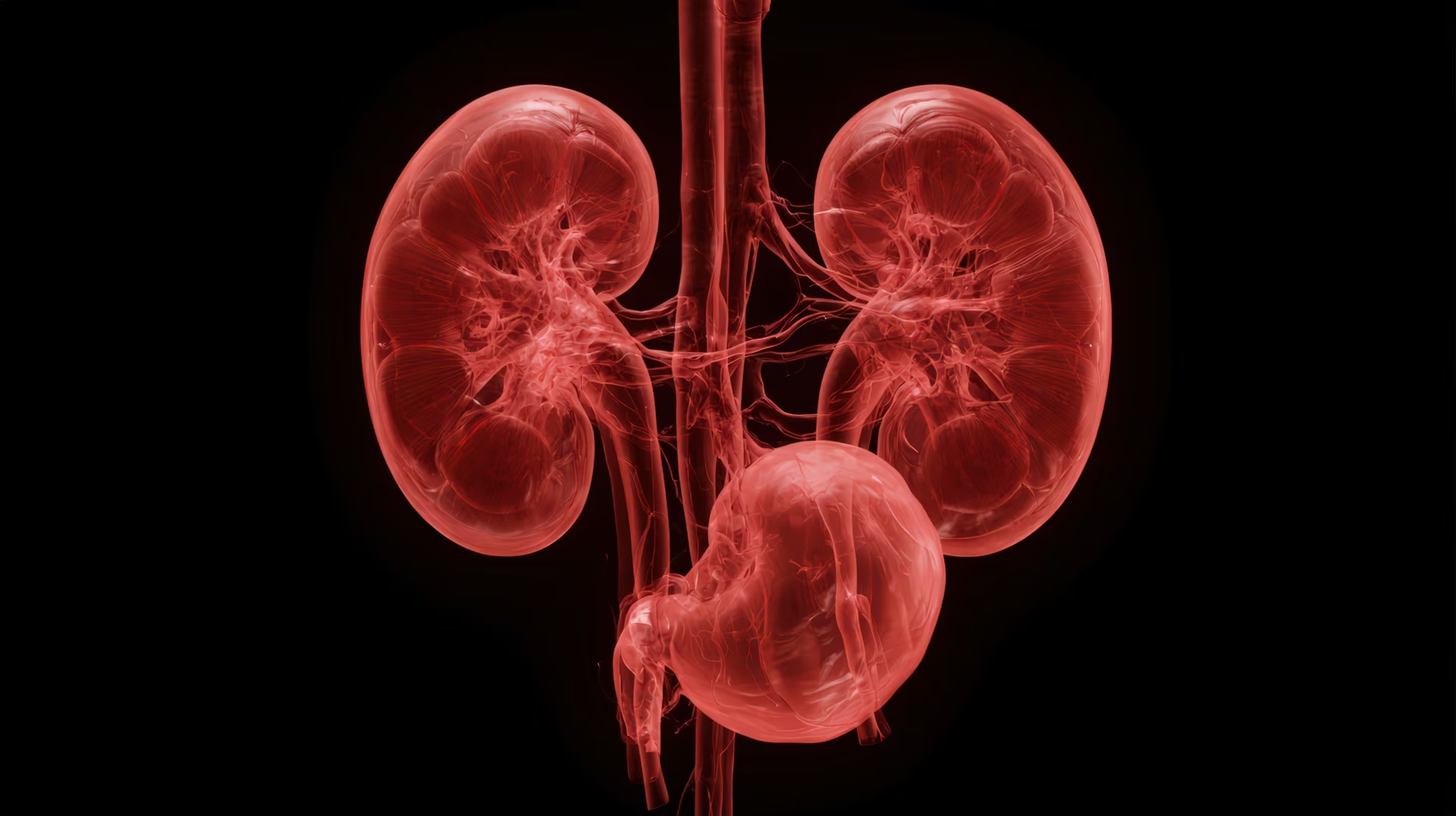
Urothelial carcinoma (UC) is the 11th most common cancer in the UK, with approximately 11,000 new bladder cancer diagnoses annually.1 Globally, bladder cancer accounts for approximately 635,000 new diagnoses and 228,000 deaths annually, based on the latest GLOBOCAN estimates for 2024.2 Bladder cancer constitutes ...

Join us as leading experts discuss key data from the Plenary, Late-breaking and top oral sessions across each major disease area at ASCO 2026 touchONCOLOGY coverage of ASCO 2026 2026 American Society of Clinical Oncology (ASCO) Annual Meeting brought together the global oncology ...

Could upfront PARP inhibition transform outcomes for patients with HRR-altered metastatic hormone-sensitive prostate cancer? New data from the landmark TALAPRO-3 trial show meaningful rPFS gains with talazoparib plus enzalutamide, reinforcing the importance of early biomarker testing. [touchplayvideo video_id="m9...
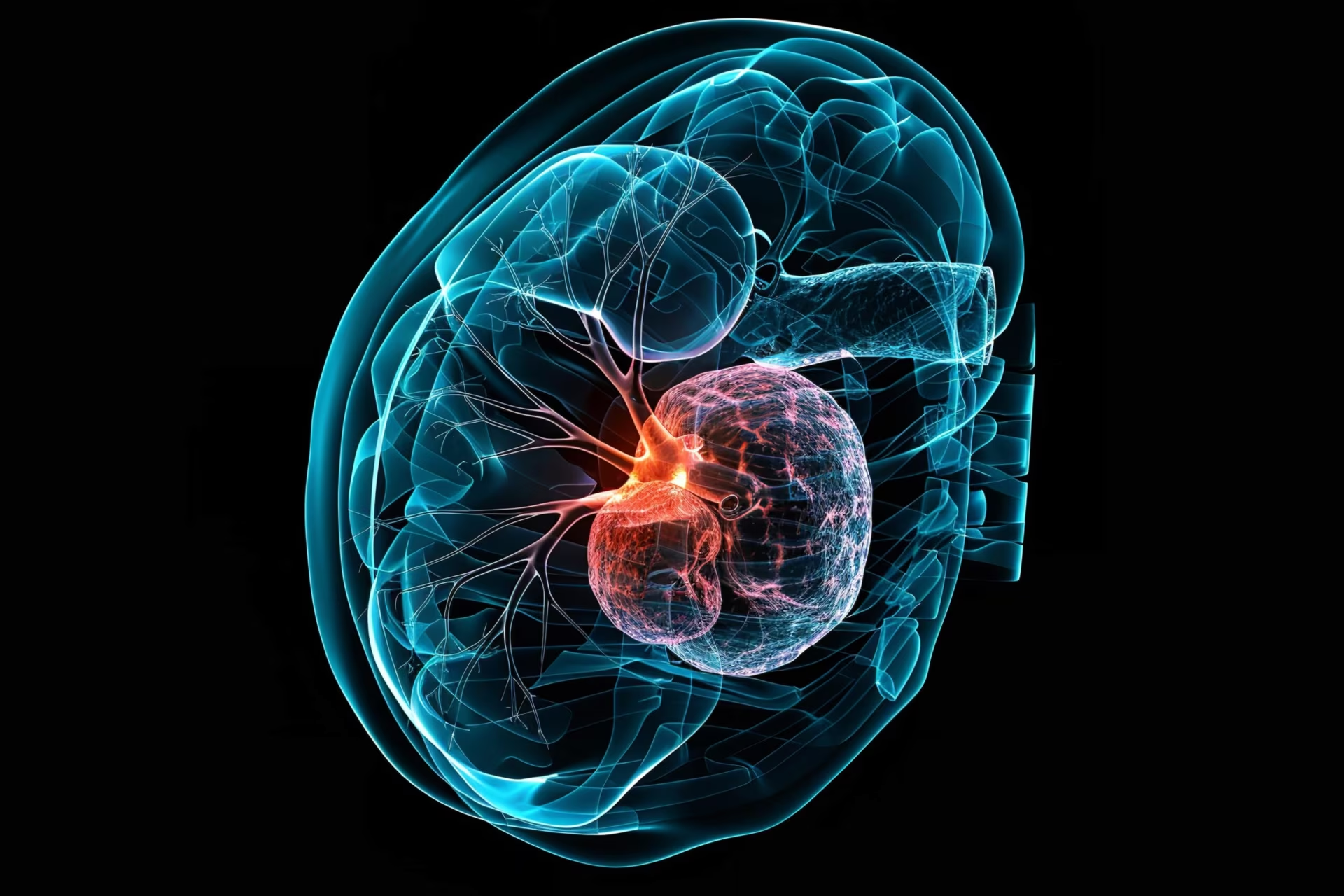
From adjuvant immunotherapy to microbiome-driven precision medicine, the biggest renal cell carcinoma abstracts presented at ASCO 2026 highlight where the field is heading next, and what may change first. In this round-up, we discuss the key data from four of the meeting’s most important studies, from investigational to late-phase: RAMPART, KEYNOTE-564, CaboNivo in patients with nccRCC and microbiome-based predictive biomarker development in mRCC.

Bladder cancer’s treatment landscape is changing fast; and the biggest abstracts presented at ASCO 2026 show just how far that shift now extends. With insight from our Editor-in-Chief, Prof Axel S Merseburger (University Hospital Schleswig-Holstein, Germany), we examine the four studies likely to have the biggest impact on clinical practice across advanced and localized disease: EV-302, KEYNOTE-905, SAKK 06/19 and POTOMAC.

Landmark abstracts across localized and advanced prostate cancer presented at ASCO 2026 addressed treatment intensification, biomarker-driven therapy, radiotherapy modality comparisons, and novel radioligand strategies. In this piece we examine four studies that reflect important shifts in prostate cancer management, influencing both near-term treatment pathways and future: PROTEUS, TALAPRO-3, COMPPARE and ProstACT Global.

The five selected Plenary late-breaking abstracts at the ASCO 2026 Annual Meeting in Chicago showcased some of the meeting’s most practice-influencing data. Across prostate cancer, sarcoma, lung cancer and pancreatic cancer, these phase 3 studies demonstrated meaningful improvements in survival outcomes, highlighting the growing impact of perioperative intensification, precision oncology and novel targeted therapies in difficult-to-treat disease settings.

The 38th Annual Congress of the European Association of Nuclear Medicine (EANM) in Barcelona brought together over 9,400 participants, marking a major milestone. The meeting highlighted major advances in oncologic imaging and theranostics, with a strong emphasis on precision medicine and combination treatment strategies. Across plenary sessions, debates, and late-breaking discussions, the meeting underscored how nuclear medicine is increasingly central to cancer diagnosis, treatment selection, and therapeutic delivery.

New clinical data presented at the 2026 International Kidney Cancer Symposium (IKCS) Europe supports the potential of next-generation FTI darlifarnib, alone and in combination with cabozantinib, to overcome resistance and resensitize tumors to VEGFR TKI therapy in clear cell renal cell carcinoma (ccRCC)






See who the oncology community selected as the rising stars of 2026!

In this Future Leaders interview, Dr Gómez Rivas discusses the mentors who shaped his career, the values that sustain a life in surgery and research, and the importance of mentorship, teamwork and resilience for the next generation of urologists.

In this Future Leaders interview, Dr Kevin Keane discusses the mentors who shaped his approach to clinically meaningful research, the integration of surgery and innovation in uro-oncology and the collaborative, patient-centred advances set to transform bladder cancer care.
At EAU26, Dr Juan Gómez Rivas reflected on a period of rapid transformation in the field. Across mentorship, technology and precision medicine, Dr Gómez Rivas believes the field is entering a new era. For urologists, he says, the message is simple: embrace innovation, collaborate widely and keep patients at the centre of every advance.

At EAU26, Dr Karen Buch-Olsen and Professor Mads Hvid Aaberg Poulsen shared early insights from the PRISMA PET trial, a randomized study comparing conventional sodium fluoride PET CT with PSMA PET CT in newly diagnosed, high-risk prostate cancer patients.

At EAU26, Dr Kevin Keane presented early results from the G-DISCO trial, the first-in-human study exploring a streamlined intravesical approach for patients with BCG-unresponsive non–muscle-invasive bladder cancer.
At #EAU26, Professor Dickon Hayne presented early findings from the ZiPUP study. This is a phase I trial exploring a novel PET imaging approach in urothelial cancer. In this interview, he discusses the unmet need in staging, the study’s design and what the preliminary data might mean for clinical practice.
Log into your Touch Account
Keep track of your clinical interests and newsletter subscriptions.
Sign up with an Email
Or use a .
Register now for FREE access
Already registered? Login below.