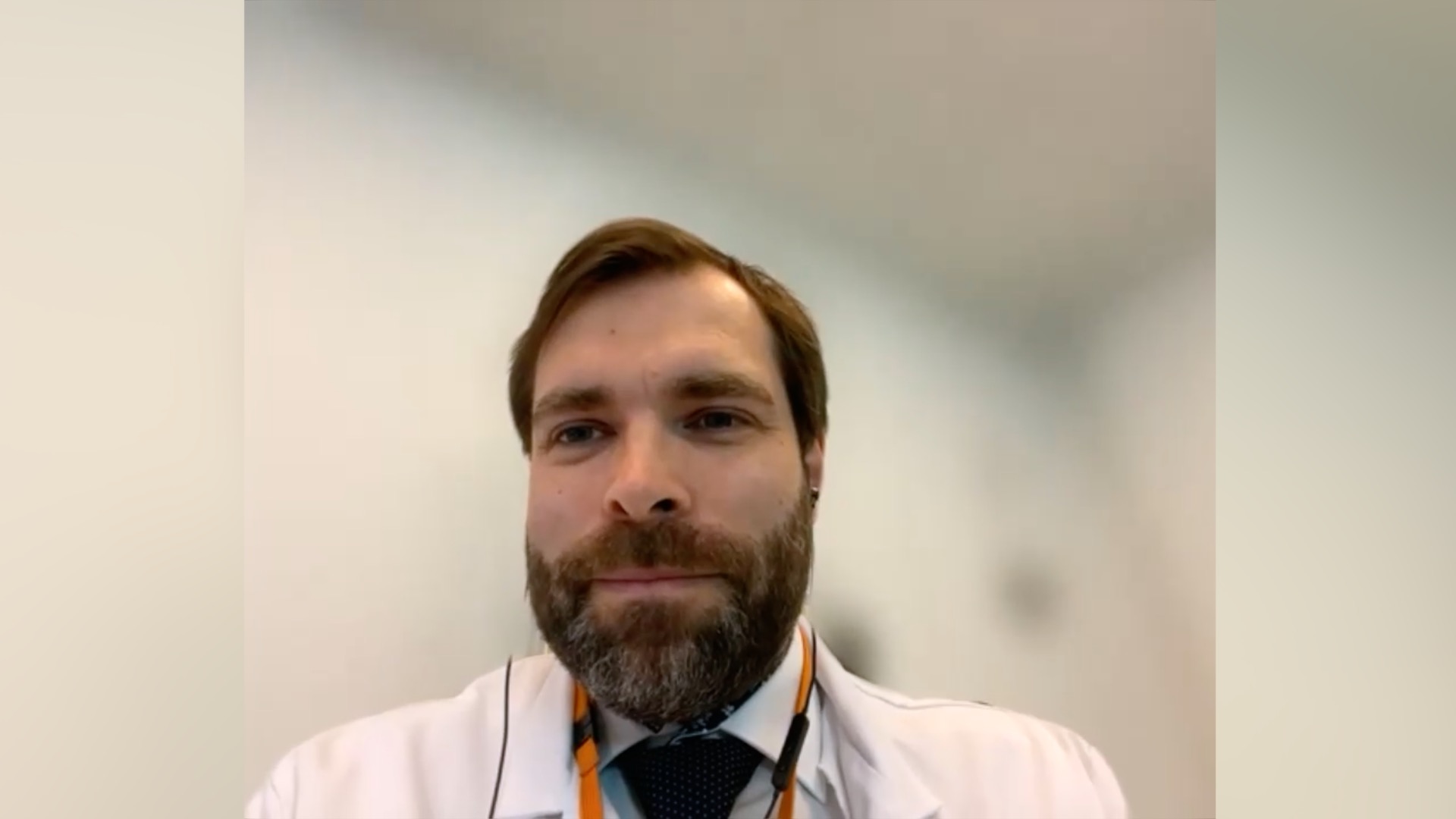
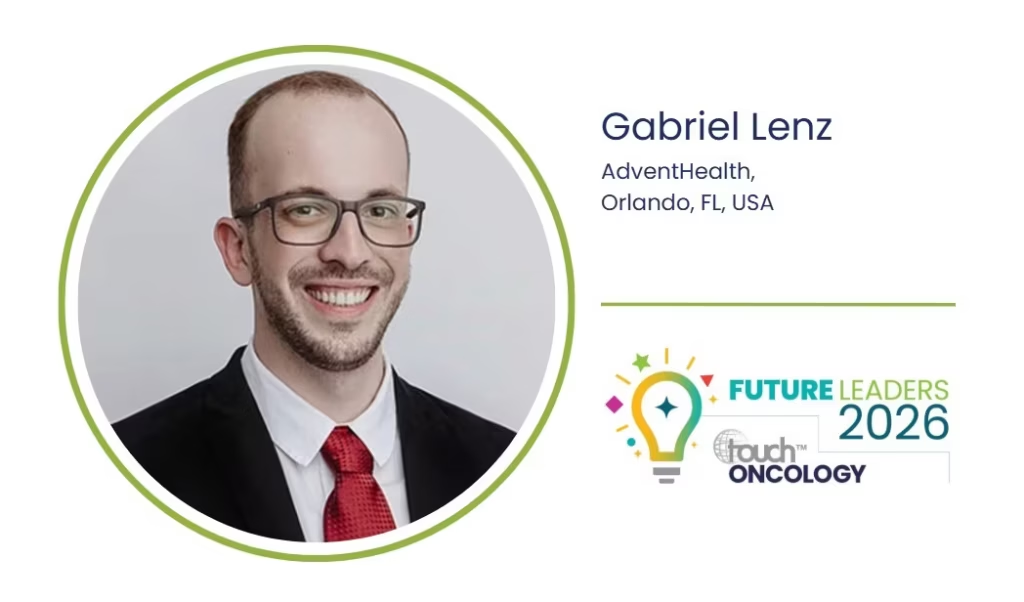
We are delighted to announce Dr Gabriel Lenz as a touchONCOLOGY Future Leader 2026, selected as a rising star poised to shape the future of lung cancer and immunotherapy.
Dr Lenz is an Internal Medicine resident at AdventHealth in Orlando, FL, USA. He earned his medical degree from the Pontifical Catholic University of Rio Grande do Sul (PUCRS) in Brazil with full medical scholarship, where he also conducted clinical research in oncology. Dr Lenz has received several honours, including the Leonel Lerner Award for academic excellence and predoctoral research grants.
In this Future Leaders interview, Dr Lenz reflects on the mentorship that shaped his commitment to oncology, the role of research in exposing inequities in cancer care, and why ensuring equitable access to innovation will define the future of the field.

“The future of oncology will be defined not just by innovation, but by equity”
Q: Can you tell us about a mentor who significantly impacted your career, and the most valuable lesson they have shared with you?
My first influential mentor in oncology, who became a lifelong friend, was Dr Leonardo Stone Lago, from Porto Alegre, Brazil. From the very beginning, he taught me that oncology is not only about scientific advances, but about who is able to benefit from them. We worked in a public hospital where most patients were treated through Brazil’s public health system, and access to innovative therapies and molecular testing was extremely limited. Dr Lago was deeply concerned with these gaps and encouraged me to question them rather than accept them as unavoidable.
One of our first research projects together evaluated patients with non-small cell lung cancer treated at our institution, focusing on the presence of actionable mutations such as EGFR and ALK, and whether patients were actually tested and treated accordingly. The results were striking: fewer than half of patients underwent molecular testing, and only about one-third ultimately received targeted therapy as first-line treatment. Subsequent studies by our group highlighted how many lives are lost each year due to delays or lack of approval for therapies that are readily accessible in high-income countries. Through these experiences, I came to understand how research can expose inequities, inform policy, and serve as a powerful tool for advocacy. I remain deeply grateful to Dr Lago not only for shaping my academic path, but for teaching me to care about access, justice, and the people behind the data – lessons I will carry with me throughout my career.
Q: Is there a particular moment or experience in your career that reinforced your passion for Oncology?
My passion for oncology started almost before I even knew what medicine was. Curing cancer was the dream I shared with my parents as a child. Maybe it sounded silly back then, but it started me on this journey. I didn’t know how it would happen, or what that really meant, but the desire to help people facing that disease was already there. Years later, as I progressed through medical training and became involved in oncology research, that childhood motivation found clarity and purpose. I encountered patients and data that showed not only how aggressive cancer can be biologically, but also how outcomes can differ dramatically based on where someone lives, what resources they can access, and what systems stand between them and high-quality care. Those experiences made me realize that the practice of oncology is not just about understanding cells or drugs — it’s about understanding people, contexts, and barriers that shape who truly benefits from medical progress.
Q: What aspects of your work do you find the most fulfilling?
I find the most fulfilment in research that bridges the worlds of science, clinical insight, and real-world impact. As an internal medicine trainee with research focus in oncology and aspirations to become an oncologist, I have come to see that the questions worth asking often emerge from the tension between what we know and what we see in practice. In oncology, that tension is especially clear: we have remarkable scientific progress, but uneven access and persistent disparities. What motivates me daily is the opportunity to explore those gaps — to ask why certain populations are underrepresented in trials, why outcomes differ across communities, and how evidence can be translated into policies or interventions that make care more equitable. Collaborating with patients, mentors, and interdisciplinary teams — and seeing how small discoveries can lead to larger changes — is deeply rewarding. To me, that is the essence of meaningful progress in oncology.
Q: Looking ahead, what do you anticipate will be the biggest advancements or changes in your field over the next decade?
Over the next decade, I expect oncology to continue advancing in precision medicine, immunotherapy, and data-driven research. Yet the greatest transformation, in my view, will come from ensuring that these breakthroughs are accessible and beneficial to all populations. Expansion of real-world evidence, pragmatic clinical trials, and implementation science will be key to reducing disparities. The promise I made to my parents in childhood – to cure cancer – cannot be fulfilled in a world where access remains unequal, which is why highlighting this impact is critical to changing this reality.
Disclosures: This short article was prepared by touchONCOLOGY in collaboration with Dr Lenz. No fees or funding were associated with its publication.
Citation: Dr Gabriel Lenz on equity, access and the real-world impact of oncology research: touchONCOLOGY Future Leaders 2026. touchONCOLOGY. 14th April 2026.
Register now to receive the touchONCOLOGY newsletter!
Don’t miss out on hearing about our latest peer reviewed articles, expert opinions, conference news, podcasts and more.