

touchREVIEWS in Oncology & Haematology – Volume 22, Issue 1 – 2026
We are pleased to present the latest issue of touchREVIEWS in Oncology & Haematology, which brings together a diverse collection of articles reflecting the growing complexity of modern cancer care and the continued evolution of precision medicine. Across tumour types, this edition explores emerging targeted therapies, treatment-related challenges and novel biological insights, while also highlighting the significant unmet needs that remain in oncology.
This issue features timely discussions on immunosuppression-associated skin cancer risk, advances in small bowel adenocarcinoma and pancreatic cancer, and the impact of corticosteroid use on outcomes with immune checkpoint inhibitors. We also examine the expanding role of targeted therapies in HER2-mutant non-small cell lung cancer and the therapeutic potential of imipridones in diffuse midline glioma. Together, these contributions underscore the importance of multidisciplinary care, biomarker-driven strategies and continued innovation in improving patient outcomes.
We extend our sincere thanks to all contributors, including our authors, Editor-in-Chief, editorial board members and partners, for their valued support in producing this edition.
We hope you find the content insightful and informative.
Foreword

This issue of touchREVIEWS in Oncology & Haematology brings together a diverse collection of articles reflecting the growing complexity of cancer care and the continued evolution of precision medicine across tumour types. From rare malignancies and treatment-related challenges to emerging targeted therapies and novel biological insights, the contributions highlight both recent progress and the significant […]
Reviews

An immunosuppressed person is one whose immune function is impaired by underlying disease and/or immunosuppressive medications, resulting in reduced immunosurveillance against malignant cells and increased vulnerability to opportunistic infections. Longstanding immunosuppression has been linked to increased risk for cutaneous (among other) malignancies for over half a century.1 Intrinsic patient characteristics, including advanced age, lighter skin phototype and […]

Small bowel adenocarcinoma (SBA) is a rare gastrointestinal malignancy, accounting for about 1–3% of gastrointestinal cancers.1,2 Its reported incidence has increased in recent decades, likely reflecting improved detection by balloon-assisted and capsule endoscopy and the more widespread use of cross-sectional imaging.3,4 Many patients present with unresectable, locally advanced or metastatic disease, and recurrence remains common even after […]

Immune checkpoint inhibitors (ICIs) act by blocking inhibitory pathways such as programmed cell death protein 1 (PD-1), programmed cell death ligand 1 (PD-L1) and cytotoxic T lymphocyte-associated antigen 4 (CTLA-4), thereby restoring T-cell activity and promoting tumour cell destruction.1,2 The ability of tumours to evade the immune system is a significant drawback of conventional treatments that immunotherapy has […]
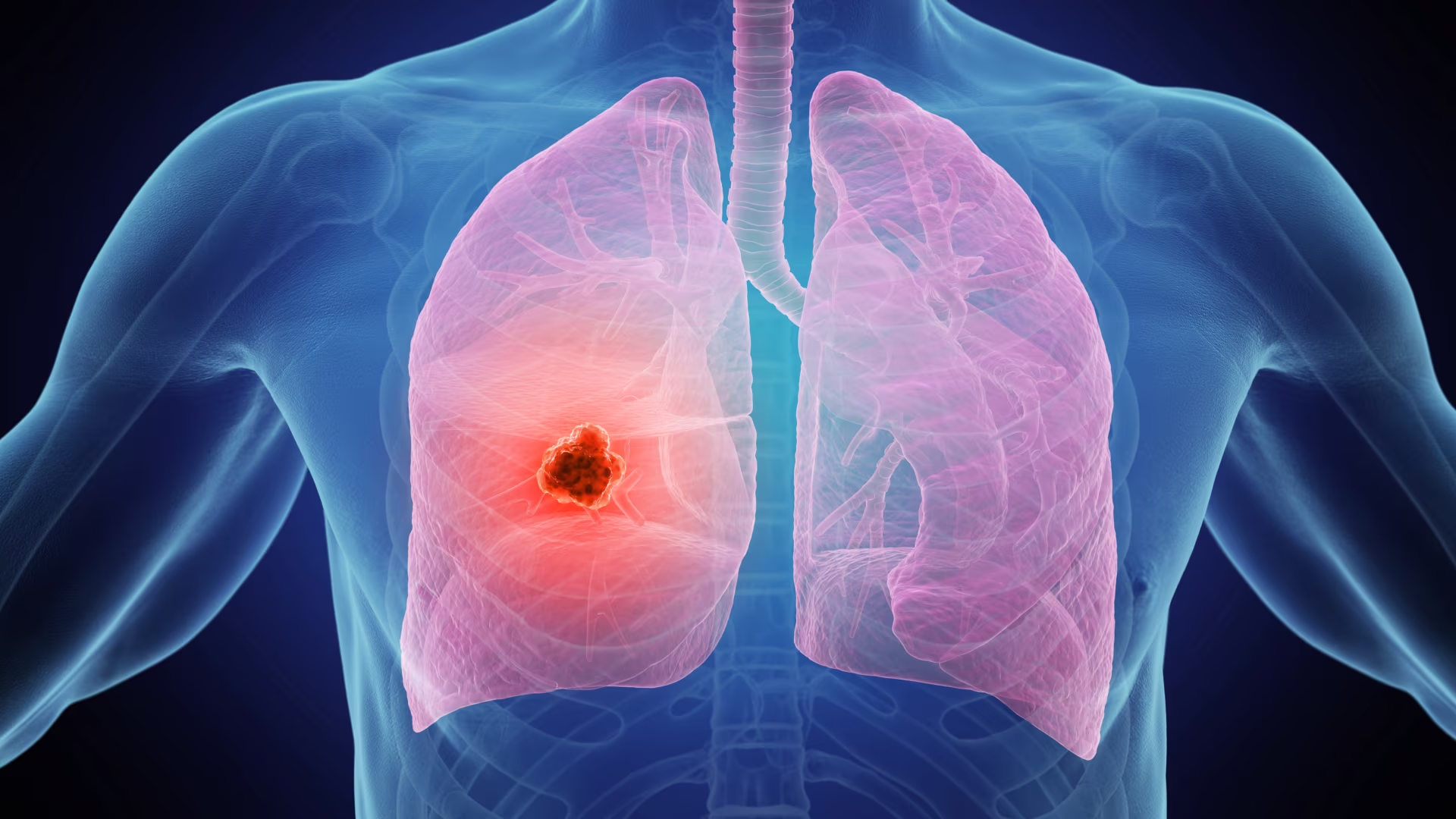
Non-small cell lung cancer (NSCLC) remains the leading cause of cancer-related mortality worldwide.1 Over the past two decades, the molecular characterization of NSCLC has transformed the therapeutic landscape by enabling the development of targeted therapies that have significantly improved outcomes in subsets of patients.2 Among the less common but clinically significant molecular alterations in NSCLC are mutations […]

Among glial tumours of the central nervous system (CNS), one of the most devastating is the category of H3K27-altered midline gliomas because of their uniform and rapid mortality, high neurological symptom burden and predilection for paediatric, adolescent and young adult populations.1 Historically, these tumours were divided into two categories: diffuse interstitial pontine glioma (DIPG), seen most frequently in […]
Pancreatic cancer (PC) is the tenth most common cancer in 2024, with 66,440 new cases and 51,570 deaths.1,2 Globally, the prevalence varies from 10/100,000 cases in the Americas and Europe to 0.9/100,000 cases in South Central Asia and most of Africa.3 Currently, it has the third-highest mortality:incidence ratio, with an increasing death rate of 0.23% annually, paralleling […]

Trending Topic
Pancreatic cancer (PC) is the tenth most common cancer in 2024, with 66,440 new cases and 51,570 deaths.1,2 Globally, the prevalence varies from 10/100,000 cases in the Americas and Europe to 0.9/100,000 cases in South Central Asia and most of Africa.3 Currently, it has the third-highest mortality:incidence ratio, with an increasing death rate of 0.23% annually, paralleling […]
Journal Archive




Log into your Touch Account
Keep track of your clinical interests and newsletter subscriptions.
Sign up with an Email
Or use a .
Register now for FREE access
Already registered? Login below.