
One of the biggest challenges in practice relates to optimizing supportive care for patients undergoing therapy. Cancer-related cognitive dysfunction (CRCD) constitutes a significant problem for cancer patients and survivors. In the supportive care section of this issue, Dr Jean-Pierre gives us an update about the management of CRCD and the challenges and implications for clinical […]
Supportive Oncology
Epidemiology of Cancer-related Cognitive Dysfunction
Oral mucositis is a common complication of cancer chemotherapy. The incidence of oral mucositis in cancer patients varies widely.1 In patients receiving high-dose myeloablative therapies, the incidence rate of oral mucositis is nearly 100%.2 The incidence rate is also high in patients undergoing head and neck cancer treatments,3 especially if they are receiving concurrent chemoradiotherapy.4 […]
Docetaxel is effective against numerous tumors, mainly in metastatic breast cancers; however, it can lead to other conditions, in particular cutaneous reactions, such as onycholysis and hand–foot syndrome. The ungual toxicity of docetaxel is well-known and occurs in 40–50% of cases. The mechanism of this toxicity is of neurogenic origin. Local symptoms are due to […]
Cancer and its treatments result in side effects that impair quality of life (QoL). The most common side effect reported by cancer patients is cancer-related fatigue (CRF).1–4 Cancer patients report that CRF begins with diagnosis and worsens during the course of treatment. It can persist for months, and years, after treatment is complete.1–4 CRF often […]
Hematological Malignancies
Autologous Stem Cell Transplantation—An Important Step Toward Improving Survival in Multiple Myeloma
Multiple myeloma is a malignant disorder characterized by the proliferation of plasma cells. It accounts for 10% of hematological cancers and 1% of all cancers. The disease is uniformly fatal with a median survival of approximately three years with conventional chemotherapy (CC), although the outlook has improved with the integration of newer therapies including high-dose […]
Lung Cancer
Lung cancer is the leading cause of cancer-related mortality in the US, with 219,440 new cases of lung cancer diagnosed in 2009.1 According to the US National Cancer Institute (NCI), it is estimated that there will be 222,520 new cases and 157,300 deaths from lung cancer (non-small-cell and small-cell combined) in the US in 2010.2 […]
Lung cancer is the leading cause of cancer deaths, having caused an estimated 1.18 million deaths worldwide in 2002.1 In the US alone, lung cancer resulted in an estimated 159,300 deaths in 2009.2 Most deaths are from non-small-cell lung cancer (NSCLC), which accounts for more than 80% of lung cancers diagnosed in the US. Sadly, […]
Breast Cancer
In the US, breast cancer is the most common non-skin cancer and the second leading cause of cancer-related death in women. There were expected to be 192,370 new diagnoses of invasive breast cancer in the US in 2009, and of that number we estimate that 28,856 (15%) will die of the disease by 2022, considering […]
Musculoskeletal Cancer
Giant cell tumor of bone (GCT) is an uncommon, benign condition that typically affects patients of both sexes between 20 and 40 years of age. GCT accounts for 15–20% of all benign bone tumors.1 GCT is more common in ethnic Chinese populations, and cases of multifocal and familial GCT suggest that inherited factors may play […]
Gastrointestinal Cancer
The liver is the most common site of metastases for patients with metastatic colorectal cancer (mCRC). In spite of the striking advances that have been made in the systemic treatment of mCRC, chemotherapy alone is rarely associated with long-term survival. Complete resection offers the greatest likelihood of prolonged survival for patients with isolated liver metastases […]
Gynecologic Cancer
The Premise of Targeted Drug Therapy
Adolescent and Young Adult Oncology
Due to advances in medical treatment over the last few decades, rates of childhood cancer survivorship have reached almost 80%.1,2 The goal of treatment is to eliminate disease with the least compromise to subsequent health and quality of life.3 Approximately one in every 640 young adults between 20 and 39 years of age is a […]
Geriatric Oncology
Pancreatic adenocarcinoma (commonly referred to as pancreas or pancreatic cancer) is a devastating disease. Outcome is dismal, irrespective of treatment modality and stage of disease. It is the fourth leading cause of death in the US and is second to colorectal cancer as a cause of gastrointestinal cancer deaths. Most patients with pancreatic cancer will […]
International Health
Breast cancer, the most common cancer and the second leading cause of death among women worldwide, remains an important public health problem. More than one million women are newly diagnosed with breast cancer each year, and approximately 500,000 women die annually from this malignancy. Advances in breast cancer therapy have led to improved survival in […]
Trending Topic
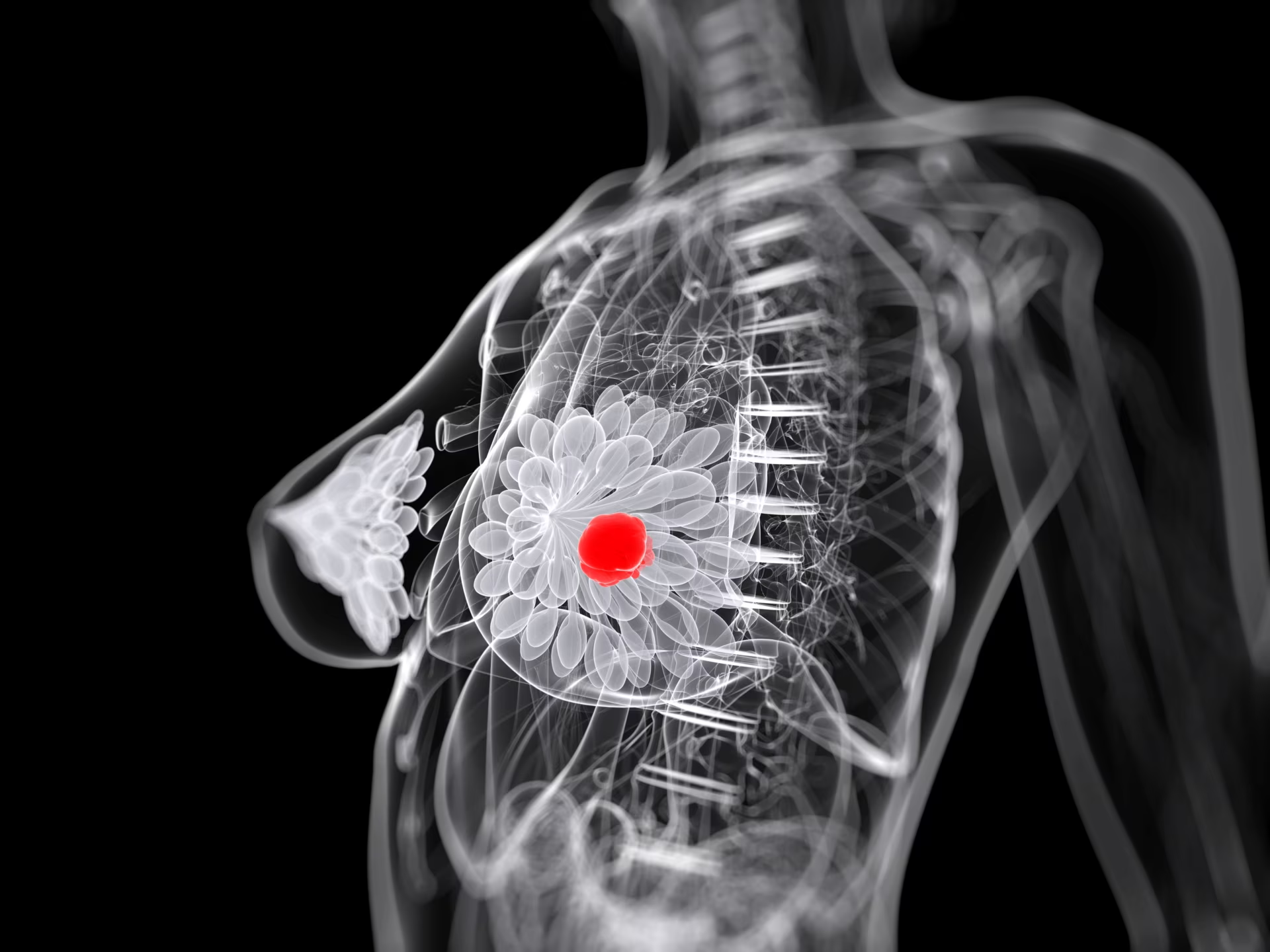
Metastatic triple-negative breast cancer (mTNBC) is a clinically heterogeneous disease, but compared with other breast cancer subtypes, triple-negative breast cancer (TNBC) is generally associated with a poorer prognosis and has historically had limited therapeutic options.1 The 5-year survival rate remains only 14.9%, and some patients are unable to proceed to second-line or later-line therapies because […]
Journal Archive



Log into your Touch Account
Keep track of your clinical interests and newsletter subscriptions.
Sign up with an Email
Or use a .
Register now for FREE access
Already registered? Login below.