
but it offers key lessons for patient selection”
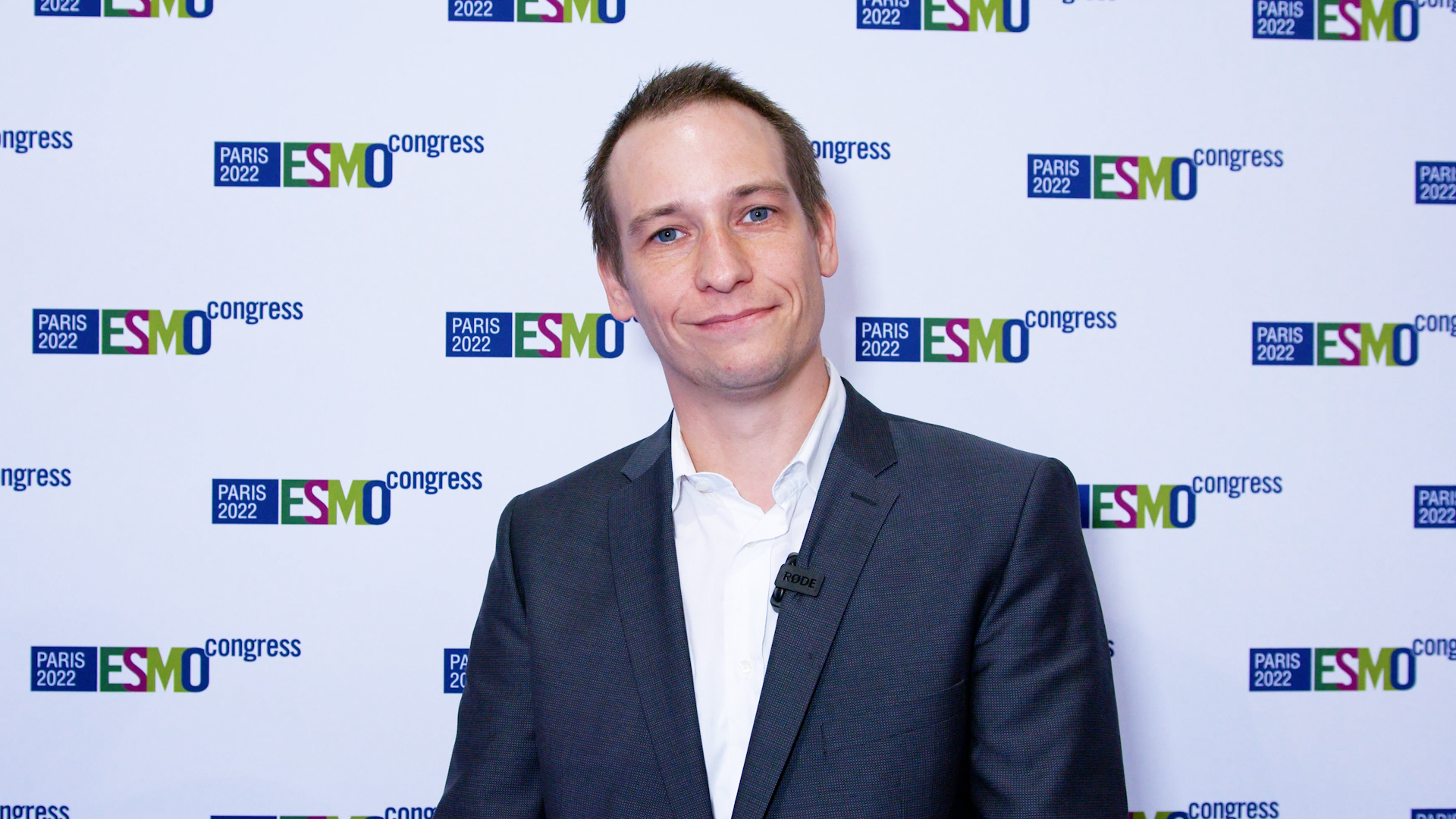
At the European Society for Medical Oncology (ESMO) 2025 congress, Prof Morgan Rouprêt (Professor of Urology at Assistance Publique – Hôpitaux de Paris [APHP] Sorbonne University, Paris, France) discussed the ALBAN trial (LBA107), a phase III international study evaluating intravenous atezolizumab plus intravesical BCG versus BCG alone in BCG-naïve, high-risk non-muscle-invasive bladder cancer (NMIBC). Conducted across 517 patients, ALBAN explores whether systemic checkpoint inhibition can enhance outcomes in localized disease. While early findings show no event-free survival benefit, the study offers valuable insights into treatment sequencing, toxicity and molecular stratification – moving the field closer to personalized immunotherapy for NMIBC.
The late-breaking abstract, ‘ALBAN: A phase 3, randomized, open-label, international study of intravenous (iv) atezolizumab and intravesical Bacillus Calmette-Guérin (BCG) vs BCG alone in BCG-naïve high-risk, non-muscle-invasive bladder cancer (NMIBC)’ (LBA107) was presented at the European Society for Medical Oncology (ESMO) congress on 17th-21st October 2025 in Berlin, Germany.
Q: Could you briefly outline the rationale behind combining atezolizumab with BCG therapy in BCG-naïve high-risk NMIBC in the ALBAN study?
When we initiated ALBAN nearly a decade ago, checkpoint inhibitors were mainly used for metastatic urothelial carcinoma. We wanted to investigate whether immunotherapy could also benefit patients earlier in the disease course. Even in localized NMIBC, we sometimes see micrometastatic activity that might drive recurrence or progression. The hypothesis was that adding a systemic immune checkpoint inhibitor, like atezolizumab, could reduce disease burden and delay progression when combined with standard intravesical BCG therapy.
Q: What was the design and key eligibility criteria of the ALBAN study?
ALBAN is a randomized, open-label, phase III trial designed to recruit over 500 patients with high-risk, BCG-naïve NMIBC – specifically T1 high-grade tumors, with or without carcinoma in situ (CIS). The control arm followed the standard of care: TURBT followed by BCG induction and one year of maintenance. In the experimental arm, patients received the same local therapy plus intravenous atezolizumab every three weeks for one year. The design was pragmatic and academic in nature, aiming to evaluate whether systemic immune modulation could enhance local BCG response.
Q: What were the primary endpoints primary endpoints, and key takeaways so far from the ALBAN study?
At this disease stage, overall survival is not the main endpoint. Instead, the primary endpoint was event-free survival (EFS) – defined as any recurrence in the bladder, upper urinary tract or at distant sites. The key question was whether combining atezolizumab with BCG would reduce recurrence events. Unfortunately, no EFS improvement was observed, with a hazard ratio close to 1.0, indicating no benefit from the addition of systemic therapy at this stage.
One important consideration is quality of life. Introducing a systemic drug increases the risk of immune-related toxicities, so if efficacy isn’t improved, the risk–benefit ratio becomes unfavourable.
However, ALBAN isn’t the only study exploring this concept – trials like CREST and KEYNOTE-676 are testing other checkpoint inhibitors or different treatment durations. Some of these extend therapy to two years, showing potential benefit, but also raising questions about treatment burden and grade 3–4 adverse events.
Ultimately, we must identify which patient subgroups truly benefit from systemic immunotherapy. This likely lies in molecular profiling – defining a ‘super high-risk’ NMIBC population with genomic or immune signatures indicating likely response. Moving forward, personalized treatment strategies will be crucial to refine care beyond the current ‘one-size-fits-all’ approach.
Disclosure: Morgan Rouprêt has no financial or non-financial conflicts of interest to declare in relation to this interview.
This content has been developed independently by Touch Medical Media for touchONCOLOGY. It is not affiliated with the European Society for Medical Oncology (ESMO). Views expressed are the speaker’s own and do not necessarily reflect the views of Touch Medical Media.
Cite: ESMO25: ALBAN – Can systemic immunotherapy boost BCG response in NMIBC? touchONCOLOGY. November 5th, 2025
Related content
- ESMO25 Presidential Late-breaker: KEYNOTE-905 delivers breakthrough results in cisplatin-ineligible MIBC
- ESMO25 late-breaker: LenCabo head-to-head highlights lenvatinib-everolimus benefit after immunotherapy in metastatic ccRCC
- ESMO25 BladderPath: Early MRI cuts time-to-treatment and relapse risk in muscle-invasive bladder cancer