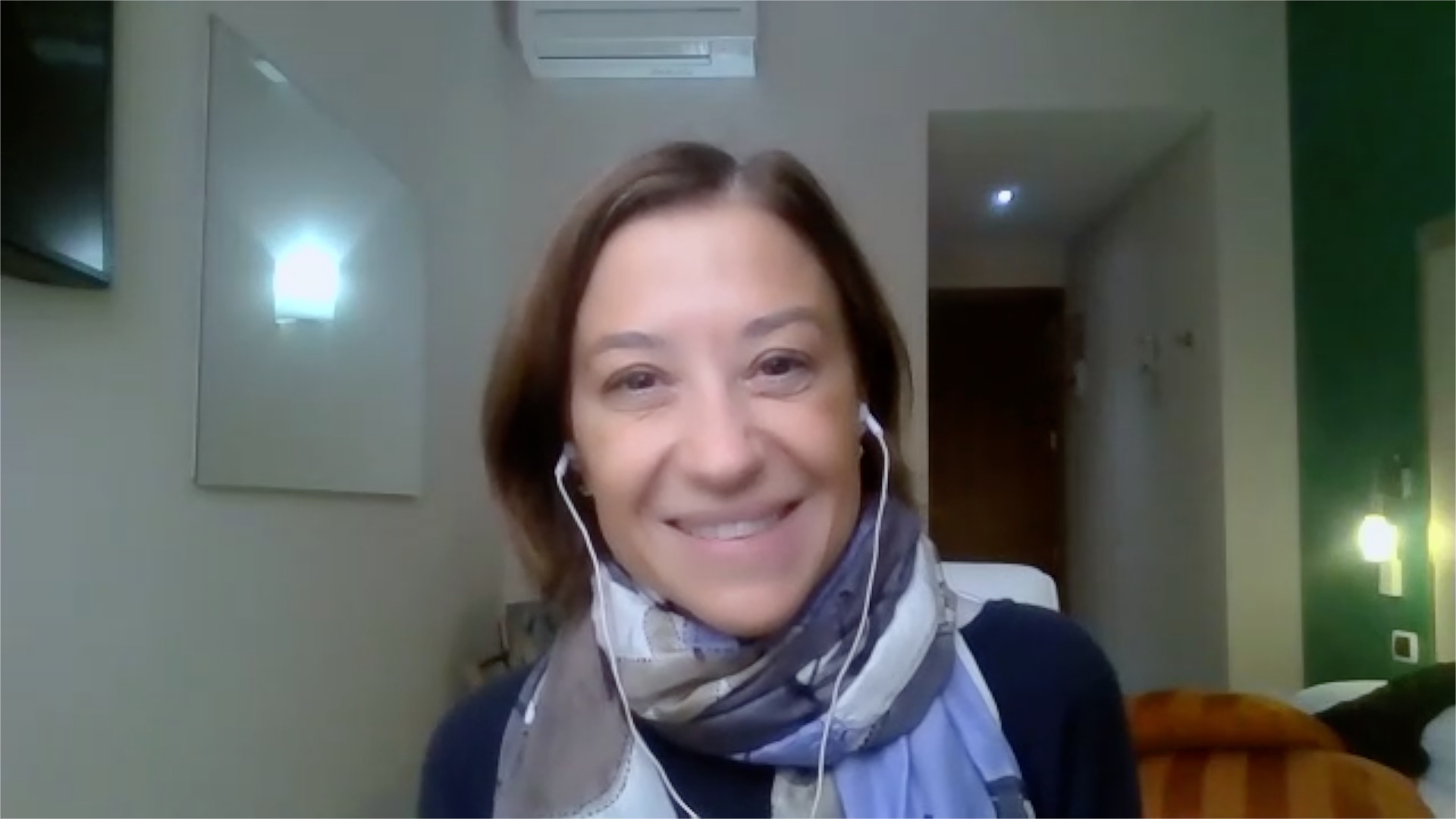

– Dr Antonio González-Martín
New findings from two in ovarian cancer: the ANITA and NAPISTAR-101 trials, were presented at the European Society for Medical Oncology (ESMO) 2025 Congress by Dr Antonio González-Martín, a leading medical oncologist and Director of the Cancer Center at the Clínica Universidad de Navarra.
The NAPISTAR phase 1 dose escalation study investigated TUB-040, a novel NaPi2b-targeting exatecan antibody-drug conjugate (ADC) in patients with platinum-resistant ovarian (PROC) high grade serous carcinoma (HGSC); and the phase 3 ANITA study investigated baseline (BL) multiplex cytokine profiling identifies prognostic signatures in recurrent ovarian cancer.
In this interview, he discusses the current treatment landscape, the unmet needs in recurrent and platinum-resistant ovarian cancer, and the promise of immunotherapy, and ADCs in improving patient outcomes.
Phase III ANITA trial
The ANITA trial aimed to determine whether adding atezolizumab to platinum-based chemotherapy followed by niraparib maintenance could provide benefit in the platinum-sensitive recurrent setting. Unfortunately, the study was negative, the addition of atezolizumab did not improve efficacy outcomes.
What we presented at ESMO was the first biomarker study linked to the ANITA trial. One of our exploratory endpoints was to evaluate the association of progression-free survival (PFS) and overall survival (OS) with potential plasma biomarkers. We selected 74 proteins related to immune modulation, angiogenesis and apoptosis, and analyzed them using multiplex immunoassays in baseline plasma samples from almost 80% of enrolled patients, more than 330 individuals.
Although these proteins did not have a predictive value, we found that some had prognostic significance. In our multivariate model, VISTA showed the strongest association with PFS and OS, patients with higher expression had worse outcomes. Additionally, we integrated four selected proteins with clinical variables to generate an overall survival model that demonstrated high predictive capacity in the context of platinum-sensitive recurrent ovarian cancer.
Our next goal is to validate these findings in independent cohorts. We are also extending our analysis, as plasma samples were collected every 12 weeks throughout the study. This will help us determine whether protein expression before poly(ADP-ribose) polymerase (PARP) inhibitor maintenance could predict benefit and how these biomarkers evolve over time, potentially correlating with treatment outcomes. Platinum-resistant ovarian cancer remains a challenging setting to treat.
NAPISTAR-101 trial
Patients with platinum-resistant ovarian cancer face a very high unmet need. Most no longer respond to standard chemotherapy, and progression-free survival is typically only 2–4 months. Unfortunately, median overall survival remains around one year, highlighting the urgent need for new therapeutic approaches. This is why we believe antibody–drug conjugates (ADCs) represent a particularly promising class of agents — delivering potent therapy directly to tumour cells through targeted antibody conjugation.
The NAPISTAR-101 study explored NaPi2b-targeted ADC TUB40. This ADC uses a highly stable exoatecan payload with a fixed drug-to-antibody ratio (DAR = 8). It targets NaPi2b, a transporter highly expressed in ovarian cancer, and features an Fc-silenced design, allowing efficient tumour penetration while minimising off-target toxicity.
In this phase I, first-in-human study, the maximum tolerated dose was 4.4 mg/kg, with effective and well-tolerated doses observed between 1.67 mg/kg and 3.3 mg/kg. The study included a heavily pre-treated population (median = 4 prior lines), with eligibility allowing up to five platinum-based and two non-platinum-based regimens. Notably, 86 % of patients had previously received bevacizumab and 76 % had received a PARP inhibitor, making this cohort highly representative of real-world practice.
The most common treatment-emergent adverse events were mild, mainly nausea and fatigue, both typically grade 1–2. Importantly, prophylactic anti-emetics were not required in cycle 1. Haematologic toxicity was low, with only 22 % of patients experiencing grade ≥ 3 neutropenia, 9% with anaemia, and 4 % with thrombocytopenia. No patient discontinued treatment due to toxicity. Equally encouraging, no relevant cases of pneumonitis, ocular toxicity, bleeding, stomatitis or neuropathy were reported. Only two grade 1 interstitial lung disease (ILD) events occurred, both resolved without discontinuation.
In terms of efficacy, responses were observed even at the lower dose levels, with an unconfirmed overall response rate (ORR) of 59%, including one complete response. Responses appeared early, deepened over time, and were durable, with 93% of responding patients still on treatment at data cut-off.
Given the strong efficacy and safety data, we believe TUB40 is an active and promising therapy for platinum-resistant ovarian cancer. Development is ongoing, with an optimisation and randomised dose-selection study now underway to determine the best dosing strategy moving forward.
References:
- ESMO Congress 2025. Baseline multiplex cytokine profiling identifies prognostic signatures in the phase 3 ANITA (ENGOT-Ov41/GEICO 69-O) trial in recurrent ovarian cancer (rOC) [Abstract LBA41]. Presented at: ESMO Congress, 17–21 October 2025, Berlin, Germany.
- ESMO Congress 2025. NAPISTAR 1-01: A phase 1 dose-escalation study of TUB-040, a novel NaPi2b-targeting exatecan antibody–drug conjugate (ADC) in patients with platinum-resistant ovarian high-grade serous carcinoma (HGSC) [Abstract LBA43]. Presented at: ESMO Congress, 17–21 October 2025, Berlin, Germany.
Editor: Sophie Nickelson, Editorial Director
Disclosures: Antonio González Martín has nothing to disclose in relation to this interview.
This content has been developed independently by Touch Medical Media for touchONCOLOGY. It is not affiliated with the European Society for Medical Oncology (ESMO). Views expressed are the speaker’s own and do not necessarily reflect the views of Touch Medical Media.
Cite: Antonio González. ESMO25 Late breaker: ANITA and NAPISTAR-101 trials, immunotherapy and antibody–drug conjugates in ovarian cancer. touchONCOLOGY. November 11th, 2025
Related content
- ESMO25 Late-breaker: ENGOT-ov65/KEYNOTE-B96 shows survival benefit in platinum-resistant ovarian cancer
- ESMO25 Late-breaker: VIKTORIA-1 triplet and doublet combinations improve PFS in HR+/HER2– PIK3CA wild-type breast cancer
- #ASCO25 late-breaker: How vepdegestrant could reshape ER+ breast cancer