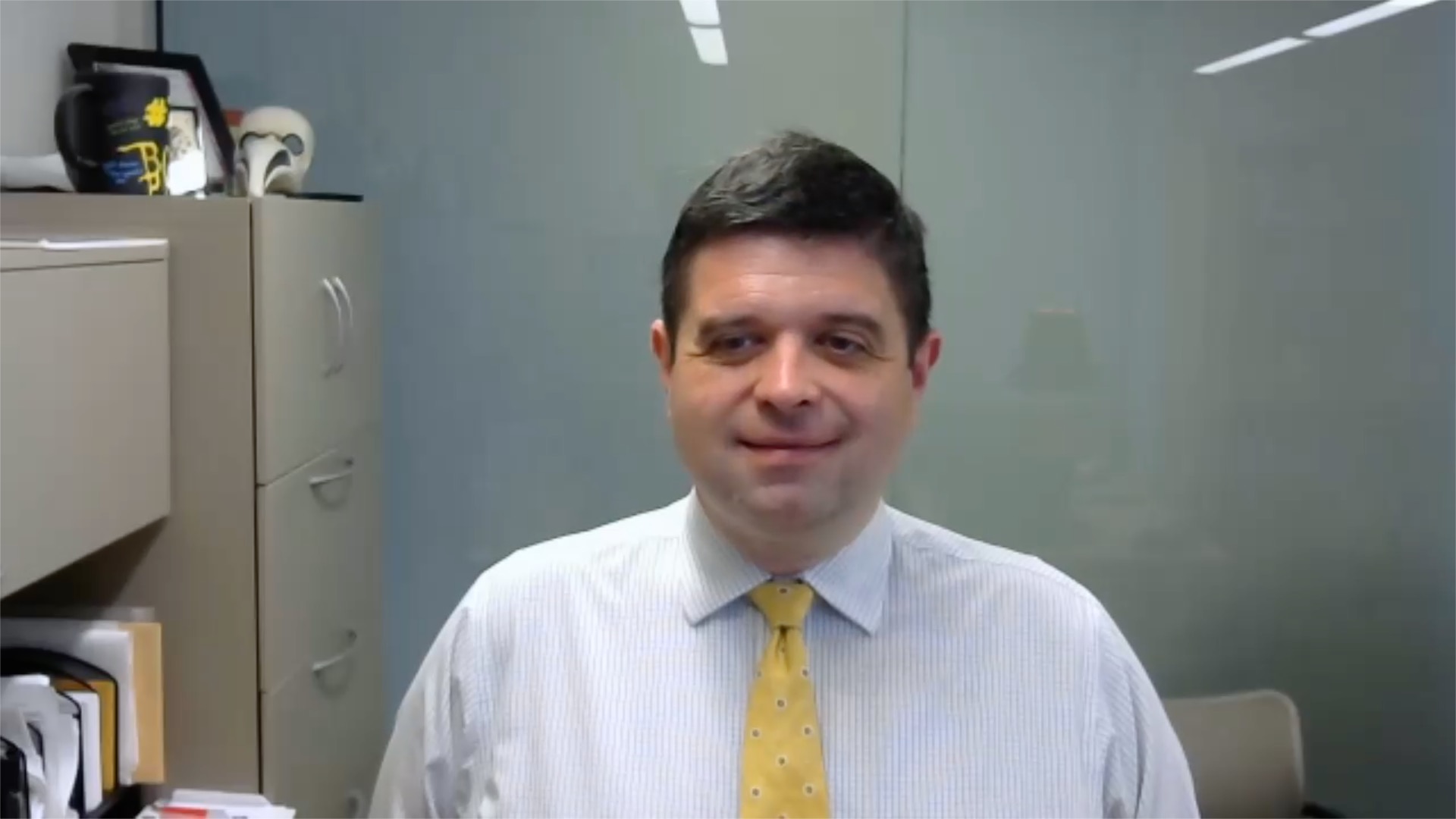
 July marks Sarcoma Awareness Month. This year, the focus is on supporting healthcare professionals by sharing practical guidance, training resources and real-world insights, helping recognize the early signs and early diagnosis. touchONCOLOGY spoke with Dr Rodrigo Munhoz (Clinical Oncologist, Skin Cancer and Sarcoma Group, Hospital Sírio-Libanês, São Paulo, Brazil) who shares his expert insights on the most impactful data from the recent ASCO 2025 congress and what it means for the future of sarcoma care.
The 2025 ASCO Annual Meeting featured pivotal updates in the sarcoma field, advancing our understanding of how immune checkpoint inhibitors and molecularly targeted therapies are reshaping the treatment landscape. While the diversity and rarity of sarcoma subtypes remain a major challenge, this year’s data underscored a common theme: synergistic strategies and rational drug development can deliver meaningful clinical benefit across histologies.
Combining immunotherapy with conventional therapies in sarcoma
For decades, chemotherapy has remained the backbone of systemic therapy in unselected soft tissue sarcomas. However, data from ASCO 2025 indicate that immunotherapy may meaningfully augment standard cytotoxic approaches in selected subtypes expanding the role of immune checkpoint blockade beyond alveolar soft part sarcomas and cutaneous sarcomas.
In undifferentiated pleomorphic sarcoma (UPS), a notoriously aggressive and immune-infiltrated histology, the Spanish Sarcoma Group’s ImmunoSarc II (Cohort 7A) trial evaluated the addition of nivolumab to first-line epirubicin and ifosfamide in advanced disease. The phase Ib study, presented by Dr. Martín-Broto and colleagues, demonstrated promising activity among 16 evaluable patients with advanced UPS, resulting in an objective response rate (ORR) of 68.8% and a median progression-free survival (mPFS) of approximately 10 months, with a manageable toxicity. These results support a new paradigm wherein immune priming with chemotherapy may enhance the sensitivity of sarcomas to checkpoint blockade.1
In parallel, a distinct cohort of the ImmunoSarc II trial explored the combination of sunitinib and nivolumab in extraskeletal myxoid chondrosarcoma (EMC). EMC harbours frequent NR4A3 fusions and displays an indolent, yet highly chemoresistant clinical course. Presented by Dr. Hindi and collaborators, this study showed objective responses and durable disease control in a patient population typically refractory to conventional approaches, with a 6 month-PFS rate of 77% and a clinical benefit rate of 91%. While the study had a modest sample size, the findings reinforce the relevance of molecularly informed immunotherapy trials in rare sarcoma subsets.2
A similar rationale underpinned the single-arm phase II trial evaluating camrelizumab plus apatinib in refractory chordoma, also presented at ASCO 2025. Chordomas, often driven by brachyury overexpression, pose a significant therapeutic challenge and are typically resistant to systemic therapy, having shown low responsiveness to TKIs or checkpoint inhibitors alone. However, this combination achieved disease control in a significant proportion of patients, with na ORR of 24.2% and 48.5% using RECIST and Choi criteria, respectively, and a safety profile consistent with prior studies of VEGFR blockade. The potential synergy between anti-angiogenic and immune checkpoint inhibition appears to be a recurring theme across select sarcoma histologies, and deserves further investigation in this scenario that remains an unmet need.3
New roles for targeted therapies: From rare entities to emerging standards
Targeted therapy also took center stage at ASCO 2025, particularly in rare tumours where traditional systemic therapy has limited utility.
The MANEUVER study, a global phase III trial, marked a breakthrough in tenosynovial giant cell tumour (TGCT). While TGCT often behaves as a benign entity, its management has historically been plagued by local recurrence and morbidity associated with repeated surgeries. Pimicotinib, an oral CSF-1R inhibitor, was evaluated in patients with symptomatic, unresectable TGCT. The study met its primary and all secondary endpoints, with significant reductions in tumour burden and patient-reported pain and stiffness. In addition, pimicotinib resulted in encouraging tolerability, requiring dose reductions in 8% of the patients and leading to treatment discontinuations in 2% of the cases, safety outcomes that may compare favorably with additional CSF-1R inhibitors investigated in TGCT.4
In the realm of more aggressive tumours, anlotinib emerged as a potent addition to doxorubicin-based therapy. A phase III trial evaluated anlotinib plus epirubicin followed by maintenance with anlotinib versus standard epirubicin plus placebo in advanced soft tissue sarcoma. While final OS results are pending, interim analysis revealed improved PFS (median PFS 8.6 months vs 3.0 months; HR 0.30; p<0.001) and disease control, particularly in leiomyosarcoma and synovial sarcoma subgroups, with toxicities mostly driven by the cytotoxic agent. These data suggest that sustained TK inhibition may help prolong chemotherapy benefit, particularly in histologies with prominent vascular signaling.5
Kaposi sarcoma (KS), although rare in most oncology practices, was also represented with novel data. A proof-of-concept trial investigated abemaciclib, a CDK4/6 inhibitor, based on preclinical evidence linking KSHV-driven tumourigenesis to dysregulated cell cycle pathways. The trial demonstrated encouraging clinical responses (response rate: 84%), with limited impact on CD4+ T cell counts in patients with HIV-associated and classic KS. These findings not only highlight a potential new mechanism-based therapy for KS but also reflect a broader trend: the repurposing of drugs developed for common malignancies in rare, virus-driven tumours.6
A glimpse ahead
As sarcoma oncologists, we often navigate the intersection of uncertainty, complexity, and heterogeneity. The 2025 ASCO Annual Meeting showcased a series of thoughtful, biology-driven investigations that may serve as blueprints for future trial design. What distinguishes this year’s data is not just the variety of agents or targets and successfully conducted clinical trials even in rare subgroups, but rather the clear emphasis on combination strategies tailored to histology, immune microenvironment and molecular biology.
References
1. Martin-Broto J et al. ImmunoSarc2 (Cohort 7a): A Spanish Sarcoma Group (GEIS) phase Ib trial of epirubicin and ifosfamide plus nivolumab in first line of advanced undifferentiated pleomorphic sarcoma (UPS). J Clin Oncol 2025; Volume 43, Number 16_suppl: abstract 11514
2. Hindi N et al. Phase II of sunitinib plus nivolumab in extraskeletal myxoid chondrosarcoma: Results from the GEIS, ISG, and UCL IMMUNOSARC II Study. J clin Oncol 2025; Volume 43, Number 16_suppl: abstract 11513
3. Yang Y et al. Camrelizumab plus apatinib in patients with advanced or refractory chordoma: A single-arm, open-label, phase 2 trial. J Clin Oncol 2025; Volume 43, Number 16_suppl: abstract 11503
4. Niu X et al. Pimicotinib in tenosynovial giant cell tumor (TGCT): Efficacy, safety and patient-reported outcomes of phase 3 MANEUVER study. J Clin Oncol 2025; Volume 43, Number 16_suppl: abstract 11500
5. Zhou Y et al. Anlotinib in combination with epirubicin followed by maintenance anlotinib versus placebo plus epirubicin as first-line treatment for advanced soft tissue sarcoma (STS): A randomized, double-blind, parallel-controlled, phase III study. J Clin Oncol 2025; Volume 43, Number 16_suppl: abstract 11501
6. Ramaswami R et al. A phase I/II study of abemaciclib, a CDK4/6 inhibitor, in participants with HIV-associated and HIV-negative Kaposi sarcoma. J Clin Oncol 2025; Volume 43, Number 16_suppl: abstract 11505
Disclosure: Rodrigo Munhoz has no financial or non-financial conflicts of interest to declare in relation to this article.
Cite: Sarcoma Awareness Month 2025: Highlights from ASCO 2025! touchONCOLOGY. July 24th, 2025
SIGN UP to touchONCOLOGY!
Join our global community today for access to thousands of peer-reviewed articles, expert insights, and learn-on-the-go education across 150+ specialties, plus concise email updates and newsletters so you never miss out.