
EUROPEAN HAEMATOLOGY – VOLUME 3 – SUMMER 2009
This issue of European Haematology reflects the magnificently exciting scope of this field. The enduring allure of haematology that drew many of us into this speciality is its unsurpassed track record of continually being able to bridge the arenas of biomedical research and clinical practice. Haematology epitomises the concept of ‘translational research’ – the truly […]
Anaemia and Haemoglobinuria
Pernicious anaemia, which causes severe vitamin B12 (cobalamin) deficiency, used to be a fatal, non-curable disease. However, in 1926 George Minot and William Murphy discovered that pernicious anaemia can be treated by including large amounts of liver in patients’ food. Vitamin B12 is synthesised exclusively in microorganisms. Animals obtain vitamin B12 from foods contaminated with […]
Pathophysiology of Paroxysmal Nocturnal Haemoglobinuria
Coagulation Disorders
Disseminated intravascular coagulation (DIC) is a systemic, life-threatening disease characterised by excess thrombin generation and simultaneous activation of the fibrinolytic system. The clinical condition that follows is characterised by the presence of various degrees of both intravascular coagulation and haemorrhage resulting from consumption of coagulation factors. According to the Subcommittee (SSC) on DIC of the […]
von Willebrand disease (VWD) is the most common inherited bleeding disorder and is characterised by low levels of and/or abnormal function in the plasma protein von Willebrand factor (VWF). Typically, laboratory investigation entails initial plasma testing of factor VIII coagulant (FVIII:C), VWF protein antigen (VWF:Ag) and VWF activity, which is classically assessed using the ristocetin […]
von Willebrand disease (VWD) is a bleeding disorder caused by quantitative or qualitative defects of von Willebrand factor (VWF). VWF is a high-molecular-weight (HMW) glycoprotein that plays an essential part in the early phases of haemostasis by promoting platelet adhesion to the subendothelium and platelet aggregation under high shear stress conditions.1 VWF is also the […]
Thrombosis
D-dimer Formation
Infection in Haematology
Human cytomegalovirus (HCMV) is a DNA virus that is part of the herpesviridae family. Infections are common, with the worldwide seroprevalence for CMV ranging from approximately 60 to 100%.1 In immunocompetent individuals, primary CMV infection is often an asymptomatic and self-limiting disease. If symptomatic, it often occurs as a mononucleosis-like syndrome with fever, lymphadenopathy and […]
Haematological Malignancies
The outcome of adults with high-risk acute lymphoblastic leukaemia (ALL) features at diagnosis, slow responders or those with recurrent disease is poor with standard chemotherapy. Autologous stem cell transplantation (ASCT) has not demonstrated a clear advantage over chemotherapy for ALL patients in complete remission due to the high relapse rate,1–4 and allogeneic SCT (alloSCT) – […]
Anaplastic Lymphoma Kinase
The term myeloproliferative disorders (MPDs) was introduced by Demeshek in 1951.1 He postulated that various clinical conditions, such as chronic granulocytic leukaemia, polycythaemia vera (PV), idiopathic myeloid metaplasia, thrombocythaemia, megacariocytic leukaemia and erythroleukaemia, can be regarded as variable manifestations of proliferative activity of bone marrow cells. In the following few years, the term MPD was […]
Allogeneic stem cell transplantation (alloSCT) has been utilised in the management of leukaemia for several decades and has established its role in producing long-term remission. In the context of multiple myeloma (MM), alloSCT induces the highest rate of remissions, including molecular remission, resulting in long-term disease-free survival (DFS) in 20 years, but there is good […]
Trending Topic
Multiple myeloma (MM) is the second most common haematological malignancy, with upwards of 35,000 diagnoses in the USA each year.1,2 It remains a leading cause of blood cancer–related mortality worldwide, and although therapeutic advances have allowed for significant improvements in the median overall survival,3,4 the majority of patients still experience cycles of relapse that are eventually fatal.5 While patients with MM are living longer, a subgroup with high-risk disease at diagnosis still does poorly, with a median […]
Journal Archive
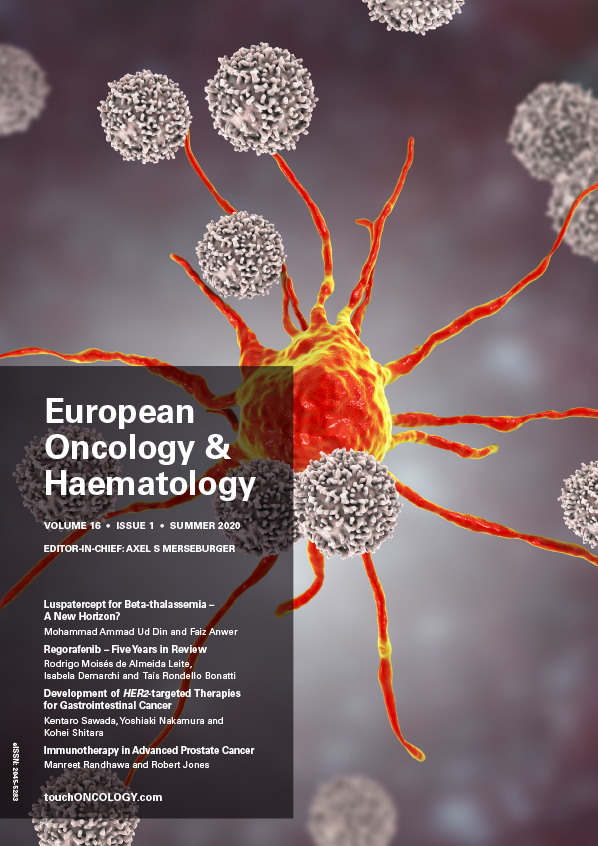
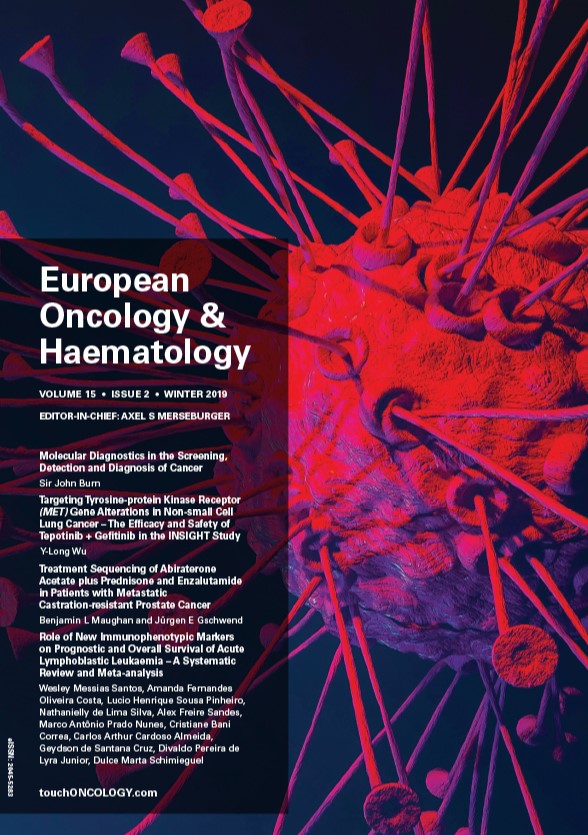
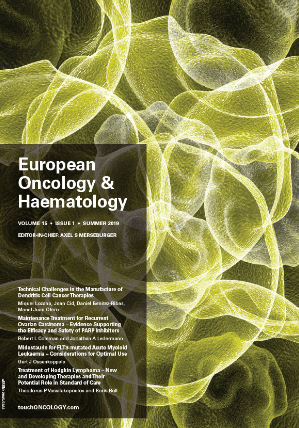
Comprising articles contributed by renowned thought leaders, European Oncology & Haematology is a peer reviewed, free-to-access, bi-annual journal that aims to disseminate best practice through review articles addressing the most important and salient developments in the Oncological & Haematology field in practical terms.
European Oncology & Haematology
Frequency: Two print issues per year (Summer & Winter); ePub ahead of print throughout the year.
Print ISSN: 2045-5275 Electronic ISSN: 2045-5283
Indexing: EMBASE, Google Scholar, Genamics JournalSeek
Log into your Touch Account
Keep track of your clinical interests and newsletter subscriptions.
Sign up with an Email
Or use a .
Register now for FREE access
Already registered? Login below.