
Metastatic triple-negative breast cancer (mTNBC) is a clinically heterogeneous disease, but compared with other breast cancer subtypes, triple-negative breast cancer (TNBC) is generally associated with a poorer prognosis and has historically had limited therapeutic options.1 The 5-year survival rate remains only 14.9%, and some patients are unable to proceed to second-line or later-line therapies because of rapid disease progression or clinical deterioration.2,3 These observations underscore the importance of selecting the most effective treatment strategy in the first-line setting (Figure 1).
Figure 1: Evidence-based first-line treatment of mTNBC
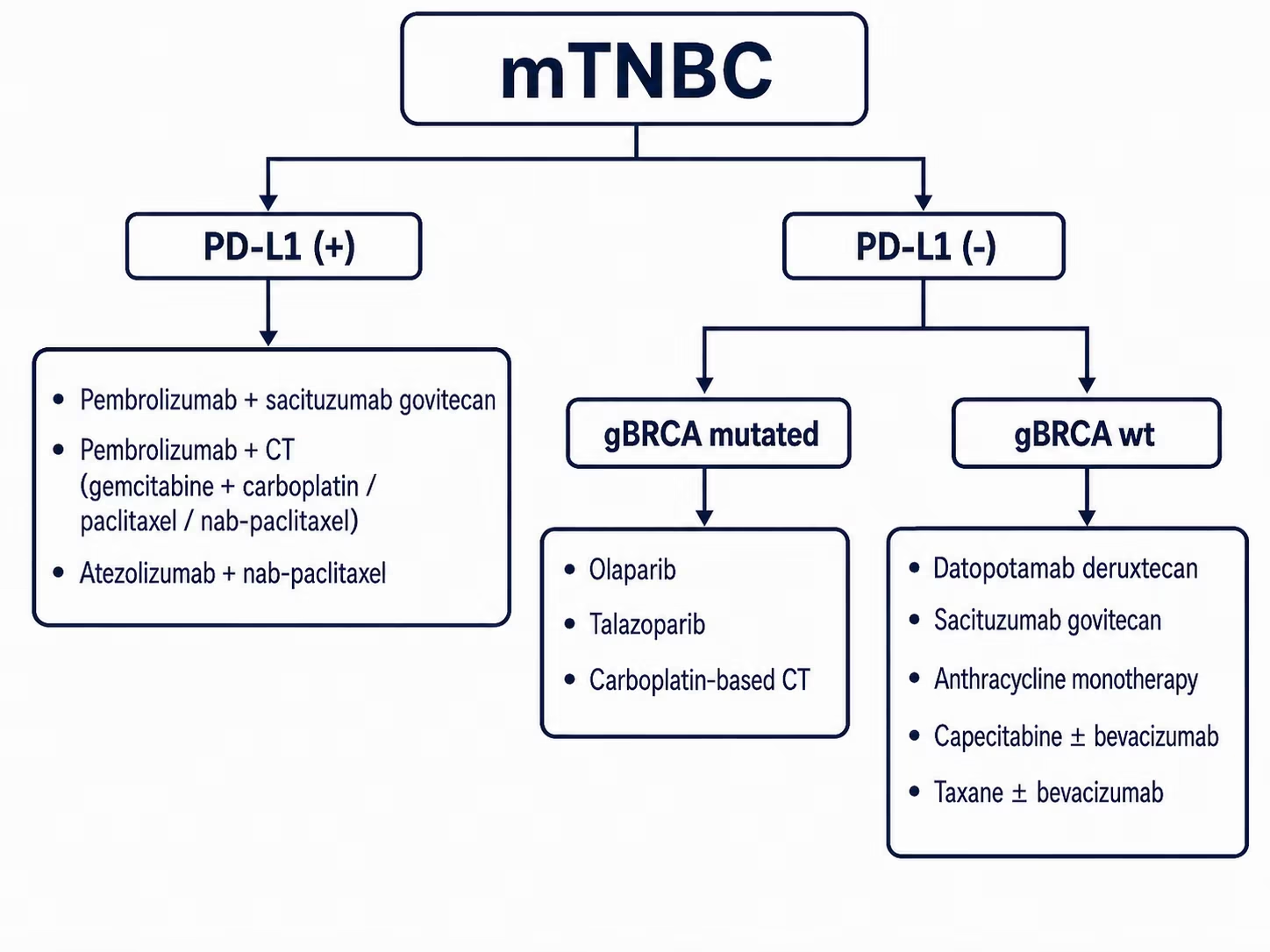
Figure 1 was created and edited using ChatGPT (OpenAI, San Francisco, CA, USA)
CT = chemotherapy; gBRCA = germline BRCA1/2 ; mTNBC = metastatic triple-negative breast cancer; PD-L1 = programmed death-ligand 1; wt = wild type
Trophoblast cell–surface antigen 2 (TROP2) is expressed in approximately 88% of TNBC cases and has been exploited as a therapeutic target.4 In recent years, antibody–drug conjugates (ADCs) have emerged as an important class of therapeutics in breast cancer. ADCs consist of a monoclonal antibody that recognizes a tumor-associated cell-surface antigen, a linker and a cytotoxic payload. TROP2-targeting ADCs bind to TROP2-expressing tumor cells, undergo internalization and release their payload intracellularly, thereby inducing DNA damage and tumor cell death mainly through topoisomerase I inhibition. As discussed below, sacituzumab govitecan (SG), the first clinically established TROP2-targeting ADC in breast cancer, significantly improved progression-free and overall survival (OS) compared with physician‘s choice chemotherapy in patients with previously treated unresectable locally advanced or mTNBC.5
Following the development of SG, several other TROP2-targeting ADCs have entered clinical development and practice, with emerging evidence suggesting clinically meaningful activity beyond conventional standard therapies. Differences in linker stability, drug-to-antibody ratio (DAR) and payload membrane permeability may contribute to distinct efficacy and toxicity profiles among these agents, underscoring the need to understand the characteristics of each ADC as evidence continues to evolve. This article summarizes the current evidence for TROP2-targeting ADCs in mTNBC, with a particular focus on their role in earlier lines of treatment for advanced disease.
Sacituzumab govitecan
The ASCENT trial (Trial of Sacituzumab Govitecan in Participants With Refractory/Relapsed Metastatic Triple-Negative Breast Cancer [TNBC] [ASCENT]; ClinicalTrials.gov identifier: NCT02574455) was a randomized phase III trial that enrolled patients with unresectable locally advanced or mTNBC who had relapsed after or were refractory to at least two prior standard chemotherapy regimens, including prior taxane therapy for any indication (ClinicalTrials.gov identifier: NCT02574455).5 Patients with stable brain metastases for at least 4 weeks before treatment were eligible for the trial but were excluded from the primary efficacy analysis. In the primary efficacy population, which included 468 patients without baseline brain metastases, patients were randomly assigned to receive SG or physician‘s choice chemotherapy, consisting of capecitabine, eribulin, gemcitabine or vinorelbine. Median progression-free survival (PFS) was 5.6 months (95% confidence interval [CI]: 4.3–6.3) with SG and 1.7 months (95% CI: 1.5–2.6) with chemotherapy (hazard ratio [HR]: 0.41; 95% CI: 0.32–0.52). Median OS was also significantly longer with SG than with chemotherapy: 12.1 months (95% CI: 10.7–14.0) versus 6.7 months (95% CI: 5.8–7.7), respectively (HR: 0.48; 95% CI: 0.38–0.59; p<0.0001).5
Based on the ASCENT results, SG received regular US Food and Drug Administration (FDA) approval in April 2021 for adult patients with unresectable locally advanced or mTNBC who had received two or more prior systemic therapies, including at least one for metastatic disease.6 SG had previously received accelerated FDA approval in April 2020 for a pretreated mTNBC population.7
More recently, trial results of SG in previously untreated mTNBC have been reported.8
ASCENT-03
ASCENT-03 (Study of Sacituzumab Govitecan-hziy Versus Treatment of Physician’s Choice in Patients With Previously Untreated Locally Advanced Inoperable or Metastatic Triple-Negative Breast Cancer [ASCENT-03]; ClinicalTrials.gov identifier: NCT05382299) is a randomized phase III trial comparing SG with standard chemotherapy in previously untreated patients with unresectable locally advanced or mTNBC who are not candidates for programmed cell death protein 1 (PD-1)/programmed death-ligand 1 (PD-L1) inhibitors (ClinicalTrials.gov identifier: NCT05382299). Eligible patients included those with PD-L1-negative tumors, as well as patients with PD-L1-positive tumors previously treated with PD-1/PD-L1 inhibitors in the early-stage setting or deemed ineligible for immune checkpoint inhibitor (ICI) therapy due to comorbidities. Patients were required to have experienced disease recurrence at least 6 months after completing perioperative therapy. Patients with previously treated, stable central nervous system (CNS) metastases were also eligible. A total of 558 patients were randomized in a 1:1 ratio to receive SG or chemotherapy (paclitaxel, nab-paclitaxel or gemcitabine plus carboplatin).
The primary endpoint, median PFS assessed by blinded independent central review (BICR), was 9.7 months (95% CI: 8.1–11.1) in the SG group versus 6.9 months (95% CI: 5.6–8.2) in the chemotherapy group (HR: 0.62; 95% CI: 0.50–0.77; p<0.0001).8 At the time of the primary analysis, no difference in OS was observed. However, the data were immature, and approximately 82% of patients in the control arm crossed over to SG after disease progression. Therefore, OS results should be interpreted with caution, considering both data immaturity and crossover effects. Nevertheless, these findings support the early introduction of ADCs in mTNBC.
The main adverse events associated with SG include neutropenia, nausea and diarrhea, consistent with its previously established safety profile. In ASCENT-03, grade ≥3 neutropenia occurred in 43% of patients, and six treatment-related deaths were reported, all attributable to infections. These findings highlight the importance of careful monitoring for myelosuppression and early signs of infection. Neutropenia and febrile neutropenia are clinically important toxicities of SG. The current FDA-approved US prescribing information recommends primary prophylaxis with granulocyte colony-stimulating factor starting in the first cycle for all patients at increased risk of febrile neutropenia, including older patients and those with previous neutropenia, poor performance status, organ dysfunction or multiple comorbidities.
ASCENT-04
In PD-L1-positive mTNBC, treatment strategies based on ICIs are currently the standard approach. This has led to the hypothesis that combining ICIs with ADCs may provide greater benefit than ICIs plus chemotherapy. ASCENT-04/KEYNOTE-D19 (Study of Sacituzumab Govitecan-hziy and Pembrolizumab Versus Treatment of Physician’s Choice and Pembrolizumab in Patients With Previously Untreated, Locally Advanced Inoperable or Metastatic Triple-Negative Breast Cancer [ASCENT-04]; ClinicalTrials.gov identifier: NCT05382286) is a representative trial in this evolving field.
The ASCENT-04/KEYNOTE-D19 study enrolled patients with previously untreated, locally advanced unresectable or mTNBC with PD-L1-positive disease, defined as a combined positive score (CPS) ≥10 by the 22C3 assay. Patients were eligible if they had de novo metastatic disease or recurrence at least 6 months after completion of curative-intent therapy; prior anti-PD-1/-PD-L1 therapy in the neoadjuvant or adjuvant setting was permitted. A total of 443 patients were randomized 1:1 to receive SG plus pembrolizumab (n=221) or pembrolizumab plus chemotherapy (n=222), consisting of paclitaxel, nab-paclitaxel or gemcitabine plus carboplatin, as in KEYNOTE-355. Prior anti-PD-1/PD-L1 therapy was uncommon, reported in 4% and 5% of patients, respectively. Brain metastases were present at baseline in a small proportion of patients, occurring in eight patients (4%) in the SG plus pembrolizumab arm and six patients (3%) in the chemotherapy plus pembrolizumab arm.
The median PFS was 11.2 months (95% CI: 9.3–16.7) in the pembrolizumab plus SG group and 7.8 months (95% CI: 7.3–9.3) in the control group (HR: 0.65; 95% CI: 0.51–0.84; p<0.001).9 Although OS data are not yet mature, this phase III trial demonstrated that ICI plus ADC improves PFS compared with ICI plus chemotherapy in PD-L1-positive mTNBC. No new safety signals were observed, and the safety profile was consistent with the known toxicities of SG and pembrolizumab. The most common treatment-emergent adverse events in the SG plus pembrolizumab arm were diarrhea (70% any grade; 10% grade ≥3), nausea (68%; 3%), neutropenia (63%; 43%), fatigue (58%; 8%), alopecia (52%; <1%), constipation (41%; 1%) and anemia (37%; 7%). Rates of grade ≥3 treatment-emergent adverse events were similar between the SG plus pembrolizumab and chemotherapy plus pembrolizumab arms (71% versus 70%).
Based on the ASCENT-03 and ASCENT-04/KEYNOTE-D19 results, in addition to its existing indication for previously treated mTNBC, SG received approval from the FDA in June 2026 as first-line therapy for unresectable locally advanced or mTNBC, either as monotherapy for patients who are not candidates for PD-1/PD-L1 inhibitor-based therapy or in combination with pembrolizumab for patients with PD-L1-positive (CPS ≥10) tumors.
Datopotamab deruxtecan
Datopotamab deruxtecan (Dato-DXd) is a TROP2-targeting ADC with the same payload as trastuzumab deruxtecan (T-DXd) but with a lower DAR: 4 versus 8 for T-DXd. Its efficacy has already been demonstrated in estrogen receptor (ER)-positive/human epidermal growth factor receptor 2 (HER2)-negative disease in the TROPION-Breast01 trial (A Study of Dato-DXd Versus Investigator’s Choice Chemotherapy in Patients With Locally Recurrent Inoperable or Metastatic Triple-negative Breast Cancer, Who Are Not Candidates for PD-1/PD-L1 Inhibitor Therapy [TROPION-Breast02]; ClinicalTrials.gov identifier: NCT05374512), leading to its use in later-line settings.10
Clinical trial data suggest that Dato-DXd may also become a first-line treatment option for mTNBC.
TROPION-Breast02
TROPION-Breast02 is a randomized, open-label, global phase III trial evaluating Dato-DXd as first-line therapy in patients with locally recurrent inoperable or mTNBC for whom immunotherapy was not an option (ClinicalTrials.gov identifier: NCT05374512). Eligible patients had received no prior chemotherapy or targeted systemic therapy for locally recurrent inoperable or metastatic disease, and no minimum disease-free interval (DFI) was required. The trial included patients with PD-L1-low tumors (CPS <10), as well as patients with PD-L1-high tumors who were unable to receive PD-1/PD-L1 inhibitors because of relapse after prior PD-1/PD-L1 inhibitor therapy for early-stage breast cancer, comorbidities precluding immunotherapy or lack of regulatory access. A total of 644 patients were randomized 1:1 to receive Dato-DXd (n=323) or investigator’s choice chemotherapy (n=321), consisting of paclitaxel, nab-paclitaxel, capecitabine, eribulin or carboplatin. Patients with asymptomatic, stable brain metastases were permitted; baseline brain metastases were reported in 36 patients (11%) in the Dato-DXd arm and 28 patients (9%) in the investigator’s choice chemotherapy arm. Median PFS by BICR was 10.8 months (95% CI: 8.6–13.0) in the Dato-DXd group and 5.6 months (95% CI: 5.0–7.0) in the chemotherapy group (HR: 0.57; 95% CI: 0.47–0.69; p<0.0001). Median OS was 23.7 months (95% CI: 19.8–25.6) versus 18.7 months (95% CI: 16.0–21.8), respectively (HR: 0.79; 95% CI: 0.64–0.98; p=0.0291).11
The most common treatment-related adverse events associated with Dato-DXd included stomatitis, nausea, dry eye, alopecia, fatigue, constipation and vomiting. In the Dato-DXd arm, stomatitis occurred in 57% of patients, with grade ≥3 events in 8%; nausea occurred in 45%, with grade ≥3 events in <1%; and dry eye occurred in 24%, with grade ≥3 events in 1%. Other common treatment-related adverse events included alopecia (41%, grade ≥3: 0%), fatigue (32%, grade ≥3: 3%), constipation (23%, grade ≥3: <1%), vomiting (20%, grade ≥3: 1%), decreased appetite (15%, grade ≥3: <1%) and anemia (15%, grade ≥3: 2%).
Stomatitis and ocular toxicities are characteristic adverse events of Dato-DXd and may be related, at least in part, to TROP2 expression in normal epithelial tissues. These toxicities are generally manageable with local prophylactic measures and early intervention. For stomatitis, oral hygiene education, steroid-containing mouthwash and oral cryotherapy using ice chips or cold water during infusion may be considered. For ocular toxicity, prophylactic or therapeutic use of artificial tears, avoidance of contact lenses when symptomatic and ophthalmologic evaluation when clinically indicated are recommended. Dose interruption or dose reduction should also be considered according to severity. Although adjudicated drug-related interstitial lung disease/pneumonitis was less frequent, occurring in approximately 3% of patients with grade ≥3 events in <1%, it can be severe and requires careful monitoring for respiratory symptoms.
Based on the results of TROPION-Breast02, the FDA approved Dato-DXd in May 2026 for adult patients with unresectable or mTNBC who are not candidates for PD-1/PD-L1 inhibitor therapy. This indication reflects the first-line setting evaluated in TROPION-Breast02, in which patients had received no prior chemotherapy or targeted systemic therapy for locally recurrent inoperable or metastatic disease.
Cross-trial comparison of ASCENT-03 and TROPION-Breast02
Both ASCENT-03 and TROPION-Breast02 evaluated TROP2-targeting ADCs as first-line therapy for patients with mTNBC who were not candidates for ICIs. However, direct cross-trial comparison is not appropriate because of differences in patient populations, control regimens, crossover design, CNS involvement and safety profiles.
One important difference is the DFI. ASCENT-03 required recurrence at least 6 months after completion of curative-intent therapy, whereas TROPION-Breast02 had no minimum DFI requirement and included patients with early relapse, including those with DFI of 0–6 months. The control arms also differed: ASCENT-03 used taxane- or platinum-based chemotherapy, whereas TROPION-Breast02 used a broader investigator’s choice chemotherapy arm that included capecitabine and eribulin. In addition, ASCENT-03 allowed eligible patients in the control arm to receive second-line SG after BICR-confirmed disease progression, whereas TROPION-Breast02 did not include a similar protocol-specified crossover to Dato-DXd.
CNS disease is another relevant consideration. Both trials allowed patients with stable brain metastases, but robust prospective data evaluating intracranial activity remain limited, and no direct comparison of intracranial efficacy between SG and Dato-DXd is available.
Finally, SG and Dato-DXd differ in their toxicity profiles despite both targeting TROP2. Dato-DXd is characterized by stomatitis and ocular surface toxicity, which are considered on-target/off-tumor toxicities potentially related to TROP2 expression in normal epithelial tissues. In contrast, SG is more commonly associated with off-target toxicities such as neutropenia and diarrhea, likely related to systemic exposure to its 7-ethyl-10-hydroxycamptothecin (SN-38) payload and bystander payload release. Therefore, SG and Dato-DXd should not be treated as a homogeneous class, and treatment selection should consider trial eligibility, DFI, prior immunotherapy exposure, CNS disease status, toxicity profile and feasibility of supportive care.
BEGONIA
There is a biological rationale for synergy between ADCs and ICIs, including ADC-induced immunogenic cell death and increased T-cell infiltration within the tumor microenvironment, which may enhance the antitumor activity of ICIs.12 Thus, the combination of ADCs and ICIs represents a rational therapeutic strategy in PD-L1-positive mTNBC. The results of ASCENT-04 support this hypothesis. As with SG, Dato-DXd is also being evaluated in combination with ICIs in mTNBC populations.
In the BEGONIA trial (A Study of Novel Anti-cancer Agents in Patients With Metastatic Triple Negative Breast Cancer [BEGONIA]; ClinicalTrials.gov identifier: NCT03742102), a two-part open-label study presented at the European Society for Medical Oncology (ESMO) congress 2025, the combination of Dato-DXd and durvalumab demonstrated antitumor activity as first-line therapy for previously untreated, unresectable locally advanced or mTNBC.13 Arm 7 enrolled patients regardless of PD-L1 expression, with a median follow-up of 35.0 months. The confirmed objective response rate (cORR) was 79.0% (95% CI: 66.8–88.3), median duration of response (DoR) was 17.6 months (95% CI: 10.5–27.3) and median PFS was 14.0 months (95% CI: 11.0–21.1).13 In Arm 8, which enrolled patients with PD-L1-positive tumors, DoR and PFS data were immature due to shorter follow-up; however, the cORR was 81.8% (95% CI: 64.5–93.0). Based on these findings, the phase III TROPION-Breast05 trial is on-going, comparing Dato-DXd with or without durvalumab versus pembrolizumab plus chemotherapy in the first-line setting for PD-L1-positive unresectable or mTNBC.
Sacituzumab tirumotecan
Sacituzumab tirumotecan (sac-TMT) is an emerging TROP2-targeting ADC that may further expand treatment options for mTNBC. While sac-TMT shares the same target as SG and Dato-DXd, it has distinct structural characteristics, including a different linker, DAR and a belotecan-derived topoisomerase I inhibitor payload. These differences may influence its efficacy and toxicity profile, and clinical evidence supporting its activity in mTNBC is accumulating.
OptiTROP-Breast01
OptiTROP-Breast01 is a randomized phase III trial comparing sac-TMT with physician’s choice single-agent chemotherapy in patients with locally recurrent or mTNBC who had received at least two prior regimens (including at least one for metastatic disease) (SKB264 Injection vs Investigator Selected Regimens to Treat Locally Advanced, Recurrent or Metastatic Triple-negative Breast Cancer; ClinicalTrials.gov identifier: NCT05347134).14 A total of 263 patients were randomized 1:1. Median PFS by BICR was 6.7 months (95% CI: 5.5–8.0) in the sac-TMT group versus 2.5 months (95% CI: 1.7–2.7) in the chemotherapy group (HR: 0.32; 95% CI: 0.24–0.44; p<0.00001). Median OS was not reached in the sac-TMT group (95% CI: 11.2 months–not estimable) versus 9.4 months (95% CI: 8.5–11.7) in the chemotherapy group (HR: 0.53; 95% CI: 0.36–0.78; p=0.0005).
Common adverse events included myelosuppression and stomatitis. The most frequent treatment-related adverse events in the sac-TMT group were anemia (82.3%; grade ≥3: 29.2%), neutropenia (78.5%; 34.6%), leukopenia (76.2%; 27.7%), thrombocytopenia (40.8%; 13.1%) and stomatitis (49.2%; 10.0%).
OptiTROP-Breast05
The phase II OptiTROP-Breast05 trial, presented at the 2025 American Society of Clinical Oncology (ASCO) Annual Meeting, evaluated sac-TMT monotherapy as first-line treatment for patients with unresectable locally advanced or mTNBC (SKB264 +/- KL-A167 in Recurrent or Metastatic HER2-negative Breast Cancer; ClinicalTrials.gov identifier: NCT05445908).15 Key eligibility criteria included no prior systemic therapy for advanced or mTNBC, an Eastern Cooperative Oncology Group (ECOG) performance status of 0 or 1 and eligibility regardless of PD-L1 expression status; for patients with recurrent disease, DFI of at least 6 months was required. Sac-TMT was administered at 5 mg/kg every 2 weeks until disease progression or unacceptable toxicity. In this single-arm study, 41 patients were treated; 32 patients (78.0%) had PD-L1 CPS <10 and 9 patients (22.0%) had PD-L1 CPS ≥10. Regarding DFI, 12 patients (29.3%) had de novo metastatic disease, 8 patients (19.5%) had recurrence within 6–12 months and 21 patients (51.2%) had recurrence after ≥12 months.
Median PFS was 13.4 months (95% CI: 9.9–18.2) in the overall population and 13.1 months (95% CI: 8.9–18.2) in the PD-L1 CPS <10 subgroup, suggesting promising first-line activity of sac-TMT. Notably, most patients in this study had PD-L1-low disease, a population with limited immunotherapy-based treatment options. However, these findings should be interpreted with caution because OptiTROP-Breast05 was a small, single-arm phase II study without a chemotherapy control arm. Therefore, although the results support further development of sac-TMT in first-line mTNBC, they are not yet directly comparable with randomized phase III trials such as ASCENT-03 or TROPION-Breast02. A randomized phase III trial, TroFuse-011, is on-going to evaluate sac-TMT monotherapy or sac-TMT plus pembrolizumab versus treatment of physician’s choice in patients with previously untreated, locally recurrent unresectable or mTNBC with PD-L1 CPS <10.
Conclusion
Evidence supporting TROP2-targeting ADCs in mTNBC is rapidly accumulating. Randomized phase III trials have demonstrated the clinical benefit of ADC-based strategies in earlier-line metastatic settings, including SG and Dato-DXd in ICI-ineligible populations and SG plus pembrolizumab in PD-L1-positive disease (Table 1).8,9,11,15 These findings indicate a shift from chemotherapy-centered treatment toward ADC-based strategies. However, TROP2-targeting ADCs should not be regarded as a homogeneous class because their payloads, linker characteristics, administration schedules, toxicity profiles and supportive care requirements differ among agents (Table 2).16–18 Treatment selection should be individualized according to patient characteristics, disease biology, prior therapy, expected toxicity and feasibility of adverse-event management.
Table 1: Comparison of key trials of trophoblast cell–surface antigen 2-targeting ADCs in the first-line treatment of mTNBC8,9,11,15
|
| ASCENT-038 | ASCENT-04/KEYNOTE-D199 | TROPION-Breast0211 | OptiTROP-Breast0515 |
| Phase | Phase III, randomized | Phase III, randomized | Phase III, randomized | Phase II, single-arm |
| Study population | 1L unresectable a/mTNBC; ICI-ineligible | 1L PD-L1+ (CPS ≥10) unresectable a/mTNBC | 1L locally recurrent inoperable/mTNBC; immunotherapy not an option | 1L unresectable a/mTNBC; PD-L1 any |
| Key eligibility criteria | No prior advanced therapy; PD-(L)1 not candidate; DFI ≥6 months; stable CNS metastasis allowed | No prior advanced therapy; CPS ≥10; DFI ≥6 months or de novo; prior early ICI allowed | No prior advanced chemo/targeted therapy; no minimum DFI; stable/asymptomatic brain mets allowed | No prior advanced therapy; ECOG PS 0–1; recurrent disease DFI ≥6 months |
| Treatment arm | SG 10 mg/kg days 1 and 8 of every 21-day cycle | SG 10 mg/kg days 1 and 8 of every 21-day cycle + pembrolizumab every 21 days | Dato-DXd 6 mg/kg every 3 weeks | sac-TMT 5 mg/kg every 2 weeks |
| Control regimen | Paclitaxel, nab-paclitaxel or gemcitabine/carboplatin | Pembrolizumab + paclitaxel, nab-paclitaxel or gemcitabine/carboplatin | Investigator’s choice: paclitaxel, nab-paclitaxel, capecitabine, eribulin or carboplatin | None |
| Randomization ratio | 1:1 (N=558) | 1:1 (N=443) | 1:1 (N=644) | Single arm (N=41) |
| ORR | 48% versus 46% | 60% versus 53% | 62.5% versus 29.3% | 70.7% |
| Median PFS | 9.7 versus 6.9 mo; HR 0.62 | 11.2 versus 7.8 mo; HR 0.65 | 10.8 versus 5.6 mo; HR 0.57 | 13.4 mo overall; 13.1 mo CPS <10 |
| Median OS | Immature; crossover to SG allowed | Immature | 23.7 versus 18.7 mo; HR 0.79 | Not reported/mature |
| Key toxicities | Neutropenia, diarrhea, nausea; infection risk | Diarrhea, nausea, neutropenia, fatigue; irAEs | Stomatitis, nausea, dry eye/ocular toxicity; ILD monitoring | Myelosuppression and stomatitis |
ADC = antibody drug conjugate; a/mTNBC = advanced/metastatic triple-negative breast cancer; chemo = chemotherapy; CNS = central nervous system; CPS = Combined Positive Score; Dato-DXd = datopotamab deruxtecan; DFI = disease free interval; ECOG = Eastern Cooperative Oncology Group; HER2 = human epidermal growth factor receptor 2; HR = hazard ratio; ICI = immune checkpoint inhibitor; ILD = interstitial lung disease; irAEs = immune-related adverse events; 1L = first-line; mets = metastases; mo = month; ORR = overall response rate; OS = overall survival; PD-1 = programmed cell death protein 1; PD-L1 = programmed death-ligand 1; PFS = progression-free survival; PS = performance status; sac-TMT = sacituzumab tirumotecan; SG = sacituzumab govitecan.
Table 2: Structural and clinical comparison of trophoblast cell–surface antigen 2-targeting ADCs16–18
|
| Sacituzumab govitecan | Datopotamab deruxtecan | Sacituzumab tirumotecan |
| Payload | SN-38 | DXd | KL610023 |
| Linker | Hydrolyzable CL2A linker | Cleavable tetrapeptide-based linker | Hydrolytic Kthiol (pyrimidine-thiol) linker |
| Drug-to-antibody ratio16–18 | 7.6 | 4.0 | 7.4 |
| Dose | 10 mg/kg | 6 mg/kg | 5 mg/kg |
| Schedule | Days 1 and 8 of every 21-day cycle | Every 3 weeks | Every 2 weeks |
| Major adverse events | Neutropenia, diarrhea, nausea | Dry eye, stomatitis, nausea | Anemia, thrombocytopenia, stomatitis |
ADC = antibody drug conjugate; CL2A = abbreviation; DXd = deruxtecan.
Several key questions remain unresolved. Limited real-world data suggest that prior ADC exposure may reduce the efficacy of subsequent ADC therapy, highlighting the need to define optimal sequencing and mechanisms of resistance.19 In addition, TROP2-targeting ADCs are now being evaluated in earlier-stage TNBC, including ASCENT-05/OptimICE-RD for SG and TROPION-Breast03/04 for Dato-DXd-based strategies. As these agents move into earlier lines and disease stages, their optimal integration with immunotherapy, chemotherapy and other systemic therapies will remain an important focus of future research.
Abbreviations
ADC Antibody–drug conjugates
ASCO American Society of Clinical Oncology
BICR blinded independent central review
CI confidence interval
CNS central nervous system
cORR confirmed objective response rate
CPS combined positive score
DAR drug-to-antibody ratio
Dato-DXd datopotamab deruxtecan
DFI disease-free interval
DoR duration of response
ECOG Eastern Cooperative Oncology Group
ER estrogen receptor
ESMO European Society for Medical Oncology
FDAU.S. Food and Drug Administration
G-CSF granulocyte colony-stimulating factor
HER2 human epidermal growth factor receptor 2
ICI immune checkpoint inhibitor
ILD interstitial lung disease
mTNBC metastatic triple-negative breast cancer
OS overall survival
PD-1 programmed cell death protein 1
PD-L1 programmed death-ligand 1
PFS progression-free survival
sac-TMT sacituzumab tirumotecan
SG sacituzumab govitecan
T-DXd trastuzumab deruxtecan
TNBC triple-negative breast cancer
TROP2 trophoblast cell-surface antigen 2