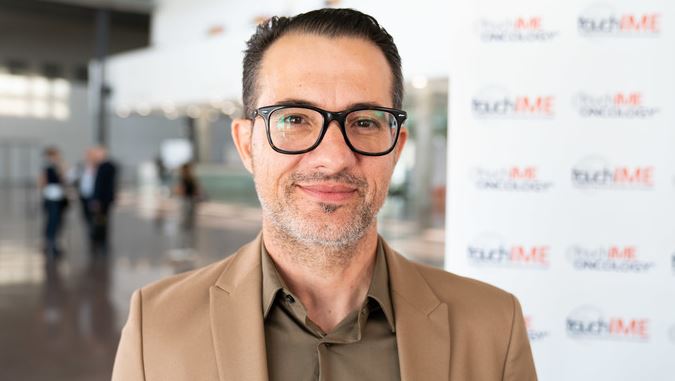
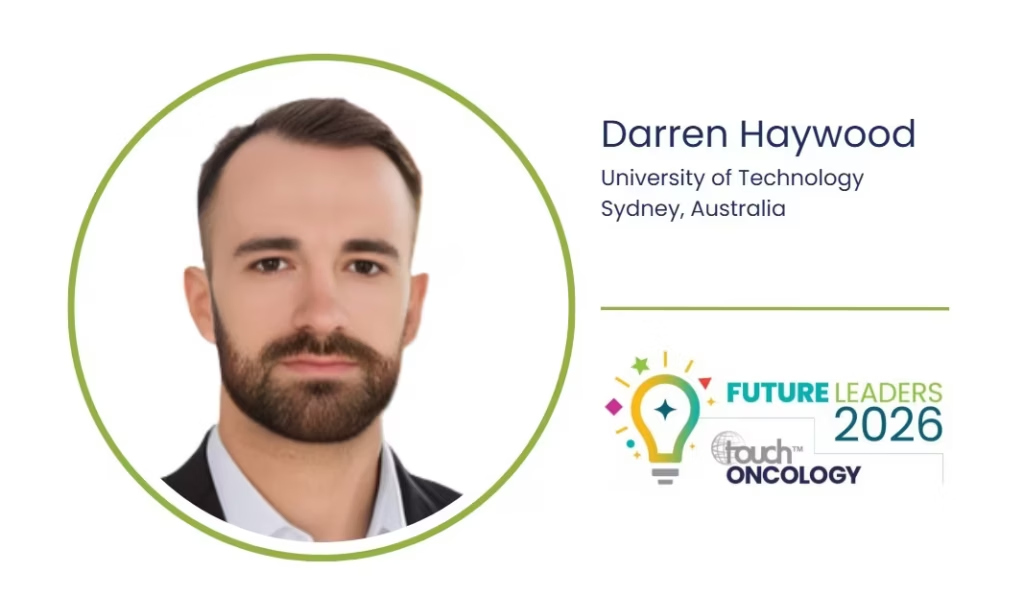
We are delighted to announce Dr Darren Haywood as a touchONCOLOGY Future Leader 2026, selected as a rising star poised to shape the future of cancer survivorship and supportive oncology.
Dr Haywood (University of Technology Sydney, Sydney, NSW, Australia) is an internationally recognized, emerging leader specializing in cancer survivorship. His academic work focuses on improving the identification and management of psychological challenges and cognitive impairment in people affected by cancer. He has a particular interest in moving beyond traditional mental illness diagnostic categories toward dimensional models of psychopathology, and embedding these approaches within routine cancer care. He works closely with consumers, clinicians and health systems to co‑design, evaluate and translate evidence‑based supportive care models that improve quality of life and long‑term outcomes.
In this Future Leaders interview, Dr Haywood reflects on the role of lived experience in shaping research, the importance of implementation in psycho-oncology and how more personalized approaches to mental health could transform cancer care.

“Psycho-oncology is moving toward a more dimensional understanding of mental health that reflects the real experiences of people with cancer”
Q: What aspects of your work do you find the most fulfilling?
What I find most fulfilling is work that has a tangible impact on how people affected by cancer are supported in real‑world care. This includes partnering with consumers, clinicians and services to translate research into practice, rather than research sitting on a (virtual) shelf. I’m particularly motivated by projects that improve how psychosocial and cognitive challenges are identified and addressed across the cancer trajectory, especially for groups whose needs are often overlooked. Mentoring other early‑career researchers and working within multidisciplinary teams is also deeply rewarding, as it helps build sustainable capacity and ensures that psycho‑oncology continues to evolve in ways that are meaningful, inclusive, and person‑centred.
Q: Looking ahead, what do you anticipate will be the biggest advancements or changes in your field over the next decade?
Looking ahead, I anticipate psycho‑oncology will increasingly shift away from strict diagnostic categories toward dimensional ways of understanding mental health, using frameworks such as the Hierarchical Taxonomy of Psychopathology (HiTOP). Rather than asking whether someone does or does not meet criteria for a specific disorder, care will focus more on patterns and severity of symptoms that change over time and often overlap. This approach better reflects the lived experience of people affected by cancer, where emotional, cognitive and physical symptoms are closely intertwined. As this shift gains traction, it is likely to support more personalized, flexible care and help mental health support become more seamlessly embedded within routine cancer services.
Q: How has working with patients shaped your approach to research?
Working closely with people affected by cancer has fundamentally shaped my approach to research and, more broadly, to improving care. It has reinforced that the most meaningful and effective interventions, tools, and resources are those designed win partnership with those with lived experience. Through consumer partnerships, co‑design, and involvement across projects, I’ve learned to prioritize what matters most to people in their everyday lives, rather than what is easiest to measure or implement. This has led me to place a strong emphasis on relevance, accessibility and real‑world feasibility in my work. It has also shifted my focus toward implementation and systems‑level change, ensuring that research outcomes translate into care that is genuinely person‑centred and responsive.
Disclosures: This short article was prepared by touchONCOLOGY in collaboration with Dr Haywood. No fees or funding were associated with its publication.
Citation: Dr Darren Haywood on bridging research and practice to improve psychosocial cancer care: touchONCOLOGY Future Leaders 2026. touchONCOLOGY. 14th April 2026.
Register now to receive the touchONCOLOGY newsletter!
Don’t miss out on hearing about our latest peer reviewed articles, expert opinions, conference news, podcasts and more.