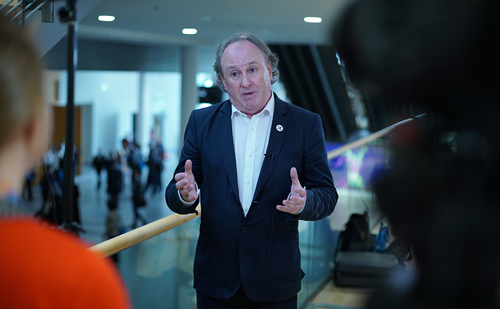

Maya Davies (final-year PhD student at the University of Adelaide, South Australia) is the 2025 MASCC Young Investigator Award recipient for her research into the neurological effects of childhood cancer treatments. Her work explores how cancer therapies and microbiota interactions can damage the blood-brain barrier – and how targeted interventions may help prevent this. Guided by her mentor, Associate Professor Hannah Wardill, Davies supports collaborative, consumer-driven research to address the unmet needs of childhood cancer survivors. She shares her insights on advancing supportive oncology through mechanistic understanding, personalized approaches and multi-disciplinary collaboration.
Q1. Please summarize the abstract and research that led to the award, and what this means to you personally and professionally?
The research that led to the award was a cumulation of a large component of my PhD work, performing a bedside-to-bench investigation of the neurological symptoms of childhood cancer treatments. My work focuses on understanding how systemic anti-cancer therapies cause toxicity to the central nervous system, despite the blood-brain barrier (BBB) being highly effective at protecting the brain from harmful circulating substances. However, increasing evidence suggests that plasma-borne products produced by the gut microbiota, the population of micro-organisms which reside within our gut, can influence BBB permeability, and we also know that a number of anti-cancer therapies are detrimental to the microbiota. The abstract that led to the award described a clinical study we performed characterizing biomarkers of microbiota function, peripheral immune activation, BBB damage and impaired neurological function in children who underwent allogeneic haematopoietic stem cell transplant. We identified correlations between these biomarkers and confirmed causality in the laboratory using a human stem cell-derived BBB model. Specifically, plasma from children following allogeneic haematopoietic stem cell transplant directly damaged the BBB, but this damage was prevented with anti-inflammatory interventions such as supplementation with beneficial microbiota-derived products.
As this research has spanned a significant proportion of my postgraduate research, the recognition of the quality of this work with the MASCC Young Investigator Award was not only an honour but also very encouraging to me personally, supporting the importance of this work to the field of supportive care in cancer. Professionally, the opportunity to present at the MASCC 2025 Annual Meeting and engage with leading experts in the field was invaluable, which I am sure will open many doors for future collaboration to aid with impactful translation of this research.
Q2. What is the most valuable lesson a mentor has shared with you, and how has it influenced your work?
One of the most valuable lessons I have learnt from my PhD supervisor, Associate Professor Hannah Wardill, is the importance of collaborative, multi-disciplinary research teams. By bringing diverse expertise to the table, it allows you to tackle problems from multiple angles and introduces alternative perspectives to discussions. As a result of this I have been involved in collaborations with experts ranging from basic science (including neuroscience, vascular biology and cell culture modelling) to clinicians, which I think has not only diversified my skillset and knowledge basis, but has also raised the calibre of my research outputs. A crucial component of this collaborative research is the importance of consumer partnerships and consumer-driven research projects, centring research objectives around the cancer survivorship experience. This is a practice inbuilt within Prof. Wardill’s research group, and it is a lesson I am committed to carrying forward, ensuring my future work continues to be guided by consumer-informed research priorities.
Q3. How do you see supportive care evolving as cancer therapies become more targeted and complex?
As cancer therapies become more targeted and complex, I think it will become increasingly important that supportive care measures also become equally individualized. In the current ‘omics’ era, predictive approaches based on personal risk factors hold promise for enabling earlier interventions and preventative care, moving beyond the traditional ‘watch and wait’ reactive model. Achieving this will require a stronger mechanistic understanding of treatment-related toxicities, which is still lacking for many side effects. In addition, the use of multi-disciplinary approaches to investigate symptoms as ‘clusters’ and not in isolation can help identify shared biological pathways which contribute to multiple symptoms, offering opportunities to address them in parallel and reducing reliance on polypharmacy. These advances will require breaking down the siloes between different departments and also increased collaboration and sharing of knowledge between clinicians and researchers, with societies such as MASCC well positioned to lead and foster these multi-disciplinary collaborations.
Q4. Where do you see the greatest unmet research needs in supportive oncology?
Cancer survivors encompass a highly heterogenous population requiring significant research breadth to address their diverse needs. However, research depth is also required to uncover the biological mechanisms which drive acute and long-term toxicities. To date, supportive oncology has largely focused on symptom management to reduce burden; however, there is now a clear need to complement this with preclinical and clinical studies aimed at characterizing pathophysiology. The success of antiemetic therapies provides a compelling example: by targeting 5-HT and NK-1 receptors to block emesis reflexes, a biologically driven approach to symptom control has transformed outcomes. Yet, in many other areas, especially paediatric supportive oncology, such mechanistic understanding remains limited. Historically considered as ‘small adults’, the distinctive nuances of paediatric oncology (i.e, cancer types and treatment approaches) coupled with their unique developmental biology, highlights the necessity of dedicated fundamental research into childhood cancer survivorship.
References
- Davies MR, Greenberg Z, van Vuurden DG, et al. More than a small adult brain: Lessons from chemotherapy-induced cognitive impairment for modelling paediatric brain disorders. Brain, Behavior, and Immunity. 2024:115;229–47. https://doi.org/10.1016/j.bbi.2023.10.013
- Cross CB, Bowen JM, Davies MR, Wardill HR. What lurks beneath the symptom? Why more basic scientists are needed in cancer supportive care and survivorship research. Supportive Care in Cancer. 2024:32(10);691. https://doi.org/10.1007/s00520-024-08901-9
About Maya Davies
Maya Davies is a final-year PhD student in the Supportive Oncology Research Group, University of Adelaide, Australia. Maya is applying fundamental neurophysiological approaches to better understand how anti-cancer therapies cause neurological complications in children with cancer. Maya’s dedication to promoting mechanistic investigation into childhood cancer survivorship is highlighted in her recent publication: More than a small adult brain: Lessons from chemotherapy-induced cognitive impairment for modelling paediatric brain disorders. In addition to her postgraduate research, Maya is an active member of MASCC, recently leading an initiative of the Pediatrics Study Group examining barriers and opportunities to implementing microbiome research into clinical practice in oncology.
 About the Multinational Association of Supportive Care in Oncology (MASCC)
The Multinational Association of Supportive Care in Cancer (MASCC) is an international, interdisciplinary organization dedicated to the practice, education and research of supportive care in cancer. Their mission is to continually improve the supportive care of people with cancer – from diagnosis through to survival or end-of-life care.
Disclosure: This short article was prepared by touchONCOLOGY in collaboration with the Multinational Association of Supportive Care in Oncology (MASCC). No fees or funding were associated with its publication. Maya Davies has no financial or non-financial conflicts of interest to disclose in relation to this article.
Related content
- The future of cancer survivorship care: 3 questions with Dr Darren Haywood
- Supportive oncology focus: Dr Díez de los Ríos de la Serna on integrating science and empathy
- “Challenges faced by Early Career Cancer Nurses and how EONS supports them in overcoming obstacles” by the EONS Early Career Nurses Working Group
Cite: MASCC Young Investigator Award Winner Maya Davies on childhood cancer survivorship. touchONCOLOGY. September 24th, 2025
SIGN UP to touchONCOLOGY!
Join our global community today for access to thousands of peer-reviewed articles, expert insights, and learn-on-the-go education across 150+ specialties, plus concise email updates and newsletters so you never miss out.