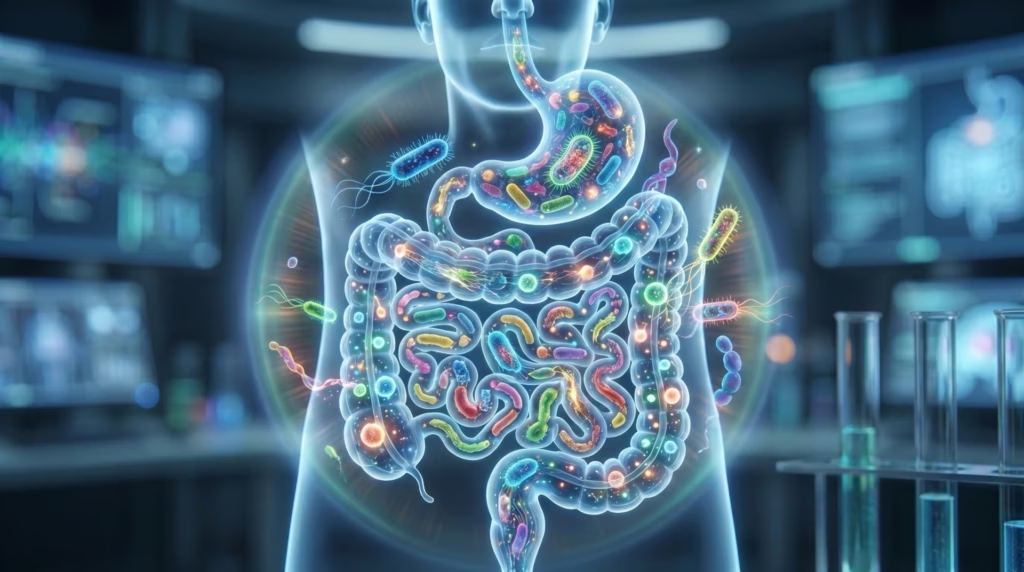
The microbiome has moved rapidly from an emerging area of cancer research towards a potential component of precision oncology. Yet despite compelling biological and observational evidence, important questions remain over how this knowledge should be translated safely into patient care.
To better understand how prepared the oncology community is to incorporate microbiome science into patient care, Prof Hannah Wardill and Dr Maya Davies (Adelaide University, South Australia) conducted an international survey through the Multinational Association of Supportive Care in Cancer (MASCC), exploring clinicians’ and researchers’ knowledge, perceptions and current practices relating to the gut microbiome. The survey examined areas including stool collection, probiotic use, faecal microbiota transplantation (FMT) and antibiotic decision-making, while also identifying the practical, safety and infrastructure barriers limiting the development of microbiome programmes.
In this Q&A, they examine where microbiome science may already be influencing oncology practice, where caution is still warranted and what will be required to move the field beyond microbiome associations towards validated, clinically meaningful interventions.
Key takeaways
- The microbiome matters, but clinical translation remains limited. 83% of respondents recognised its importance in cancer, but uncertainty remains over its role in clinical decisions.
- Antimicrobial stewardship can already incorporate microbiome considerations. Antibiotics remain essential, but unnecessary exposure should be minimised.
- Microbiome-targeted therapies require caution. Probiotics and FMT carry potential risks, particularly in immunocompromised patients.
- Infrastructure remains a major barrier. More than 70% of respondents were interested in developing microbiome programmes, but expertise and resources are lacking.
- Precision microbiome medicine requires robust clinical evidence. Practice-changing studies must demonstrate that modifying the microbiome improves meaningful clinical outcomes.
Please summarize the rationale behind conducting your survey and the main aims of your analysis.
The rationale was that microbiome science in oncology has advanced very rapidly, particularly around treatment efficacy and toxicity, but translation into clinical practice remains limited. We are increasingly seeing strong biological and observational evidence that the gut microbiome matters, yet much less is known about whether clinicians and researchers actually feel equipped to use that information, whether microbiome-related practices are already occurring in cancer centers, and what barriers were preventing further translation.
So we wanted to take a step back and understand the readiness of the oncology community itself. Through MASCC, we surveyed an international group of clinicians and researchers to characterize their current practices, knowledge and perceptions relating to the gut microbiome, including stool collection, probiotic use, FMT and antibiotic decision-making. We also wanted to identify practical barriers to establishing microbiome programmes and areas where uncertainty or safety concerns might be limiting adoption. In many ways, the study was intended as a snapshot of where the field sits between discovery and implementation.
Your survey found that 83% of respondents believe the gut microbiome plays an important role in cancer, yet uncertainty remains about how this knowledge should influence clinical practice. Where do you think the evidence is currently strong enough to change practice, and where should clinicians still exercise caution?
We think there is an important distinction between recognizing the microbiome as biologically important and having sufficient evidence to use it as a clinical decision-making tool. Our survey showed very strong agreement around the former, but much less certainty around the latter. That is probably an accurate reflection of where the evidence currently sits.
There are already areas where microbiome thinking should influence practice. One is antimicrobial stewardship. We now have substantial evidence that antibiotics can profoundly perturb the gut microbiome, and in some cancer settings, particularly immunotherapy, antibiotic exposure has repeatedly been associated with poorer outcomes. That does not mean antibiotics should be withheld when clinically indicated, but it does strengthen the argument for avoiding unnecessary exposure, minimizing duration where appropriate, and choosing the narrowest effective therapy.
Similarly, we are increasingly seeing institutions move away from the traditional neutropenic diet. Restricting fresh fruits, vegetables and other foods on the basis of their microbial content has not been shown to provide additional protection against infection and may unnecessarily restrict dietary diversity at a time when maintaining a diverse and resilient gut microbiome is likely to be important. This shift also reflects a growing appreciation that, particularly in profoundly immunocompromised patients, many serious infections arise from endogenous organisms already residing within the patient, including the gut microbiota, rather than simply from exposure to microorganisms in food or the external environment. Loss of colonization resistance and intestinal barrier integrity allow these organisms to dominate the gut and translocate, causing systemic infection. So rather than attempting to eliminate all exogenous microbial exposure, the emphasis is increasingly on antimicrobial stewardship and preservation of the intestinal ecosystem and barrier.
There is also established clinical use of microbiota-based therapies for recurrent Clostridioides difficile infection, although recommendations become much more cautious as the degree of immunocompromise increases. Current guidance supports conventional FMT in selected mildly or moderately immunocompromised adults with recurrent Clostridioides difficile infection, but suggests against it in severely immunocompromised patients because the evidence remains very limited.
Where we think we still need considerable caution is in using microbiome profiles to select cancer therapy, predict toxicity in an individual patient, prescribe probiotics, or administer FMT specifically to improve antitumour response or reduce treatment toxicity outside a clinical trial. There are extremely exciting signals in all of those areas, but we still lack sufficient standardization, prospective validation and large randomized studies to support routine use.
Probiotics are another area where greater caution may be warranted. They have traditionally been viewed as relatively benign, with an assumption that they are unlikely to cause harm, but that assumption is increasingly being challenged. Introducing a small number of organisms into an already disrupted ecosystem does not necessarily restore a healthy microbiome. In some settings, probiotic strains can become disproportionately abundant, delay recovery of the host microbiota and, counterintuitively, reduce microbial diversity. Observational data in patients receiving immunotherapy have also associated probiotic use with poorer treatment responses, although these findings should not be interpreted as evidence of causality, although these findings should not yet be interpreted as evidence of causality. So we think we need to move away from the idea that probiotics are universally “good for the gut.” Their effects are likely to be strain-, context- and patient-specific, and particularly during cancer treatment, we should be cautious about recommending them without evidence for the specific product and clinical setting.
So the field is at a point where the microbiome should increasingly inform how we think about care, but in most circumstances should not independently determine care.
Antibiotic use emerged as an important area where clinicians felt the microbiome should be considered. How should oncologists balance the potential impact of antibiotics on the microbiome with the immediate need to prevent or treat potentially life-threatening infections, particularly in immunocompromised patients?
The overriding principle has to remain that a potentially life-threatening infection takes priority. In a neutropenic or otherwise profoundly immunocompromised patient, clinicians should never delay or withhold necessary antibiotics because of concern about the microbiome.
Where microbiome science adds value is not in creating reluctance to treat infection, but in reinforcing good antimicrobial stewardship around that decision. We should be asking whether an antibiotic is truly indicated (and therefore whether we need better ways to rapidly differentiate infectious from non-infectious fever), whether prophylaxis remains necessary, whether therapy can be de-escalated once microbiological data are available, whether duration can safely be shortened, and whether broad-spectrum exposure can be minimized.
We think that distinction is very important because there is a risk that emerging microbiome data are interpreted too simplistically as “antibiotics are bad.” They are not. Antibiotics are lifesaving in oncology. The more appropriate message is that they are also biologically consequential, so they should be used purposefully rather than reflexively.
Our survey actually supports that nuance. Most respondents thought the microbiome should be considered when making prophylactic or empiric antibiotic decisions, but many centres also had established antimicrobial stewardship programmes and immunocompromised infectious disease expertise. That suggests the microbiome is best incorporated into existing infectious-disease stewardship rather than treated as a competing priority.
There were striking differences in attitudes towards microbiome-targeted interventions, particularly probiotics and faecal microbiota transplantation (FMT), with safety concerns being especially prominent in neutropenic patients. What do you think clinicians should currently know about the potential risks and benefits of these approaches in patients receiving cancer treatment?
The first thing is that “microbiome-targeted therapy” is not one homogeneous intervention. A commercial probiotic containing one or two strains is very different biologically from FMT, and both differ substantially from the defined microbial therapeutics now being developed the defined microbial therapeutics now being developed.
For probiotics, the attraction is obvious: they are accessible, familiar to patients and perceived as benign. But that familiarity can be misleading in oncology. In severely immunocompromised or neutropenic patients, there are legitimate concerns about translocation and bloodstream infection from organisms that would ordinarily be considered harmless. There is also very little evidence that off-the-shelf probiotics reproduce the complex ecological functions of a healthy microbiome. So caution is advisable for routine probiotic use during intensive cancer therapy unless there is evidence supporting a specific product, population and indication.
FMT is almost the opposite. It is an extremely potent ecological intervention and has clear efficacy in recurrent C. difficile infection. This leads to considerable safety concerns, particularly in profoundly immunocompromised patients, because we are deliberately introducing a large and diverse microbial community into a vulnerable host. However, that same ecological complexity may also be its major advantage. Low gut microbial diversity and loss of colonisation resistance are important predictors of subsequent infection in immunocompromised patients. By restoring microbial diversity and beneficial ecological functions, FMT has the potential to re-establish colonisation resistance, suppress expansion of opportunistic pathogens and support intestinal barrier integrity. In other words, although FMT introduces microorganisms, it may ultimately reduce rather than increase susceptibility to infection by restoring the ecosystem that normally protects against pathogen domination and translocation. Whether this translates into a reduced risk of infection in profoundly immunocompromised patients, however, remains to be established.
However, FMT can potentially transfer pathogens or other undesirable biological characteristics from donor to recipient. The challenge is therefore not simply whether FMT is “safe” or “unsafe” in these populations. It is about balancing the short-term risk of introducing microorganisms against the potential benefit of restoring a microbiome that is itself an important defence against infection. That is why rigorous donor screening, manufacturing controls and prospective safety studies are so important, particularly in neutropenic patients. This is also where more standardized and defined microbial therapeutics may ultimately offer an advantage: retaining the ecological functions we want while reducing some of the uncertainty associated with conventional donor-derived FMT.
Of course, some of these safety concerns can be avoided with non-live microbiome-targeted interventions, such as prebiotics. Dietary fibre is increasingly being investigated for its microbiome-modulating effects, including in oncology, and is often perceived as an inherently safe approach. However, it comes with its own challenges. Adherence can be difficult during cancer treatment, particularly in patients experiencing nausea, vomiting, appetite loss or taste changes, although enteral nutrition may provide opportunities to overcome some of these barriers. More fundamentally, prebiotics depend on the presence of microorganisms capable of utilizing them. In settings where the microbiome has been profoundly depleted or disrupted by antibiotics and intensive cancer therapy, their capacity to restore the ecosystem may therefore be limited. Put simply, you cannot feed what is no longer there. This is where approaches that actively restore missing organisms or functions, potentially followed by dietary strategies that support their persistence, become particularly interesting.
A lack of microbiome expertise and infrastructure was identified as one of the major barriers to both stool collection and FMT, despite more than 70% of respondents expressing an interest in developing a microbiome research or clinical programme. What infrastructure or multidisciplinary expertise is most urgently needed to move the field from research into routine oncology care?
One of the most striking findings was that interest was not really the limiting factor. More than 70% of respondents wanted to develop a microbiome programme, yet lack of expertise, infrastructure and funding repeatedly emerged as barriers. Only around one-third of respondents routinely collected stool samples, and lack of content experts and infrastructure were the most frequently identified obstacles.
The immediate need is therefore to build multidisciplinary microbiome capability around oncology, rather than expecting individual oncologists or centres to develop it independently.
That means bringing together oncologists, infectious-disease and antimicrobial stewardship teams, gastroenterologists, microbiologists, microbiome scientists, bioinformaticians, biostatisticians, dietitians, pharmacists and clinical trial specialists. For interventions such as FMT, you additionally need expertise in donor screening, manufacturing, regulatory compliance and biosafety.
Infrastructure is equally important. Even something as apparently simple as collecting stool requires standardized collection kits, storage and transport procedures, biobanking, linked clinical metadata and the capacity to process and analyse samples reproducibly. Without harmonization at that level, we generate large amounts of microbiome data that are very difficult to compare across institutions.
We therefore suggest the most efficient model will be networked centres of expertise, with standardized protocols and shared analytical and manufacturing capability, rather than every cancer centre independently building an entire microbiome programme. This is particularly important because the microbiome is inherently highly variable. It differs substantially between individuals and populations, and is influenced by geography, diet, medications, treatment exposures and many other factors. On top of that biological variation, we introduce considerable technical variation through differences in how samples are collected, stored, processed, sequenced and analysed. The result is enormous study-to-study variability, which remains one of the major challenges in translating microbiome research into clinically actionable findings.
Building coordinated networks would allow us to harmonize these processes, generate sufficiently large and diverse cohorts, and importantly, validate findings across centres and populations rather than repeatedly generating small, institution-specific signatures that may not reproduce elsewhere. Shared infrastructure would also make microbiome research accessible to centres that have the clinical populations and enthusiasm, but not the specialist expertise or resources to establish an entire programme independently. Our survey suggests there is a large community ready to participate if that infrastructure becomes accessible.
Ultimately, if we want a microbiome biomarker or therapeutic strategy to enter routine oncology care, it has to be robust to the natural variability of the microbiome, not dependent on the laboratory or population in which it was discovered.
Looking ahead, what would constitute a practice-changing microbiome study in oncology? Where do you think the next major advances are most likely to emerge?
A clear theme that emerged from our survey was that a practice-changing study would need to move beyond showing that the microbiome is associated with an outcome and demonstrate that deliberately modifying it produces a clinically meaningful benefit.
That means a sufficiently powered, multicentre randomized trial of a well-characterized and reproducible intervention, with a clearly defined clinical endpoint such as response, survival, treatment toxicity, infection or quality of life. It should also incorporate longitudinal microbiome and functional analyses so that we can demonstrate not simply that the intervention worked, but how it worked, who benefited and whether the biological effect was reproducible.
The next major advances are likely to come from three related areas. First is precision microbial therapeutics, moving away from crude interventions toward rationally selected strains or communities designed to deliver specific functions. Second is patient stratification, identifying baseline microbial or host-microbiome signatures that tell us who is most likely to benefit from intervention. And third is integration of the microbiome with other biological information, particularly immune, metabolic and clinical data, rather than treating it as an isolated biomarker.
Using the microbiome to improve immunotherapy efficacy is an obvious area where this could happen because the biological signal is already substantial. But supportive oncology may also be particularly fertile ground. Treatment-related infection, mucosal injury, graft-versus-host disease and other toxicities are all settings where the microbiome is disrupted, the clinical unmet need is large, and there are plausible mechanisms through which restoration of microbial function could improve outcomes.
Ultimately, we predict the field will change when we stop asking “which single bacterium is associated with a good outcome?” and start being able to say “this patient has this microbiome-associated vulnerability, and we can safely modify it with this defined intervention to improve this specific clinical outcome.” That is the transition from microbiome description to precision microbiome medicine.
About the Multinational Association of Supportive Care in Oncology (MASCC)
The Multinational Association of Supportive Care in Cancer (MASCC) is an international, interdisciplinary organization dedicated to the practice, education and research of supportive care in cancer. Their mission is to continually improve the supportive care of people with cancer – from diagnosis through to survival or end-of-life care.
This content has been developed independently by Touch Medical Media for touchONCOLOGY & touchHEMATOLOGY. Views expressed are the speaker’s own and do not necessarily reflect the views of Touch Medical Media.
Cite: The microbiome in oncology: From emerging evidence to clinical practice. touchONCOLOGY. 8th October 2026.
Editor: Sophie Nickelson