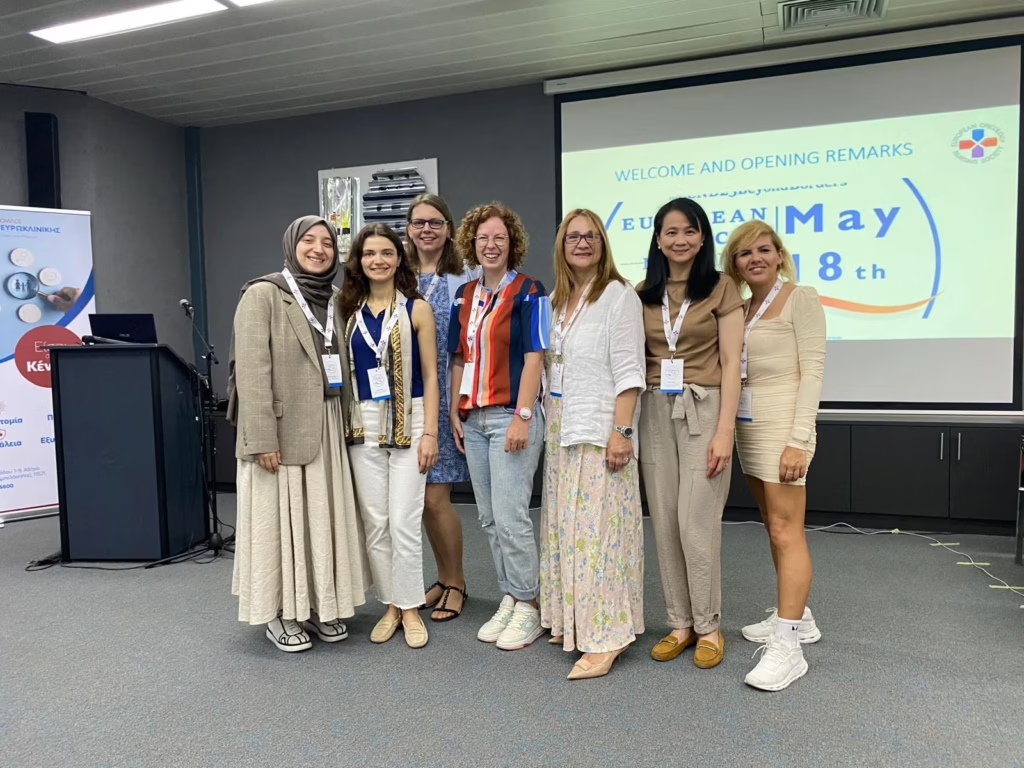
Have you ever considered what advocacy truly means?
What it represents for you, your patients, and your colleagues?
 We’re confident that you already act as an advocate, but can you identify yourself as one? Let’s explore together!
Advocacy is a broad and sometimes overwhelming concept. Its meaning doesn’t always translate across languages, and even finding an accurate translation can be challenging. Nurses, in their daily work, support vulnerable individuals who cannot speak up for themselves due to illness, mental capacity, or social circumstances. However, raising your voice—whether for others or for yourself—can be difficult for many reasons.
Based on existing research, the European Oncology Nursing Society’s (EONS) Advocacy Working Group has developed a guide to help you understand and apply advocacy effectively. They created a toolkit specifically designed for cancer nurses to advocate on behalf of those affected by cancer, recognizing advocacy as a crucial pillar of care.
What Advocacy Means
Advocacy is a deliberate process, based on proven evidence, to directly and indirectly influence decision-makers, stakeholders and relevant target groups to support and implement measures that contribute to the fulfilment of the rights of specific groups of people. Advocacy originates from “advocare”, “call to one’s aid” or to speak out on behalf of someone, as a legal counsellor. Conceptually, advocacy fits into a range of activities that include organizing, lobbying and campaigning (Advocacy toolkit Unicef, 2010).
According to the World Health Organization (WHO, 1995), health advocacy involves a mix of individual and social actions designed to gain political commitment, policy support, social acceptance and systems support for a particular health goal or program (www.who.nl).
The Vital Role of Patient Advocacy
One of the most important responsibilities of a cancer nurse is patient advocacy, which focuses on promoting patient safety and quality of care (Nsiah et al., 2019).
The Challenges We Face
Advocacy becomes even more challenging when considering the rising number of cancer patients alongside shortages in nursing staff. A Macmillan report highlights that 21% of cancer patients receive treatment but lack proper care, and 25% do not have access to specialist cancer nursing support (Macmillan Report, 2021).
Standing up for a patient’s rights, values, wellbeing, and best interests is not easy. International research has identified barriers such as feelings of powerlessness, insufficient support, and legal constraints that can prevent nurses from fully realizing their advocacy role (Tomaschewski-Barlem et al., 2017; Seal, 2007; Hanks, 2010).
What Helps Us Advocate
Several factors facilitate effective patient advocacy, including:
- nurses’ knowledge and competencies
- personal qualities and traits
- multidisciplinary team approach
- effective communication
- relationships with patients and their families
- recognition of patients’ needs and desires
- adequate nursing staff
- support from head nurses
Advocacy from the Start
Education plays a crucial role in raising awareness of advocacy among nurses and nursing students, helping them navigate conflicting situations and overcome obstacles (Hanks, 2008). Incorporating advocacy into nursing education is essential not only for enhancing the quality of care but also as an ethical responsibility. Both the International Council of Nurses (ICN, 2019) and the World Health Organization (WHO, 2019) have urged nurses to take a more active role in leadership, policy development, and advocacy. This call is helping to drive leadership, policy development and advocacy education for nurses (Turale & Kunaviktikul, 2019) and with this appropriate academic preparation will increase nurse’s astuteness and skills. Moreover, practicing advocacy in safe, controlled settings can increase students’ confidence to speak up in real clinical environments.
We Make the Difference
Advocacy is a foundational element in improving healthcare, not only for patients but also for healthcare workers. In cancer care, where patients are often dealing with life-threatening diseases, the advocacy role becomes even more pronounced. However, this responsibility comes with its own set of challenges, which are exacerbated by systemic issues like nurse shortages and heavy workloads.
Nurses are integral to the healthcare system, and their well-being directly impacts the quality of care they provide. Addressing issues such as workload, stress, and professional recognition are critical to maintaining a sustainable healthcare workforce. In fact, nurse advocacy can lead to better outcomes for everyone—patients, healthcare systems, and the nurses themselves.
Advocacy focused on nurses requires a commitment to ongoing education—not only about clinical practice but also about the rules, policies, and standards governing the profession. It involves developing skills in mentoring, peer review, teaching, and research to uphold and enhance the quality and safety of patient care as well as nursing practice (Institute of Medicine, 2011).
Only through advocacy actions by nurses for nurses themselves it will be possible to guarantee future benefits for the profession and, more generally, for health systems. By applying skills like negotiation, collaboration, and influence, we can advocate effectively for nurses, turning our current challenges into future benefits.
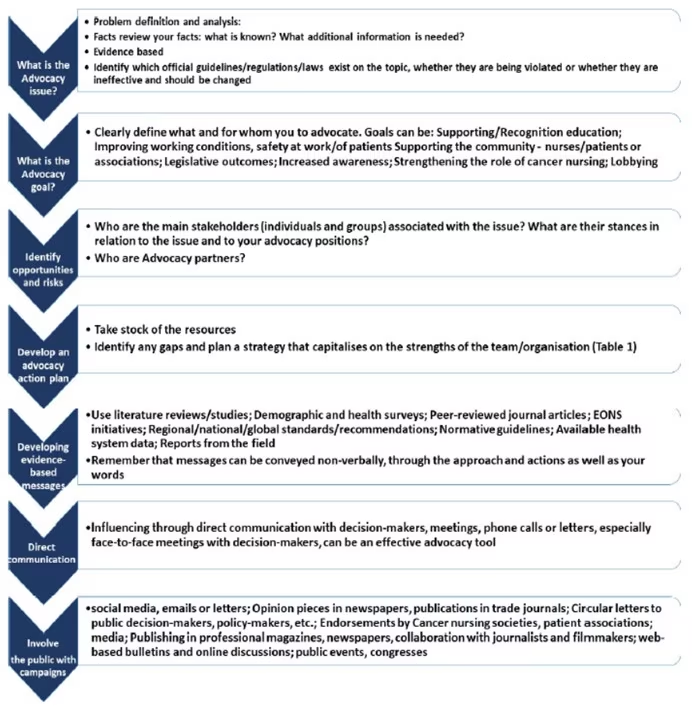
 The EONS Advocacy Toolkit offers a clear, step-by-step framework to guide cancer nurses through this process, ensuring you have the right tools to create meaningful change in your field.
The advocacy actions of nurses also seek to improve the work environment thus leading to a change in clinical cancer care practice with positive impacts on the needs of people affected by cancer and cancer nurses’ wellbeing – especially through the values and standards of nursing practice and shaping and improving the knowledge, attitudes, beliefs and behaviors of nurses (Devereux, 2022).
Learn more about The European Oncology Nursing Society (EONS)
Disclosure: This short article has been published in collaboration with the European Oncology Nursing Society (EONS). No fees or funding were associated with its publication.
Cite: The voice of care: advocacy. touchONCOLOGY. November 6th, 2025
SIGN UP to touchONCOLOGY!
Join our global community today for access to thousands of peer-reviewed articles, expert insights, and learn-on-the-go education across 150+ specialties, plus concise email updates and newsletters so you never miss out.