
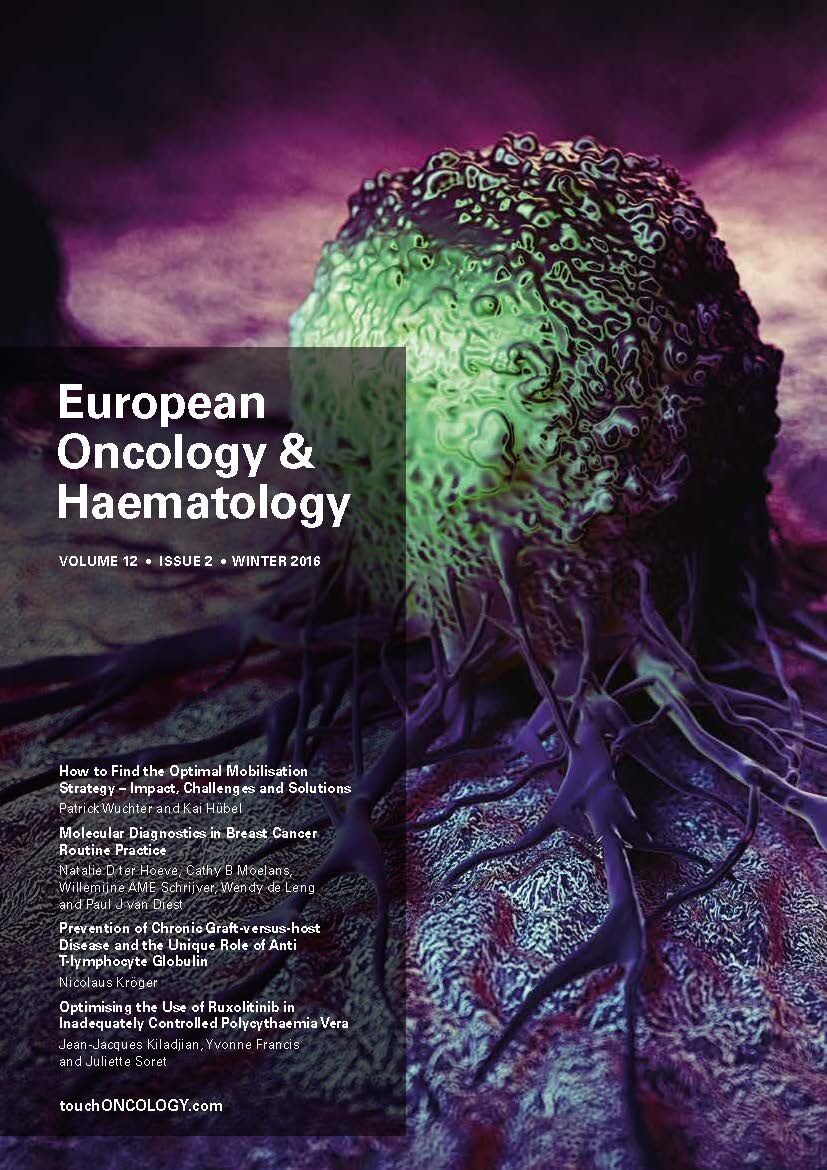
EUROPEAN ONCOLOGY & HAEMATOLOGY – VOLUME 12 ISSUE 2 – WINTER 2016
Welcome to the winter 2016 edition of European Oncology and Haematology. Please enjoy our latest publication, covering a range of topics in the oncology field. The journal is introduced by a foreword from one of our expert authors, Dr Kai Hübel. In this edition, we are delighted to announce the appointment of our new Editor-in-Chief, Axel Merseburger. You can read about this in the Letter from the Editor-in-Chief.
Featured in this edition is an expert interview with Dr Karen A Gelmon, on treatment updates for in hormone receptor-positive advanced breast cancer. Kiladjian et al. review the use of ruxolitinib in polycythaemia vera; and Wuchter and Hübel discuss finding optimal mobilisation strategy. Other review topics include graft-versus-host disease and multiple myeloma. Original research in this issue takes a look at hepatic iron overload in myelodysplastic syndrome.
We hope that you find this edition interesting and informative and we look forward bringing you more timely reviews and expert content in 2017.
Welcome to the latest edition of European Oncology & Haematology, which features a wide variety of topical articles. This issue begins with an expert interview with Karen Gelmon on the latest advances in treatments for women with hormone receptor-positive advanced breast cancer, for which effective therapeutic options still remain a major unmet need. One of […]
Letter from the Editor-in-Chief
I am delighted to take on the role of Editor-in-Chief for European Oncology & Haematology and look forward to working with everyone involved in developing the journal. European Oncology & Haematology has gained a reputation for publishing high quality, accessible articles. These articles are selected for their assessment of current practices and research and discussion […]
Expert Interview
Endocrine treatment constitutes the therapeutic backbone for hormone receptor-positive breast cancer,1 the most common breast cancer subtype.2 Despite its efficacy, endocrine resistance can arise3 and alternative treatments options are a pressing requirement. Recently, in the double-blind, multicentre, phase III trial, Fulvestrant and AnastrozoLe COmpared in hormonal therapy Naïve advanced breast cancer (FALCON), the selective oestrogen […]
Reviews
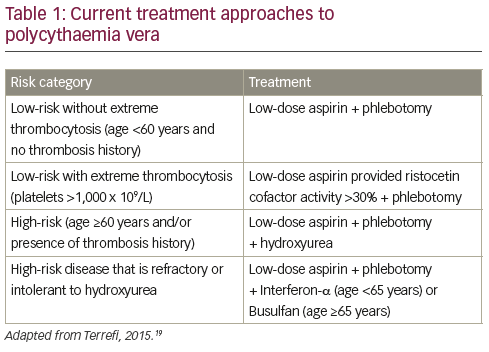
Polycythaemia vera (PV) is a chronic myeloproliferative neoplasm characterised by unregulated proliferation of red blood cells, and sometimes leukocytes and platelets in the absence of a recognisable physiological stimulus.1–4 Increased red blood cell mass leads to hyperviscosity of the blood and increased risk of thrombosis. In addition, patients may have a high symptom burden that […]
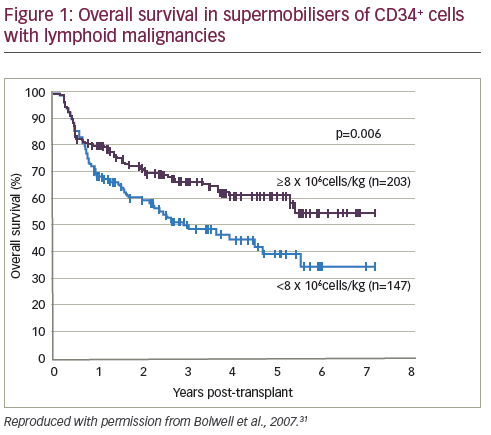
Autologous haematopoietic stem-cell transplantation (HSCT) is widely employed in haematological malignancies including multiple myeloma (MM),1 Hodgkin and non-Hodgkin lymphoma (HL and NHL)2–5 and acute myeloid leukaemia (AML).6,7 High-dose chemotherapy is an effective treatment strategy in numerous malignant conditions, however, it requires the subsequent use of autologous HSCT in order to restore bone marrow function, mostly […]
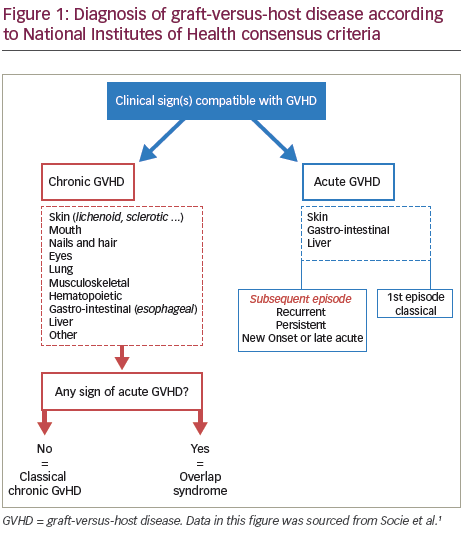
Chronic graft-versus-host disease (GVHD) is one of the major complications of allogeneic haematopoietic stem cell transplantation (HSCT) resulting from a complex interaction between the donor-derived immune system and recipient organ.1 While acute GVHD is a distinctive syndrome consisting of the development of mainly dermatitis, hepatitis and enteritis, chronic GVHD describes a more diverse syndrome, potentially […]
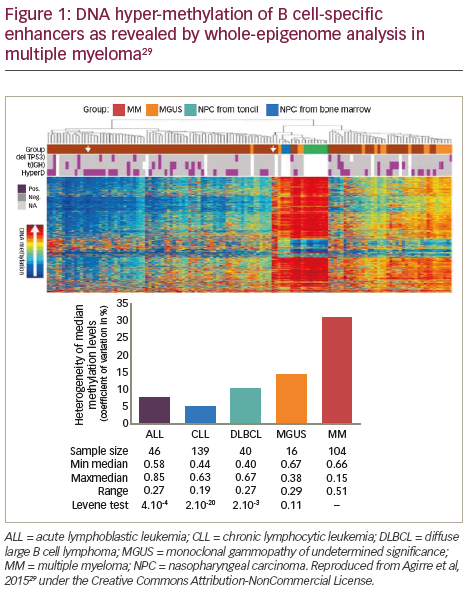
Epigenetics encompasses heritable changes in the pattern of gene expression mediated by mechanisms other than alterations in primary nucleotide sequence. The epigenome is an inheritable record of changes to the DNA and histone proteins, such as methylation and nucleosome remodelling that directs which genes are to be silenced or expressed. Following early studies of abnormal […]
Original Research
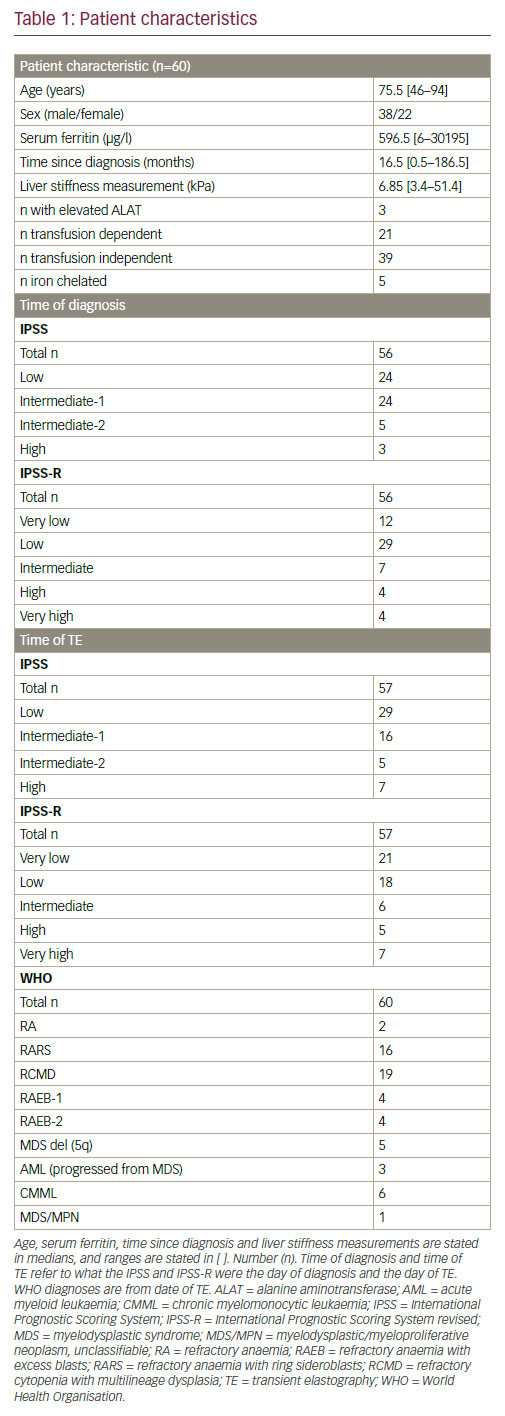
In myelodysplastic syndrome (MDS), iron overload (IOL) is the result of multiple red blood cell (RBC) transfusions and increased iron absorption. The cause for the latter is low hepcidin levels due to an ineffective erythropoiesis.1 Increased iron absorption contributes to IOL, but chronic RBC transfusions are considered the main cause of IOL.2 IOL can lead […]
Oncology & Hematology Review (US) Highlights
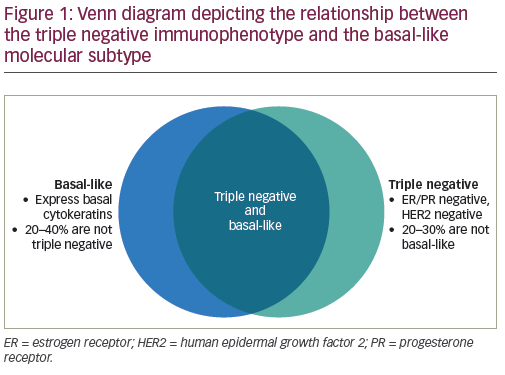
Triple negative breast cancer (TNBC) is defined by a lack of expression of estrogen receptor (ER) and progesterone receptor (PR), and a lack of overexpression or amplification of human epidermal growth factor 2 (HER2) on tumor cells. TNBC accounts for approximately 15–20% of all breast cancers diagnosed in the United States.1 It is more common […]
Breast cancers which lack expression of the estrogen receptor (ER), progesterone receptor (PR) and human epidermal growth factor receptor 2 (HER2)—so-called triple-negative breast cancers (TNBC)—make up 15–20% of the more than 230,000 cases of breast cancer diagnosed in the US each year.1 Metastatic TNBC remains an important clinical challenge as it is associated with a […]

Trending Topic
This issue of touchREVIEWS in Oncology & Haematology brings together a diverse collection of articles reflecting the growing complexity of cancer care and the continued evolution of precision medicine across tumour types. From rare malignancies and treatment-related challenges to emerging targeted therapies and novel biological insights, the contributions highlight both recent progress and the significant […]
Journal Archive
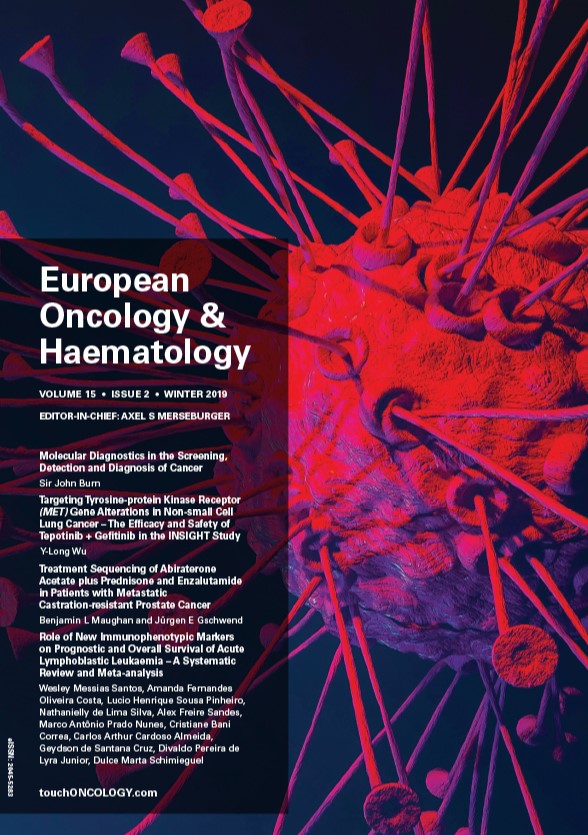
Comprising articles contributed by renowned thought leaders, European Oncology & Haematology is a peer reviewed, free-to-access, bi-annual journal that aims to disseminate best practice through review articles addressing the most important and salient developments in the Oncological & Haematology field in practical terms.
European Oncology & Haematology
Frequency: Two print issues per year (Summer & Winter); ePub ahead of print throughout the year.
Print ISSN: 2045-5275 Electronic ISSN: 2045-5283
Indexing: EMBASE, Google Scholar, Genamics JournalSeek
Log into your Touch Account
Keep track of your clinical interests and newsletter subscriptions.
Sign up with an Email
Or use a .
Register now for FREE access
Already registered? Login below.