

ONCOLOGY & HEMATOLOGY REVIEW (US) – VOLUME 9 ISSUE 2 – FALL 2013
Welcome to the winter edition of Oncology and Hematology Review (US). This edition features timely and concise review articles examining a wide variety of important topics. The areas covered range from prostate cancer and gallbladder cancer to head and neck cancer and lung cancer. There are insightful discussions of bevacizumab in epithelial ovarian cancer and adjuvant therapy in high-risk melanoma. This edition concludes with articles on geriatric oncology, acute leukemia, anaplastic lymphoma kinase and chemotherapy-induced nausea and vomiting, all providing a worthy focus for our attention. Please peruse and enjoy the expert content and we welcome your feedback.
This edition of Oncology & Hematology Review (US) covers many important oncologic topics. Specifically, this issue examines the clinical management of several important malignancies, while also providing relevant up-to-date data on the role of different systemic therapeutics. The first part of the edition is devoted to ‘solid’ malignancies, including head and neck, prostate, gallbladder, lung, […]
Prostate Cancer
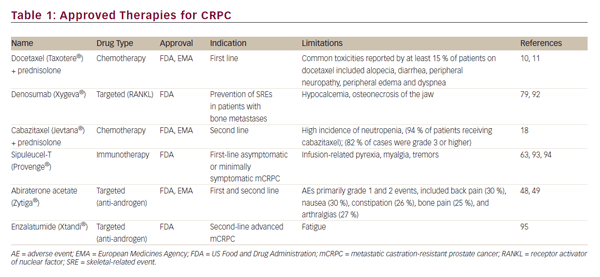
Prostate cancer is the most common noncutaneous malignancy. It is the sixth leading cause of cancer-related death in men worldwide,1 and the second most common cause of cancer death in US men.2 In 2012, it was estimated that 241,740 cases would be diagnosed and 28,170 would die of the disease.3 Prostate cancer responds to androgen-deprivation […]
Prostate cancers are a frequently occurring tumor in which incidence increases with age. In 2008, there were around 65,000 new cases in France. Median age at diagnosis is 68 years and 27% of patients are 75 years of age or more.1 Most deaths from prostate cancer (70%) occur in men over 75. Treatment of metastatic […]
Gallbladder Cancer
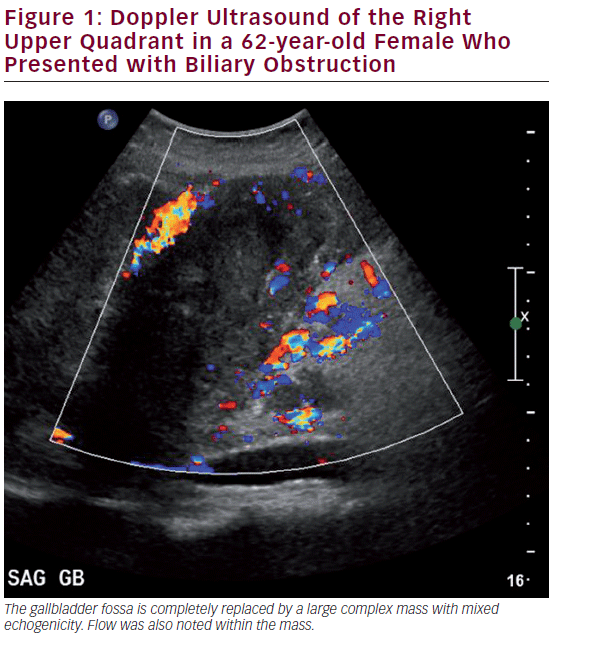
In 1777, Maximilian de Stoll, a Viennese surgeon published the first credited description of gallbladder cancer. Over two centuries later, gallbladder cancer remains a difficult disease with a dismal prognosis for those patients with advanced disease. Historically described as an extrahepatic biliary cancer, gallbladder cancer is now regarded as a distinct disease from other biliary […]
Head and Neck Cancer
Radiotherapy (RT) was used clinically for the first time in 1896, and, since then, has evolved impressively, in particular, more recently. Initially, RT was referred to as ‘Röntgen therapy,’ after the discovery of the X-rays by Wilhelm Röntgen in 1895.1 In those early days of RT, external beam RT (EBRT) with superficial kilovolt (kV) X-rays, […]
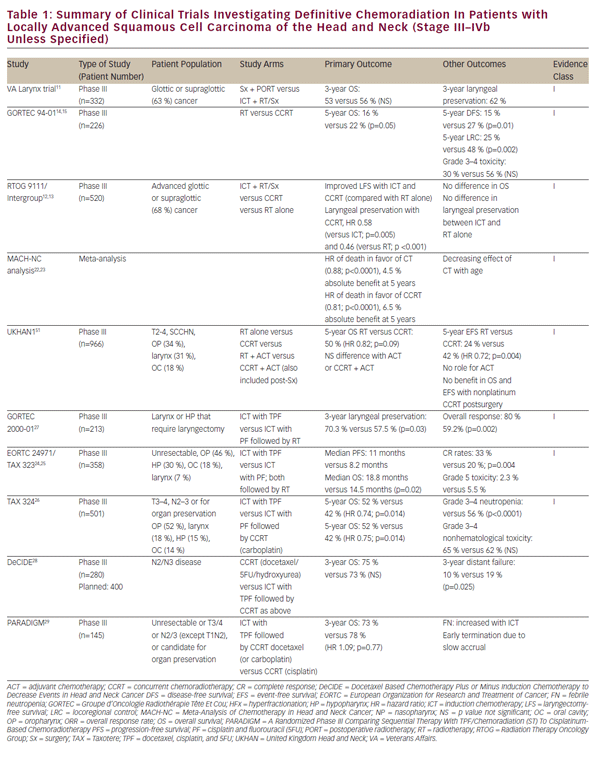
Squamous cell carcinoma of the head and neck (SCCHN) is the sixth most-common neoplasm globally with ~600,000 cases diagnosed annually. The past 20 years have yielded a wealth of clinical trial data and this has transformed the standards of care for treatment of SCCHN. Historically, poor local disease control and overall survival have provided impetus […]
Lung Cancer
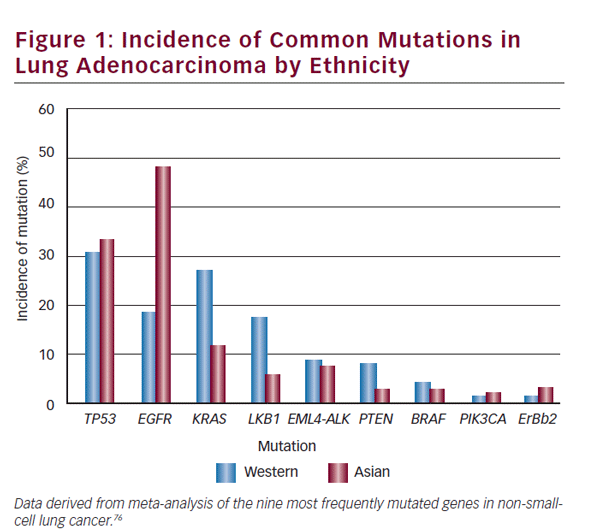
Annually, 1.3 million cases of NSCLC occur.1 Despite smoking being the most important environmental causative factor for lung cancer, 10% of lung cancers occur in never-smokers, thus emphasizing the importance of genetic factors.2 Detection methods for genomic alterations include array-based profiling, targeted sequencing, and whole-genome sequencing. The following driver genetic alterations and respective frequencies occur […]
Ovarian Cancer
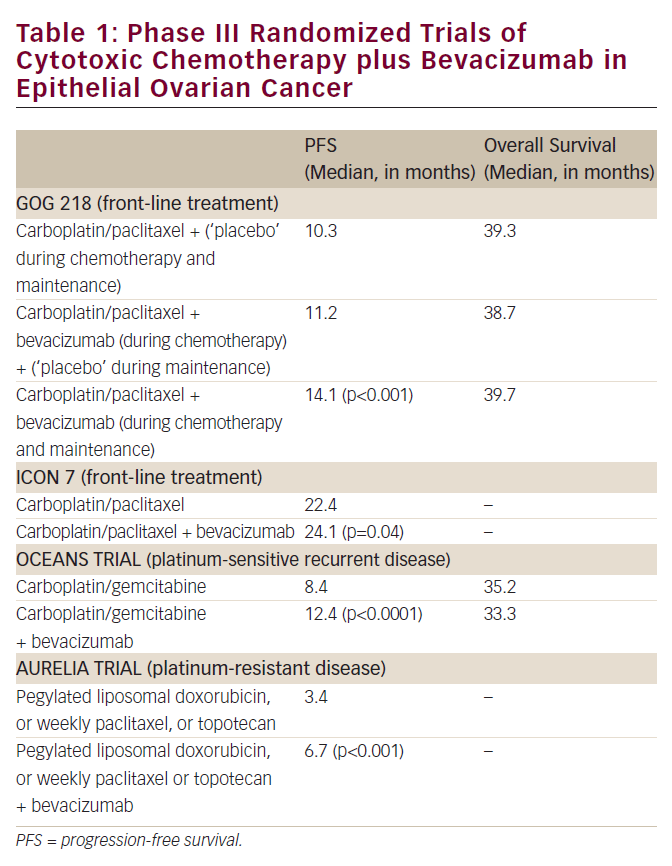
Epithelial ovarian cancer has long been recognized as being highly sensitive to cytotoxic chemotherapy, with anticipated objective response to platinum-based chemotherapy of approximately 70-85%1. Furthermore, overall survival (OS) for women presenting with advanced disease has been documented to have improved over the past few decades,2 although unfortunately the majority of responding patients ultimately experience recurrence […]
Melanoma
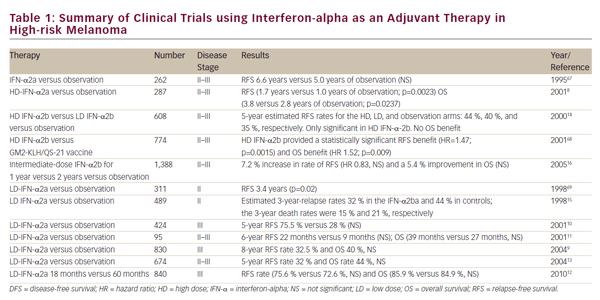
Melanoma represents 4% of all malignant tumors of the skin yet is responsible for 80% of deaths from skin cancer; it was estimated that 9,180 people would die of melanoma in 2012.1 The disease disproportionately targets young people: from 2005 to 2009 the age-adjusted incidence rate of melanoma in the US was 21.0 per 100,000 […]
Geriatric Oncology
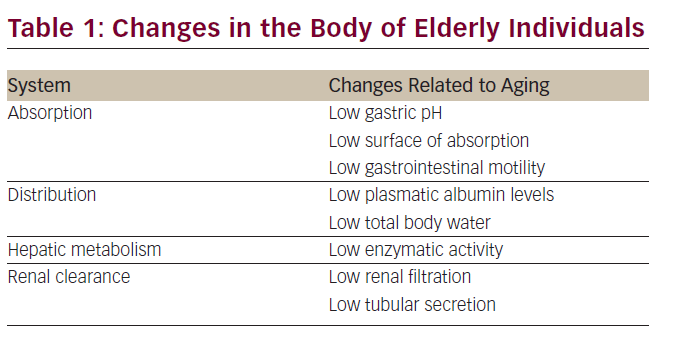
An increasing proportion of elderly people attend medical oncology consultations in which many questions about appropriate treatment will be raised by the oncologist. The balance between treatment benefits (in terms of further life expectancy of the elderly) and risks (hematologic and nonhematologic toxicity, functional impairment, and even death) will be discussed. In many cases, the […]
Hematologic Malignancies
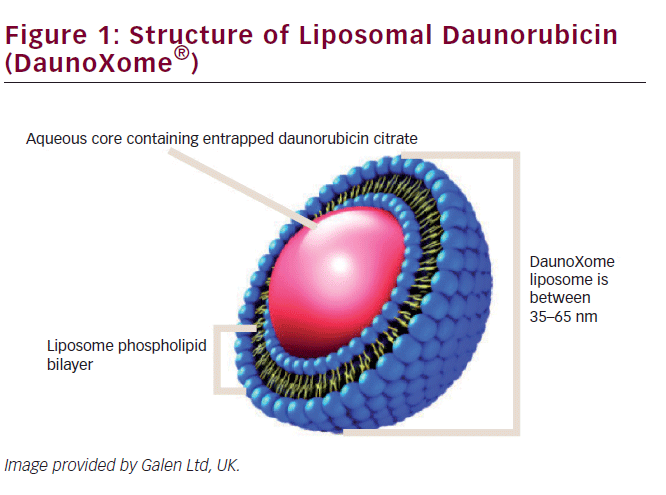
Use of Anthracyclines in Acute Leukemia
Cancer Control
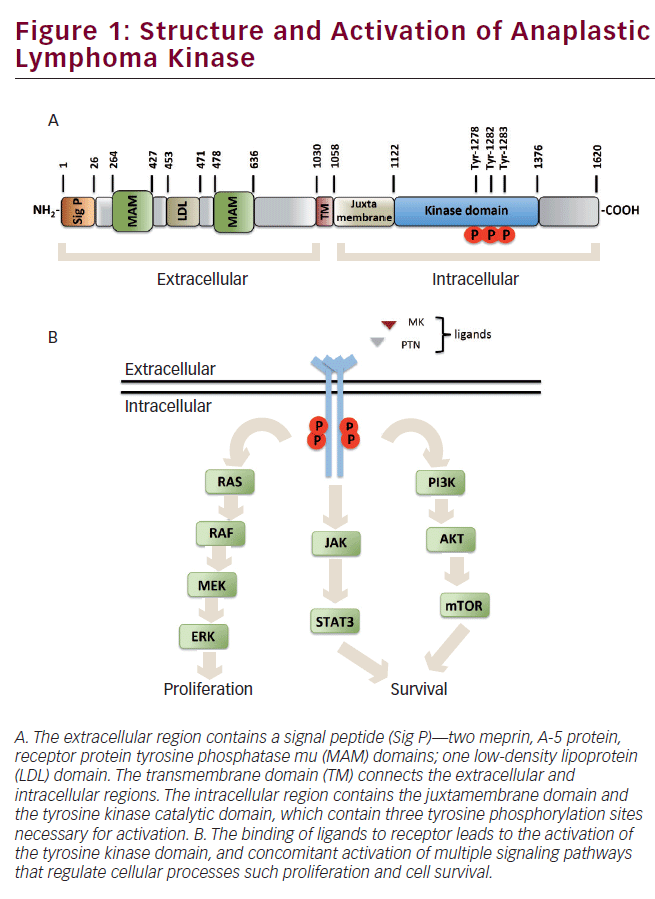
Anaplastic lymphoma kinase (ALK) is a receptor tyrosine kinase (RTK) belonging to the insulin receptor superfamily. The ALK gene is located on the short arm of chromosome 2 and was first identified as an oncogene activated by chromosomal translocation t(2;5)(p23;q35) in anaplastic large cell lymphoma (ALCL) patients.1,2 ALK is normally expressed only in the nervous […]
Supportive Oncology
It has been almost 50 years since the first study of an antiemetic (prochlorperazine versus placebo) for chemotherapy-induced nausea and vomiting (CINV) was published.1 However, we have not reached the point where CINV is never a problem for any patient receiving antineoplastic therapies. On the other hand, momentous discoveries during the intervening years have increased […]
Trending Topic
Chemotherapy-induced myelosuppression has long been considered a toxicity that limits the dose of cytotoxic agents, which contributes to significant morbidity and mortality.1 Sub-optimal dose intensity may decrease the efficacy of therapy, thereby compromising progression-free survival (PFS) and overall survival (OS) benefits.2 Chemotherapy-induced myelosuppression is often managed with granulocyte-colony stimulating factors (G-CSFs) and erythropoiesis-stimulating agents (ESAs) […]
Journal Archive



Log into your Touch Account
Keep track of your clinical interests and newsletter subscriptions.
Sign up with an Email
Or use a .
Register now for FREE access
Already registered? Login below.