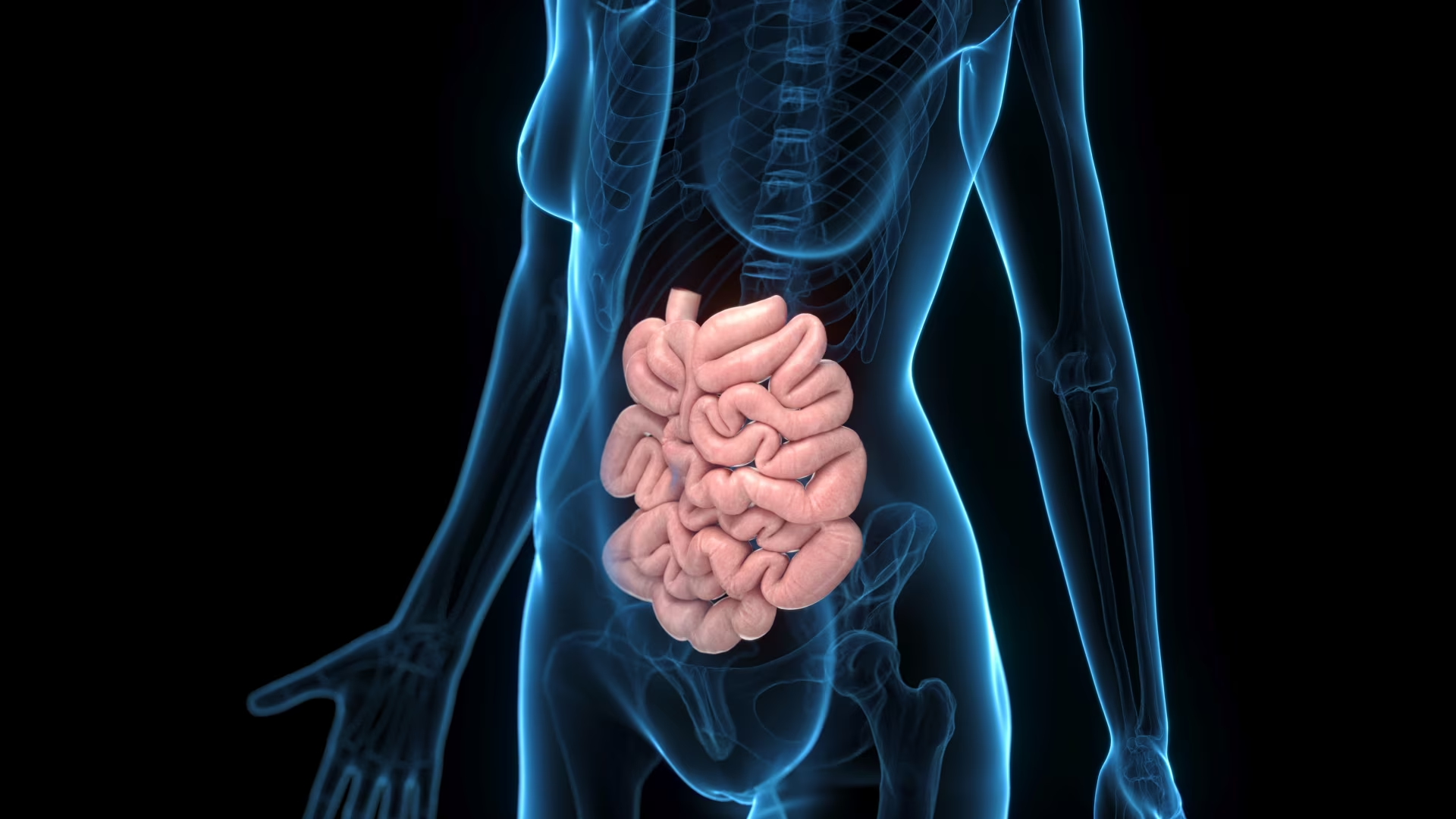
The intestinal microbiota, composed of approximately 1,000 species and over 100 trillion micro-organisms, plays a vital role in host physiology, including metabolism, barrier function and immune regulation.1 Disruption of this delicate host–microbiota balance – known as dysbiosis – has been implicated in the development of inflammatory bowel disease, metabolic disorders and various cancers. In recent years, the influence of the intestinal microbiota on the immune system has drawn increasing attention, particularly in the context of cancer immunotherapy.
Immune checkpoint inhibitors (ICIs) have revolutionized oncology by reactivating suppressed T-cell responses against tumour cells. However, their therapeutic effects are limited to a subset of patients, and immune-related adverse events (irAEs) remain a significant clinical challenge. Recent studies have shown that the composition and diversity of the intestinal microbiota can profoundly impact both the efficacy and toxicity of ICIs. While certain bacterial species promote antitumour immunity, dysbiosis may contribute to reduced therapeutic response and a higher incidence of irAEs.2–4
This article aims to provide a comprehensive overview of current knowledge on the relationship between the intestinal microbiota and ICIs, including the mechanisms of immune modulation, the impact on irAEs and the emerging role of faecal microbiota transplantation (FMT) as a strategy to overcome treatment resistance and mitigate toxicity. By focusing on the intestinal microbiota as a host-related factor influencing cancer immunotherapy, we seek to highlight its potential in advancing personalized medicine and improving our understanding of the determinants of treatment response.
Immune checkpoint inhibitors
Cancer cells avoid immune attacks by modulating molecules involved in immune regulation, such as programmed cell death protein-1 (PD-1) and cytotoxic T-lymphocyte-associated protein 4 (CTLA-4). ICIs have demonstrated efficacy in many types of cancer, including malignant melanoma, lung cancer, gastrointestinal cancer and urologic cancer. They are being developed both as single agents and in combination with conventional chemotherapy and radiation therapy. While combination therapy with ICIs and conventional treatments has shown promise, the proportion of patients who benefit remains limited. In particular, metastatic malignant melanoma, the first cancer type for which ICI was approved by the Food and Drug Administration, had a poor overall survival (OS) of approximately 6.5 months in the past, but this has now been extended to 30–70 months.5,6 However, there are several cancer types where the efficacy of ICI combination chemotherapy is limited. For example, the OS for unresectable advanced or recurrent gastric cancer and oesophageal cancer is less than 2 years7–12, and the OS for unresectable advanced or recurrent lung cancer is similarly poor.13,14Additionally, predictive biomarkers for efficacy remain insufficiently established, and treatment interruption or deaths related to irAEs continue to be an issue.
Cancer and the intestinal microbiota
Building upon the understanding of how ICIs function, we now examine the role of the intestinal microbiota in cancer development and systemic immunity. While the association of specific intestinal bacteria – such as Helicobacter pylori in gastric cancer and Fusobacterium nucleatum in colorectal cancer – in local carcinogenesis is well established, it has become clear that micro-organisms in the digestive tract also shape systemic immunity and influence overall health and disease, including cancer.15,16
Intestinal bacteria play critical roles in digestion and metabolism, immune modulation, interactions with the nervous system, carcinogenesis inhibition and association with metabolic diseases. In the context of cancer, the key functions of intestinal bacteria include anti-inflammatory effects through pathogen suppression and immune system regulation.17 Among intestinal bacteria, several short-chain fatty acids (SCFAs), including acetic acid, propionic acid and butyric acid, are produced by the fermentation of dietary fibre by obligate anaerobic bacteria. These SCFAs serve as energy sources for colonic epithelial cells and exhibit anti-inflammatory effects. Additionally, SCFAs contribute to human immunity and homeostasis by inducing regulatory T cells, supporting helper T cells and maintaining proliferation of intestinal epithelial cells.18 Further mechanisms of immune regulation involve interactions with other bacteria, induction of autophagy and apoptosis in intestinal epithelial and lymphoid tissues, and activation of immune responses to tumour antigens and cross-reactive epitopes.19 Disruption in the balance of the intestinal microbiota, called dysbiosis, has been implicated in carcinogenesis.20,21 Supporting this, several studies have reported differences in the intestinal microbiota profiles between patients with cancer and healthy individuals.22,23
The impact of the intestinal microbiota on the immune system plays a pivotal role in tumour immunity. The effects on various immune cell populations are summarized below.
Dendritic cells
Dendritic cells (DCs) are antigen-presenting cells that play a central role in T-cell activation and antitumour immunity. Antigens and metabolites derived from the intestinal microbiota activate DCs, counteracting the immune tolerance induced by immature DCs.24 For example, oral administration of Bifidobacterium bifidum has been shown to enhance the efficacy of anti-programmed death-ligand 1 (PD-L1) therapy by promoting DC activity and improving tumour-specific cluster of differentiation 8 positive (CD8+) T-cell responses.2 Additionally, Bacteroides fragilis promotes DC maturation and activates interleukin (IL)-12-dependent T helper type 1 (Th1)-cell responses, thereby enhancing antitumour efficacy.25
Monocytes and macrophages
Microbe-induced type I interferon (IFN-I) signalling plays a crucial role in the transition from innate to adaptive immunity. In particular, the stimulator of interferon genes agonists derived from intestinal bacteria, such as cyclic diadenosine monophosphate (cyclic-di-AMP), activate IFN-I signalling in intra-tumoural monocytes, facilitating crosstalk between immune cells and promoting the differentiation of mononuclear phagocytes into antitumour macrophages (Mac).26 Furthermore, Bifidobacteria and B. fragilis exert antitumour immunity by inducing Mac conversion and enhancing innate immune responses.27
Natural killer cells
Intestinal bacteria regulate natural killer (NK) cell activity and enhance tumour immunity. Lactobacillus plantarum promotes antitumour immunity by upregulating innate cytotoxic receptors on NK cells and enhancing their activation.28 Additionally, a high-salt diet and an increase in intestinal Bifidobacteria have been shown to support NK cell activation and improve the efficacy of ICI therapy.29
CD8+ T cells
Intestinal microbiota modulates adaptive immunity by inducing and enhancing CD8+ T-cell responses. Certain intestinal bacteria, such as Clostridiales and Faecalibacterium, enhance antigen presentation in tumours and improve the efficacy of ICI therapy.30 FMT and administration of Bifidobacteria have also been reported to promote the infiltration of CD8+ T cells within tumours.2,31
CD4+ T cells
Intestinal bacteria, such as B. fragilis and Akkermansia muciniphila, induce Th1-type immune responses and enhance the efficacy of anti-PD-1 therapy.25,32 Additionally, Faecalibacterium has been shown to reduce the proportion of regulatory T cells, thereby prolonging the effects of ICI therapy through CD4+ T-cell activation.33
A key mechanism by which tumour cells evade T-cell attack is the reduction in tumour immunogenicity. However, the intestinal microbiota can counteract this process by directly enhancing the innate immunogenicity of tumour cells. Specifically, it has been shown to act on ubiquitin–like modifier-activating enzyme 6 on the tumour cell surface, thereby improving the response to ICI therapy.34 Thus, the intestinal microbiota plays a crucial role in modulating tumour immunity through both innate and adaptive immune mechanisms, ultimately improving the efficacy of ICI therapy.
Intestinal microbiota and immune checkpoint inhibitor
After outlining the immunological roles of specific bacterial populations, this section explores how the intestinal microbiota modulate the effectiveness of ICIs and may serve as biomarkers for treatment responsiveness. The intestinal microbiota served as a potential biomarker in cancer treatment due to its involvement in immunity in the organism and in the tumour microenvironment (TME). Oral administration of Bifidobacteria has been shown to restore the antitumour effects of PD-L1 blockade by promoting DC maturation and enhancing the priming and accumulation of CD8+ T cells in the TME.2 Another contemporary study on anti-CTLA-4 therapy suggested that antibiotics weaken the antitumour effect of ICI, and supplementation of sterile- or antibiotic-treated melanoma mice with B. fragilis enhanced the anti-CTLA-4 therapeutic effect.25 In general, the intestinal microbiota of ICI responders is known to be more diverse than that of non-responders, and responders’ intestinal bacteria, such as Bifidobacterium longum, Collinsella aerofaciens and Enterococcus faecium, can activate the immune system and enhance the therapeutic effect of ICIs.35 In contrast, the intestinal bacteria of non-responders exhibit a lower abundance of these beneficial bacteria and a higher prevalence of Bacteroides and Ruminococcus species, which are associated with reduced ICI effectiveness.3
Differential effects of antibacterial drugs on the effectiveness of immune checkpoint inhibitors
Routinely used antibacterial drugs have been reported to have a negative role in the therapeutic efficacy of ICIs by altering the intestinal microbiota and affecting the immune system. Patients with lung, renal or urothelial carcinoma who were treated with antibacterial drugs from 2 months before to 1 month after ICI administration had significantly shorter progression-free survival (PFS) and OS compared with those who did not receive antibiotics.32
Although study results vary, a consistent observation is that patients who did not receive antibacterial drugs exhibited greater intestinal microbiota diversity (alpha diversity), whereas antibiotic use was associated with an increase in Clostridium/Hungatella hathewayi and a decrease in Eubacterium species. These findings suggest that antibacterial drugs significantly alter the composition and diversity of the intestinal microbiota, which, in turn, is closely linked to clinical outcomes in ICI therapy.
Impact of intestinal bacteria on immune-related adverse events
The intestinal microbiota is known not only for its effects on ICI but also for its influence on irAEs. In preclinical models, oral administration of B. fragilis and Burkholderia cepacia to mice treated with anti-CTLA-4 antibodies has been shown to reduce toxicity.25 In clinical studies, patients with malignant melanoma who developed grade ≥3 immune-related colitis during the course of anti-CTLA-4 and anti-PD-1 antibody therapy exhibited a higher prevalence of Bacteroidetes intestinalis and Intestinibacter bartlettii compared with those who did not experience colitis.4 Additionally, in patients with malignant melanoma receiving anti-PD-1 therapy, a greater number of Bacteroidetes families also correlated with resistance to colitis, while Ruminococcus and Lachnospira species were associated with favourable clinical response and the development of colitis.33 Furthermore, a large cohort study of patients with melanoma treated with anti-PD-1 therapy found that different irAEs were associated with distinct faecal bacterial species. Most patients who developed irAEs had an increased abundance of Lachnospiraceae and Ruminococcaceae species, which were associated with improved PFS.36 Accordingly, several intestinal bacteria have been identified as potential biomarkers for predicting ICI-related toxicity.
Immune checkpoint inhibitors and faecal microbiota transplantation
Having established the crucial roles of intestinal microbiota in modulating immune cell responses and shaping ICI outcomes, we next explore a novel therapeutic approach that directly targets the microbiota: FMT. This section will outline key clinical studies evaluating the impact of FMT on ICI effectiveness and its potential to overcome treatment resistance. The intestinal microbiota appears to influence both the efficacy and toxicity of ICIs, and on-going efforts aim to enhance the efficacy of ICIs by modulating the intestinal microbiota (Table 1).31,37,38 FMT is a method for correcting dysbiosis by administering a suspension of faecal-derived microbiota from a healthy donor into a patient’s intestines. It has been studied primarily for Clostridium difficile infection and ulcerative colitis (UC), with reports suggesting that it may improve the remission rate in patients with UC.39,40
Table 1: Previous reports on faecal microbiota transplantation combined with immune checkpoint inhibitor therapy31,37,38
|
| Baruch et al.37 | Davar et al.31 | Routy et al.38 |
| Treatment | Anti-PD-1 (N=10) | Anti-PD-1 (N=15) | Anti-PD-1 (N=20) |
| Cancer type | Metastatic melanoma | Metastatic melanoma | Metastatic melanoma |
| Anti-PD-1 antibody treatment history | Yes | Yes | No |
| Donor | Responder | Responder | Healthy donor |
| ORR (%) | 30 | 20 | 65 |
| FMT-related AE | Mild abdominal distention in one case | ― | No grade ≤3 |
| irAE (grade ≤3) (%) | 0 | 20 | 25 |
AE = adverse event; FMT = faecal microbiota transplantation; irAE = immune-related adverse event; ORR = overall response rate; PD-1 = programmed cell death 1.
In the field of oncology, FMT has been explored as a strategy to modify the intestinal microbiota, enhance the efficacy of ICIs and overcome treatment resistance. In a previous study, two patients with malignant melanoma who had achieved complete response (CR) for at least 1 year following anti-PD-1 monotherapy were selected as FMT donors.37 FMT was performed on 10 patients who had progressed after at least one line of anti-PD-1 therapy. The treatment protocol included a 72 h course of oral antibiotics (vancomycin and neomycin), followed by FMT via colonoscopic infusion on day 0 and oral faecal capsules. Subsequently, six cycles of combination therapy were administered, consisting of standard-dose nivolumab and additional administration of faecal capsules (maintenance FMT) every 14 days until day 90. Microbial analysis was performed using 16S ribosomal ribonucleic acid (16S rRNA) gene sequencing of faecal samples at baseline and at follow-up time points. This enabled quantification of alpha and beta diversity and identification of key bacterial taxa associated with clinical response. Notably, successful engraftment of donor microbiota, including Lachnospiraceae and Bifidobacteriaceae, correlated with increased immune infiltration and favourable outcomes. Among the 10 patients, three out of five (60%) who received FMT from one donor responded, and one of these (20%) achieved CR. The only FMT-related adverse event (AE) was mild abdominal distension in one patient. The irAEs were mild, and no grade ≥2 irAEs were observed. Another study also reported FMT results in 16 patients with metastatic malignant melanoma who were refractory to primary anti-PD-1 antibody therapy.31 Seven patients with melanoma who achieved partial response (PR) or better with anti-PD-1 therapy were used as FMT donors. Donors were screened rigorously for infectious pathogens, metabolic abnormalities and recent antibiotic exposure. Shotgun metagenomic sequencing was used to assess the microbiome at strain-level resolution and functional pathways. Donor-derived FMT was initially administered along with pembrolizumab, which was subsequently continued every 3 weeks until disease progression or discontinuation due to toxicity. Among 15 evaluable patients, three (20%) achieved PR, and three additional patients (20%) had stable disease lasting at least 12 months. Most AEs were mild and did not lead to treatment discontinuation.
FMT using healthy donor microbiota, in contrast to previous studies that used FMT from immunotherapy responders, has been investigated.38 In this study, 20 patients with malignant melanoma who had not previously received anti-PD-1 antibody therapy received a combination of FMT from healthy donors and anti-PD-1 therapy (pembrolizumab or nivolumab) as first-line treatment. Anti-PD-1 antibody was then continued until disease progression or discontinuation due to toxicity. The study reported responses in 13 of the 20 patients (65%), including four patients (20%) achieving CR and nine patients (45%) achieving PR. The response rate in clinical trials of anti-PD-1 antibodies in malignant melanoma has been reported to be around 30%; these results suggest that the addition of FMT may improve efficacy.41 FMT-related toxicity of grade 1 or 2 was observed in eight patients (40%), primarily involving mild gastrointestinal symptoms such as diarrhoea, flatulence and abdominal discomfort. No grade ≥3 FMT-related AEs were observed. Additionally, 17 patients (85%) experienced irAEs, the majority of which were grade ≤2. Grade 3 irAEs occurred in five patients (25%), including arthritis (two patients), fatigue (one patient), pneumonia (one patient) and nephritis (one patient), leading to treatment discontinuation. No grade 4 or 5 irAEs were reported.
In the previous study, successful colonization of donor microbiota in the recipient’s intestine was associated with an increase in bacteria families such as the Ruminococcaceae and Bifidobacteriaceae, which correlated with improved clinical response. Furthermore, this enhanced response following FMT was characterized by increased immune cell infiltration in both tumours and intestinal tissues and an enrichment of specific treatment-related blood metabolites (e.g. hippurate and cresol sulphate).
As such, studies on the relationship between ICI and FMT have been reported frequently in malignant melanoma, based on the history of ICI use. However, trials are gradually progressing in other cancer types where the efficacy of ICI is limited. In advanced non-small-cell lung cancer, FMT was performed once before primary ICI treatment using healthy donors, and the objective response rate (ORR) was 80%, which was a favourable result.42 Furthermore, in a study of advanced renal cell carcinoma, FMT was administered three-times during first-line ICI therapy, and the ORR in the FMT group (66.7%) was superior to that in the placebo group (35%). In this study, the donors were ICI responders.43 Kim et al. conducted a clinical trial (Utilization of Microbiome as Biomarkers and Therapeutics in Immuno-Oncology; ClinicalTrials.gov identifier: NCT04264975) combining anti-PD-1 inhibitors and FMT from anti-PD-1 responders in 13 patients with advanced gastrointestinal cancer who were resistant to anti-PD-1 antibodies.44 Patients received multiple FMT infusions alongside on-going ICI. FMT induced sustained changes in the microbiota and clinical benefits in six of 13 patients, achieving an ORR of 7.7% (one case of hepatocellular carcinoma) and a disease control rate of 46.2% (four cases of oesophageal squamous cell carcinoma and one case of hepatocellular carcinoma). They discovered that Lactobacillus salivarius and Bacteroides plebeius may inhibit antitumour immunity, suggesting that FMT with beneficial microbiota could overcome resistance to anti-PD-1 inhibitors in advanced solid tumours, particularly gastrointestinal cancers.
Although preliminary results are promising, heterogeneity in FMT methodologies remains a critical barrier to clinical adoption. Variations in donor selection (healthy versus ICI responders), FMT preparation (colonoscopy versus oral capsules), pretreatment regimens (e.g. antibiotics) and microbiome sequencing approaches (16S rRNA versus shotgun metagenomics) complicate comparison across studies. Moreover, optimal frequency, dosage and safety-monitoring protocols are yet to be standardized. To address these challenges, prospective studies are under way not only for malignant melanoma but also for other cancer types.45–47 Furthermore, rigorous research efforts are being conducted to determine whether the ideal FMT donor is an immunotherapy responder or a healthy individual without cancer. Additional trials combining ICI therapy with FMT from complete-response donors and/or healthy donors are currently under way.45–49
Immune-related adverse events and faecal microbiota transplantation
FMT has been reported to suppress irAE colitis. FMT, using the same healthy donor for two patients with refractory irAE colitis, improved their clinical symptoms.50 The first case was a 50-year-old woman with urothelial carcinoma who developed irAE colitis after treatment with a combination of anti-CTLA-4 and anti-PD-1 antibodies. Her symptoms improved after a single dose of FMT with colonoscopy. The second case was a 78-year-old man with prostate cancer who developed irAE colitis after receiving anti-CTLA-4 antibody treatment. His symptoms improved after two doses of FMT administration. Immunostaining of the colonic mucosa revealed that, after FMT, CD4+ T cells and forkhead box P3 positive T cells were maintained compared with CD8+ T cells, and in terms of changes in the intestinal microbiota, in the first patient, donor-derived bacteria were found in nearly 75% of the intestinal microbiota immediately after FMT, with a particularly high number of Akkermansia. In the second patient, the number of bacteria belonging to the Blautia and Bifidobacterium genera increased significantly after FMT.
Although clinical evidence remains limited, FMT is attracting attention as a potential strategy for mitigating irAEs. Several on-going clinical trials are further investigating its therapeutic potential.51–53
Discussion
In this article, we have summarized the growing body of evidence linking the intestinal microbiota with the efficacy and irAEs of ICIs. The preceding sections detailed how microbial composition affects immune mechanisms and therapeutic outcomes. We now turn to the implications and future directions arising from these findings.
Specific intestinal bacteria – such as Bifidobacterium, Faecalibacterium and A. muciniphila – have been shown to enhance antitumour immunity and improve ICI efficacy by promoting DC activation and increasing tumour-infiltrating CD8+ T cells. In contrast, reduced microbial diversity and the overrepresentation of certain taxa, such as Bacteroides and Ruminococcus, are associated with poor responses to ICIs and a higher incidence of irAEs. These findings underscore the importance of intestinal microbial composition in determining clinical outcomes of immunotherapy.
FMT has emerged as a promising strategy to manipulate the intestinal microbiota and overcome resistance to ICIs. Clinical studies have demonstrated that FMT from healthy donors or ICI responders can restore sensitivity to ICIs in patients with previously refractory melanoma and FMT may also mitigate irAEs, such as immune-related colitis.31,37,38,50 These results suggest that modulating the intestinal microbiota through FMT could enhance both the efficacy and tolerability of cancer immunotherapy.
However, several challenges remain before FMT can be widely implemented in oncology. First, most existing studies are small, single-centre and involve heterogeneous patient populations, limiting the generalizability of the findings. Furthermore, randomized controlled trials (RCTs) remain scarce, and long-term safety data are lacking. Second, robust biomarkers are needed to predict patient response to FMT, and questions remain regarding optimal donor selection (healthy versus ICI responder), delivery routes, dosing schedules and long-term safety. In addition, the negative impact of antibiotics on microbial diversity and immune responsiveness raises concerns about their use in patients undergoing ICI therapy.
Overall, the intestinal microbiota represents a novel and promising target for optimizing cancer immunotherapy. Integration of microbiota-based strategies may contribute to more personalized and effective treatment approaches. To advance the clinical application of microbiota modulation, future studies should focus on large-scale, prospective RCTs that stratify patients based on microbiome profiles and ICI responsiveness. Moreover, integration with multi-omics approaches (e.g. metabolomics, transcriptomics) could provide a more comprehensive understanding of host–microbe interactions. Ultimately, personalized microbiota-based interventions, such as tailored FMT or targeted probiotic therapies, may be incorporated into standard oncology care, enhancing both efficacy and safety of immunotherapies.
Conclusion
As the discussion has shown, the interplay between the intestinal microbiota and host immunity is deeply entwined with the clinical outcomes of ICI therapy. ICIs represent a powerful tool in cancer treatment, yet their efficacy and safety are significantly influenced by the host’s intestinal microbiota. This article has highlighted how specific bacterial populations can enhance antitumour immunity and reduce irAEs, while dysbiosis may hinder treatment success.
Key take-home messages include:
-
The composition and diversity of the gut microbiota modulate the therapeutic response to ICIs.
-
FMT has shown promise in restoring ICI responsiveness and reducing irAEs.
-
Antibiotic use may negatively impact microbiota diversity and compromise immunotherapy outcomes.
Nevertheless, significant knowledge gaps remain. Large-scale, prospective studies are essential to validate current findings, identify reliable biomarkers and determine optimal FMT strategies – including donor selection, dosing and timing.
In the future, microbiome-based interventions – whether via FMT, probiotics or dietary modulation – could become integral to personalized oncology, enabling clinicians to tailor immunotherapy based not only on tumour genetics but also on host microbial profiles.