
EUROPEAN ONCOLOGY – VOLUME 4 ISSUE 1 – SUMMER 2008
This issue of European Oncology highlights many of the challenges that we face in our fight against cancer in this diverse world. Clinical drug development has become complex, and independent academic research is in danger. Fortunately, these difficulties are not reflected in the many excellent contributions in this publication, which highlights progress in almost every […]
Current Issues
Bridging the ‘bench to bedside’ gap and the widely accepted approach of mulitdisciplinarity are pivotal in advancing research and improving patient treatment and care. The reality of the implementation and measurable outcomes of both ideals generally translates into palpable debate between professional specialities and communities. In the relentless battle to eliminate cancer, much more can […]
The European Organisation for Research and Treatment of Cancer (EORTC) is a pan-European, non-profit, independent research organisation that develops, conducts, co-ordinates and stimulates high-quality translational and clinical research aimed at improving the standards of treatment for cancer patients in Europe.1 This mission is achieved through collaboration in the development of new drugs and other innovative […]
This forms part of a larger epidemiological transition in which the burden of chronic, non-communicable disease is now increasing in less developed countries. Tobacco use is the single largest preventable cause of cancer in the world today. In addition to the accumulating risks associated with diet, alcohol and industrial exposure, the increase in tobacco use […]
Supportive Oncology
An ANC below 0.5×10⁹/l is therefore considered severe neutropoenia (SN) and febrile neutropoenia (FN) is defined as a temperature >38.2ºC on two determinations with an ANC Risk of SN and FN from chemotherapy depends on several factors, most importantly the myelosuppressive intensity of the chemotherapy regimen utilised. One way to reduce the risk of CIN […]
Cancer pain is also very complex from a pathophysiological perspective. It may incorporate a nociceptive, somatic or visceral component resulting from the activation of nociceptors, and a neuropathic component produced by damage to the central nervous system or peripheral nervous system.3 A further consideration is the fact that patients may have to take multiple medications. […]
Anticoagulant drugs represent an essential therapeutic class in patients with cancer, venous thromboembolism being one of the most common complications occurring during the evolution of this disease.1 Among the available drugs, oral vitamin K antagonists are not ideally suited to this patient group owing to the presence of factors that may influence the stability of […]
Haematological Cancer
The incidence of NHL has increased nearly two-fold over the past few decades, with AIDS-related lymphoma accounting for some of this expansion and environmental factors probably playing a role.3 NHL accounts for approximately 8–10% of all childhood malignancies.4 The prognosis of both localised and advanced childhood and adolescent NHL has improved considerably over the past […]
However, it has become increasingly apparent that the clinical course of CLL is highly variable and in some patients not as benign as was previously thought. Thus, large clinical studies have demonstrated that nearly 40% of untreated patients with early-stage CLL will progress to the point of requiring therapy and over 20% will die of […]
Clinical Staging Two widely accepted clinical staging systems exist for CLL: the Rai1 and Binet2 systems. The Rai system is mostly used in the US, while the Binet system is more widely used in Europe. A modified Rai system has also been described, which reduces the number of prognostic groups from five to three. These […]
Therapeutic goals vary in MDS, with some treatments aimed at symptom control while others aim to alter disease biology and improve survival. Both treatment approaches are relevant in different contexts, and the International Working Group (IWG) criteria have been developed to encompass a range of clinically pertinent measurements to monitor disease response. The evaluation of […]
Head and Neck Cancer
Optical biopsy techniques can provide immediate in vivo diagnosis of suspicious oral lesions. Other advantages include their non-invasive nature and reducing patient stress and anxiety while waiting for the diagnosis. Some of these techniques have already been incorporated into clinical practice and have become indispensable tools in oral dysplasia clinics (e.g. fluorescence spectroscopy); others continue […]
Lung Cancer
Adenocarcinomas represent a heterogenous group of tumours and are known to exhibit the highest degree of morphological and clinical diversitiy, which reflects patient survival.3 This review highlights the molecular characteristics that may influence metastatic behaviour in lung adenocarcinoma. Molecular Signatures It is now recognised that the ability of cells to gain metastatic potential is an […]
Breast Cancer
Recent data using modern systemic chemotherapy and hormone and targeted therapy give better but still modest results.5 Once BC recurs, the goal of treatment of MBC is control of disease and palliation of symptoms for as prolonged a time as possible, with as few adverse effects as possible. This goal of prolonging life quantitatively and […]
The Clinical Problem Breast cancer is a global public health issue. It is the most frequently diagnosed malignancy in women in the western world and the most common cause of cancer death in European and American women. According to estimates, in 2002 there were 1,151,298 new cases of breast cancer diagnosed, 410,712 deaths caused by […]
Liver Cancer
Hepatocellular carcinoma (HCC) is one of the leading causes of death worldwide, with a peak incidence in Asian countries. Unfortunately, by the time of diagnosis the disease is often so far advanced that the only curative treatment so far – surgery – cannot be performed in the majority of patients. In the past, several treatment […]
The Clinical Management of Liver Tumours as an Interdisciplinary Task
Colorectal Cancer
Surgery Surgery is the most important treatment modality for patients with CRLMs. Appropriate surgery in selected patients will result in long-term survival of up to 40%.1,2 This percentage has increased over the last two decades. There have been developments in surgical technique, including portal vein embolisation and safer liver division and resection, as well as […]
Historically, these patients have been considered to have a poorer prognosis than those subsequently found to have developed metachronous diseases.1,5 A further 40–50% will develop liver metastases, usually within the first three years of follow-up after successful resection of the primary tumour.1,4,5 Surgery remains the only treatment that offers the prospect of cure for CRLM. […]
Germ Cell Tumours
Factors that predict outcome in relapsing patients include previous complete response (CR), non-mediastinal primary, low serum tumour markers and no visceral metastasis. High-dose chemotherapy (HDCT) plus peripheral blood stem cell transplantation (PBST) can help patients who relapse after conventional chemotherapy, but has not been shown to be effacious.3 A multi-institutional retrospective study of 310 patients […]
Geriatric Oncology
This means that half, if not more, of these patients are in other parts of the world, a fact recognised by the World Health Organization (WHO), which has put cancer among its health priorities on a global scale. In 2002, 411,000 women died of breast cancer worldwide, and most of these were aged 65 years […]
In industrialised countries, the fastest growing segment of the population is composed of individuals aged 65 years or over,4 and this demographic group is predicted to increase by 13.3% by 2010 and by 53.2% by 2020.5 The over-75-year-old group will triple by 2030, and the over-85-year-old group will double in the same period.6 By 2050, […]
Trending Topic
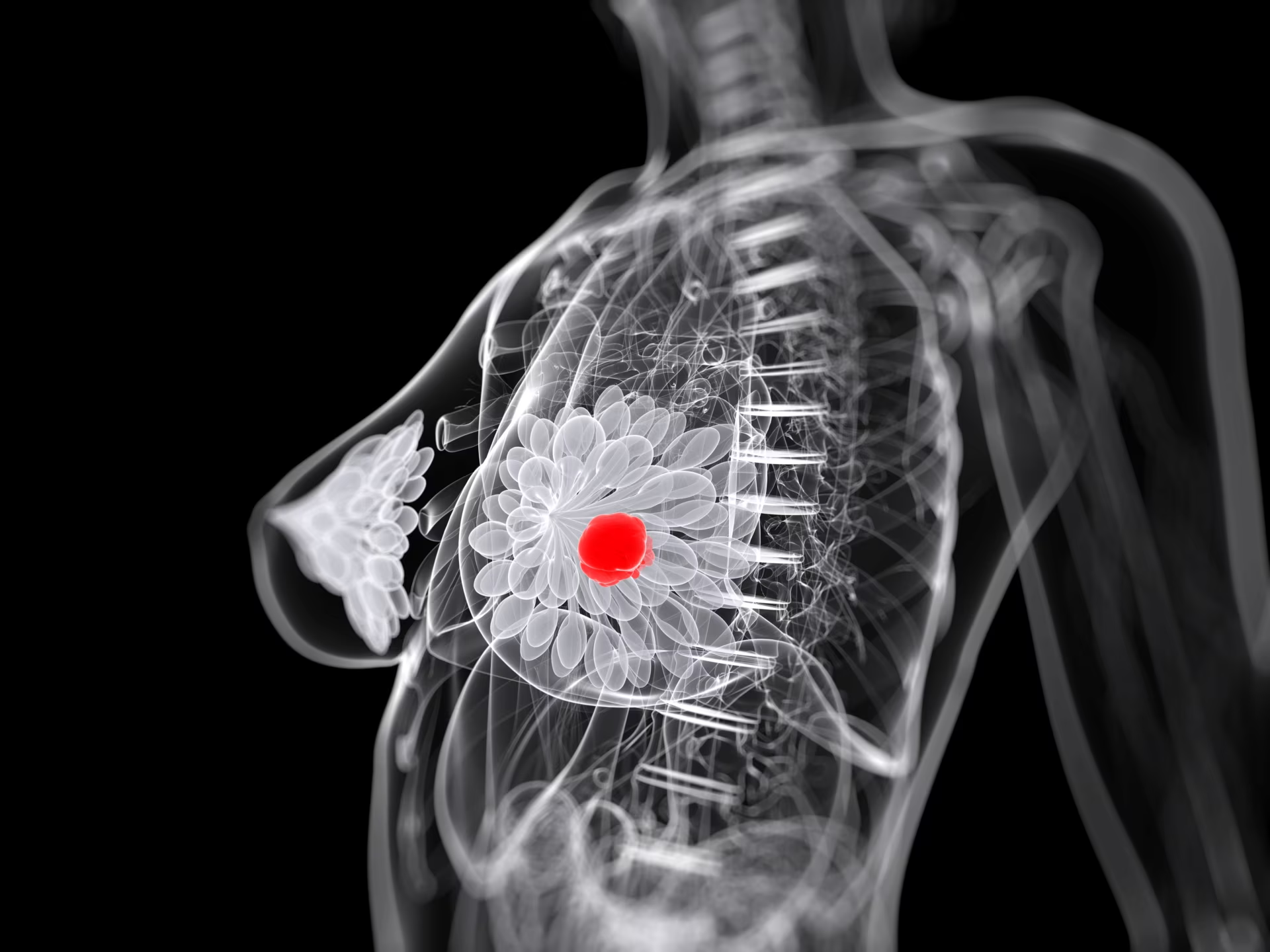
Metastatic triple-negative breast cancer (mTNBC) is a clinically heterogeneous disease, but compared with other breast cancer subtypes, triple-negative breast cancer (TNBC) is generally associated with a poorer prognosis and has historically had limited therapeutic options.1 The 5-year survival rate remains only 14.9%, and some patients are unable to proceed to second-line or later-line therapies because […]
Journal Archive
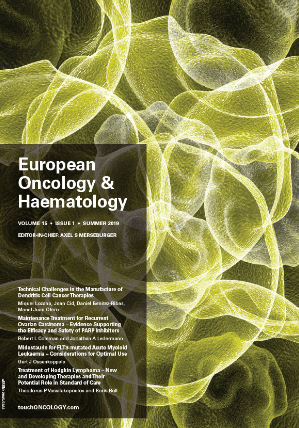
Comprising articles contributed by renowned thought leaders, European Oncology & Haematology is a peer reviewed, free-to-access, bi-annual journal that aims to disseminate best practice through review articles addressing the most important and salient developments in the Oncological & Haematology field in practical terms.
European Oncology & Haematology
Frequency: Two print issues per year (Summer & Winter); ePub ahead of print throughout the year.
Print ISSN: 2045-5275 Electronic ISSN: 2045-5283
Indexing: EMBASE, Google Scholar, Genamics JournalSeek
Log into your Touch Account
Keep track of your clinical interests and newsletter subscriptions.
Sign up with an Email
Or use a .
Register now for FREE access
Already registered? Login below.