Gastrointestinal (GI) cancers constitute a major contributor to global cancer incidence and mortality and remain among the leading causes of cancer–related death worldwide despite advances in prevention, screening and supportive care.1,2 Collectively encompassing malignancies of the esophagus, stomach, liver, biliary tract, pancreas and colorectum, these tumors account for a disproportionate share of advanced–stage diagnoses and treatment-related morbidity. Historically, systemic management across GI cancers relied primarily on anatomic site, histologic classification and disease stage, with cytotoxic chemotherapy forming the cornerstone of treatment for most patients with advanced disease.3,4 While these approaches provided modest survival gains, they failed to adequately address the substantial biologic heterogeneity observed both within and across GI tumor types.
Over the past decade, advances in molecular oncology have fundamentally reshaped the management of GI malignancies. The integration of next-generation sequencing (NGS), refined molecular classification and biomarker-driven treatment selection has enabled a transition from empiric, histology-based approaches toward precision oncology. Rather than focusing solely on tumor site, contemporary management increasingly relies on actionable biomarkers, immune profiling and dynamic monitoring strategies to guide therapeutic decisions across disease stages.
Immunotherapy has emerged as a critical component of this evolving treatment landscape. Immune checkpoint inhibitors targeting programmed cell death protein 1 (PD-1), its ligand PD-L1 and cytotoxic T lymphocyte-associated antigen 4 have demonstrated durable clinical benefit in biomarker-selected GI cancer populations, most notably tumors characterized by microsatellite instability-high (MSI-H) or mismatch repair deficiency (dMMR).5–7 Landmark randomized trials have established immune checkpoint blockade as standard therapy in MSI-H/dMMR colorectal and gastroesophageal cancers, with expanding roles in hepatocellular carcinoma (HCC) and other GI malignancies when combined with chemotherapy or antiangiogenic agents.8–11 Beyond microsatellite instability (MSI) status, predictive biomarkers, such as PD-L1 expression, tumor mutational burden and immune microenvironment features, continue to be evaluated to refine patient selection and optimize treatment sequencing.12,13
Concurrently, the therapeutic armamentarium for GI cancers has expanded through the development of molecularly targeted therapies and antibody–drug conjugates (ADCs). Actionable molecular alterations across GI malignancies have enabled the development of targeted therapies and ADCs in defined patient subsets, improving outcomes in diseases historically associated with limited treatment options.14–19 ADCs have further extended the reach of precision oncology by enabling targeted delivery of cytotoxic payloads to tumors with heterogeneous or low-level antigen expression, particularly in gastroesophageal malignancies.16,20 These advances underscore the clinical importance of systematic and timely molecular testing, as well as multidisciplinary integration of pathology, medical oncology, surgery and radiology.
Circulating tumor DNA (ctDNA) has emerged as a complementary biomarker platform with the potential to refine risk stratification and longitudinal disease monitoring across GI cancers. Increasing evidence supports the prognostic value of ctDNA detection following curative-intent therapy, as well as its utility in identifying minimal residual disease (MRD) and predicting relapse prior to radiographic progression.21–23 In metastatic settings, serial ctDNA assessment enables dynamic evaluation of treatment response and clonal evolution, informing both therapeutic adaptation and clinical trial design.22,24 Although clinical implementation remains heterogeneous, ctDNA-guided strategies are increasingly incorporated into prospective trials and are expected to play an expanding role in routine care.
Despite these scientific and therapeutic advances, real-world implementation has been uneven. Multiple studies have demonstrated persistent disparities in stage at diagnosis, access to molecular testing and receipt of biomarker-matched therapies across GI cancer populations.25–27 These inequities are closely associated with race, socioeconomic status, geographic location, nutritional status and broader social determinants of health, contributing to continued survival gaps even in the era of precision oncology.26–28 Addressing these barriers is essential to ensure that therapeutic progress translates into meaningful population-level benefit.
In this article, we synthesize recent advances in targeted therapy, immunotherapy and biomarker development across major GI cancer subtypes, with a particular emphasis on clinically applicable, biomarker-driven treatment strategies. We examine how molecular profiling and ctDNA are reshaping real-world clinical decision-making, highlight emerging therapeutic approaches and propose practical frameworks for integrating these tools into routine practice. In parallel, we emphasize the necessity of equitable implementation to ensure that advances in precision oncology translate into meaningful population-level benefit (Figure 1).
Figure 1: Evolution of systemic therapy in gastrointestinal cancers
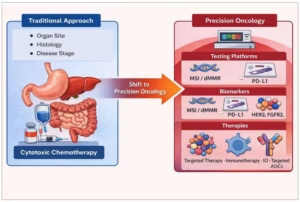
Advances in molecular profiling and biomarker integration have shifted GI cancer management from histology-based treatment toward precision oncology, enabling individualized use of targeted therapy, immunotherapy and ADCs. Molecular examples are shown as representative rather than exhaustive. Figure 1 was created using Claude.ai (Anthropic, San Francisco, CA, USA)
ADC = antibody–drug conjugate; dMMR = mismatch repair deficiency; FGFR2 = fibroblast growth factor receptor 2; HER2 = human epidermal growth factor receptor 2; IO = immuno-oncology; GI = gastrointestinal; MSI = microsatellite instability; PD-L1 = programmed death-ligand 1.
Molecular profiling and biomarkers in gastrointestinal oncology
The incorporation of molecular profiling and biomarker-guided decision-making has become central to contemporary GI cancer management. NGS, immune profiling and ctDNA technologies have enabled a transition from empiric, histology-based treatment paradigms toward increasingly individualized therapeutic strategies.29 This shift is consistently emphasized across modern GI oncology literature, particularly in the context of immunotherapy and targeted treatment selection (Table 1).30,31
Table 1: Key molecular and genomic biomarkers in gastrointestinal cancers and their clinical relevance
| Biomarker | Cancer type(s) | Therapeutic class | Representative agents | Typical clinical use |
| MSI-H/dMMR | CRC, gastric, GEJ and others | Immunotherapy | Pembrolizumab and nivolumab | Primarily metastatic; emerging perioperative use in selected settings |
| HER2 | Gastric, GEJ and CRC | Targeted therapy, ADC | Trastuzumab and trastuzumab deruxtecan | Metastatic |
| CLDN18.2 | Gastric and GEJ | Targeted mAb | Zolbetuximab | Metastatic |
| FGFR2 (fusion/rearrangement) | Cholangiocarcinoma | Targeted therapy | Futibatinib, pemigatinib and infigratinib | Metastatic (previously treated) |
| IDH1 | Cholangiocarcinoma | Targeted therapy | Ivosidenib | Metastatic (previously treated) |
| BRAF V600E | CRC and others | Targeted therapy | Encorafenib + cetuximab | Metastatic; also tissue-agnostic relevance |
| BRCA1/2 | Pancreatic | PARP inhibitor | Olaparib | Maintenance after platinum response |
ADC = antibody–drug conjugate;BRAF = B-raf proto-oncogene;BRCA1/2 = breast cancer gene 1/2;CLDN18.2 = Claudin-18 isoform 2;CRC = colorectal cancer;dMMR = mismatch repair deficiency;FGFR2 = fibroblast growth factor receptor 2;GEJ = gastroesophageal junction;HER2 = human epidermal growth factor receptor 2;IDH1 = isocitrate dehydrogenase 1;mAb = monoclonal antibody;MSI-H = microsatellite instability-high;PARP = poly ADP-ribose polymerase.
Next–generation sequencing in clinical practice
Broad panel NGS has fundamentally altered the diagnostic and therapeutic landscape of GI malignancies by enabling simultaneous evaluation of multiple oncogenic drivers, resistance pathways and DNA repair alterations. In gastroesophageal cancers, routine molecular assessment has expanded beyond HER2 amplification and MSI to include emerging targets such as CLDN18.2 expression and investigational targets, including FGFR2 alterations, which are increasingly shaping therapeutic sequencing and clinical trial design.31,32 Similarly, molecular profiling has become indispensable in hepatobiliary malignancies, where actionable genomic alterations, such as FGFR2 fusions, IDH1 mutations, BRAF V600E and HER2 amplification, identify subsets of patients who derive meaningful benefit from targeted therapies. Multidisciplinary consensus panels have highlighted the importance of early and comprehensive molecular testing in intrahepatic cholangiocarcinoma to avoid missed therapeutic opportunities, particularly given the aggressive natural history of the disease.33 NGS has also deepened understanding of molecular heterogeneity within GI tumors, revealing biologically distinct subgroups with differential sensitivity to chemotherapy, immunotherapy and targeted agents. These insights reinforce the limitations of uniform treatment strategies and support guideline recommendations advocating early molecular profiling in advanced GI cancers.30
Predictive biomarkers for immunotherapy
Among established biomarkers in GI oncology, MSI-H or dMMR status remains the most robust predictor of response to immune checkpoint blockade. MSI-H/dMMR tumors are characterized by high neoantigen load and increased immune infiltration, resulting in heightened sensitivity to PD-1 inhibition across multiple GI tumor types.30,34
Beyond MSI status, PD-L1 expression has emerged as a clinically relevant but context-dependent biomarker, particularly in gastroesophageal cancers. Large, randomized trials have demonstrated survival benefits from the addition of PD-1 inhibitors to chemotherapy in PD-L1-expressing tumors, informing both first-line metastatic and perioperative treatment strategies.9,31,35 However, contemporary reviews emphasize that PD-L1 expression alone is insufficient to fully predict benefit and should be interpreted alongside other tumor and host factors.
Foundational immune oncology frameworks provide a mechanistic context for these observations. The cancer immunity cycle describes the sequential steps required for effective antitumor immune responses, while characterization of the tumor immune microenvironment highlights how immune exclusion, stromal barriers and checkpoint-mediated suppression can limit therapeutic efficacy.36,37 These principles have guided the rational development of combination strategies integrating chemotherapy, antiangiogenic agents and dual immune checkpoint blockade.38,39
Circulating tumor DNA
ctDNA has emerged as a minimally invasive biomarker with expanding applications across GI oncology. ctDNA analysis enables real–time assessment of tumor burden, molecular evolution and treatment response, offering advantages over static tissue-based testing. Translational evidence has demonstrated the utility of ctDNA in monitoring immunotherapy response and identifying hypermutated tumor phenotypes, such as DNA polymerase epsilon (POLE)-mutated colorectal cancer (CRC), in which immune checkpoint blockade may confer exceptional clinical benefit.40 Beyond response assessment, ctDNA detection following curative intent therapy has been associated with increased risk of recurrence, supporting its role as a surrogate marker of MRD. Contemporary GI immunotherapy reviews increasingly highlight ctDNA as a promising tool for guiding adjuvant treatment escalation or de-escalation, as well as for early detection of relapse prior to radiographic progression.30 ctDNA profiling also offers insight into acquired resistance mechanisms. Genomic alterations associated with immune escape have been described following checkpoint blockade, underscoring the potential role of serial ctDNA monitoring in anticipating resistance and informing subsequent therapeutic strategies.41
Tumor microenvironment, microbiome and emerging biomarkers
The tumor immune microenvironment plays a critical role in determining response and resistance to immunotherapy across GI malignancies. Interactions among immune cells, stromal components, cytokines and vascular factors can promote immune evasion despite adequate antigen recognition. Reviews of immunotherapy in GI cancers emphasize that resistance often reflects microenvironmental constraints rather than the absence of immune activation alone.30,37 Emerging evidence also implicates the gut microbiome as a modulator of immunotherapy efficacy. Studies across solid tumors have demonstrated that microbial diversity and specific bacterial taxa influence response to PD-1 blockade, potentially through effects on antigen presentation and systemic immune priming. While these findings remain exploratory in GI oncology, they highlight an expanding biomarker landscape that extends beyond tumor genomics.42,43
Practical framework for biomarker-driven clinical decision-making
The increasing complexity of biomarker data in GI oncology necessitates practical frameworks to guide real-world clinical decision-making. Across tumor types, a stepwise approach can be applied:
-
Initial diagnosis and staging: Comprehensive histopathological evaluation should be combined early with molecular profiling, including NGS where available, to identify actionable alterations and inform prognosis.
-
Core biomarker assessment: Key biomarkers, including MSI/dMMR status, PD-L1 expression (where relevant) and tumor-specific targets such as HER2, FGFR2, IDH1 and BRAF V600E, should be assessed at diagnosis of advanced disease.
-
First-line treatment selection: Treatment decisions should prioritize biomarker-driven strategies where validated. For example, MSI-H/dMMR tumors should be considered for immune checkpoint blockade, while HER2-positive tumors are candidates for HER2-directed therapy combined with chemotherapy.
-
Dynamic monitoring and adaptation: ctDNA and repeat molecular profiling may be used to monitor treatment response, detect MRD and identify mechanisms of resistance that inform subsequent lines of therapy.
-
Multidisciplinary integration: Treatment decisions should be contextualized within multidisciplinary care models, incorporating surgical, medical and supportive care considerations alongside molecular findings.
This framework provides a practical foundation for integrating precision oncology tools into routine care, while allowing adaptation based on tumor type, resource availability and patient-specific factors.
Gastroesophageal cancers
Gastroesophageal cancers have been at the forefront of therapeutic innovation within GI oncology, reflecting both their molecular complexity and historically poor outcomes with cytotoxic chemotherapy alone. Over the past decade, advances in targeted therapies, ADCs and immunotherapy have reshaped management across perioperative and metastatic settings. Contemporary treatment paradigms increasingly rely on biomarker-driven strategies that integrate tumor genomics, immune profiling and disease stage to optimize therapeutic selection (Table 2).30,31
Table 2: Key clinical trials supporting biomarker-driven and immunotherapy-based strategies in gastrointestinal cancers8–10,17,35
| Trial | Cancer type(s) | Biomarker | Treatment arms | Clinical setting | Key outcome |
| CheckMate 649 (ClinicalTrials.gov identifier: NCT02872116)9 | Gastric/GEJ | PD-L1 CPS | Nivolumab + chemotherapy versus chemotherapy | 1L Metastatic | OS Benefit |
| KEYNOTE-590 (ClinicalTrials.gov identifier: NCT03189719)35 | Esophageal | PD-L1 | Pembrolizumab + chemotherapy | 1L Metastatic | OS Benefit |
| KEYNOTE-177 (ClinicalTrials.gov identifier: NCT02563002)8 | CRC | MSI-H | Pembrolizumab versus chemotherapy | 1L Metastatic | PFS Benefit |
| IMbrave150 (ClinicalTrials.gov identifier: NCT03434379)10 | HCC | Not biomarker-selected | Atezo + bevacizumab | 1L Metastatic | OS Benefit |
| ClarIDHy (ClinicalTrials.gov identifier: NCT02989857)17 | Cholangiocarcinoma | IDH1 | Ivosidenib versus placebo | Refractory | PFS Benefit |
CPS = combined positive score;CRC = colorectal cancer;GEJ = gastroesophageal junction;HCC = hepatocellular carcinoma;IDH1 = isocitrate dehydrogenase-1;MSI-H = microsatellite instability-high;OS = overall survival;PD-L1 = programmed death-ligand 1;PFS = progression-free survival.
Targeted therapies and antibody–drug conjugates
Targeted therapy has long played a role in biomarker-selected gastroesophageal cancers, with HER2 amplification representing the earliest validated actionable alteration in this disease group. HER2-directed therapy established proof of principle that molecular stratification could improve outcomes beyond chemotherapy alone, laying the groundwork for subsequent generations of targeted approaches.31 More recently, ADCs have emerged as a particularly impactful therapeutic class in gastroesophageal malignancies. ADCs combine the specificity of monoclonal antibodies with potent cytotoxic payloads, enabling targeted delivery even in tumors with heterogeneous antigen expression. Clinical data demonstrate that HER2-directed ADCs can induce meaningful responses in patients with advanced disease, including those with prior exposure to HER2-targeted agents, thereby extending the therapeutic lifespan of this biomarker.31 Beyond HER2, CLDN18.2 has gained prominence as a novel therapeutic target in gastric and gastroesophageal junction cancers. CLDN18.2 expression is largely restricted to gastric lineage cells and is retained in malignant tissue, with increased accessibility following malignant transformation, making it an attractive therapeutic target. Clinical trials evaluating CLDN18.2-directed agents have demonstrated improved outcomes when combined with chemotherapy, supporting routine assessment of this biomarker in advanced disease.31 Fibroblast growth factor receptor 2 (FGFR2) alterations have also been explored as a potential therapeutic target in gastroesophageal cancers. However, compared with HER2 and CLDN18.2, the clinical role of FGFR2-directed therapy in this setting remains less well established. Early-phase studies suggest potential activity in selected patients, but these approaches are currently investigational and not part of standard treatment algorithms. Ongoing clinical trials are expected to further clarify the therapeutic relevance of FGFR2 targeting in gastroesophageal malignancies.
Collectively, these advances underscore the expanding role of molecular profiling in identifying actionable vulnerabilities and informing personalized treatment strategies (Table 3).31
Table 3: Selected antibody–drug conjugates in gastrointestinal cancers
| ADC | Target | Payload | Cancer type(s) | Clinical setting | Key outcome |
| Trastuzumab deruxtecan | HER2 | Topo I inhibitor | Gastric/GEJ | ≥2L | OS benefit |
| Sacituzumab govitecan | TROP-2 | SN-38 | CRC (investigational) | Later lines | ORR |
| CLDN18.2-targeted ADCs (investigational) | CLDN18.2 | Cytotoxic | Gastric | Trials ongoing | Early efficacy |
ADC = antibody–drug conjugate;CLDN18.2 = Claudin-18 isoform 2;CRC = colorectal cancer;GEJ = gastroesophageal junction;HER2 = human epidermal growth factor receptor 2;ORR = objective response rate;OS = overall survival;TROP-2 = trophoblast cell surface antigen 2.
Immunotherapy in perioperative and metastatic disease
Immunotherapy has become an integral component of gastroesophageal cancer management, particularly following the demonstration of survival benefit with immune checkpoint inhibitors in combination with chemotherapy.44 In the metastatic setting, the addition of PD-1 blockade to first-line chemotherapy has resulted in improved overall survival compared with chemotherapy alone, particularly among patients with PD-L1-expressing tumors.9,30,35
MSI-H gastroesophageal cancers represent a distinct biologic subset characterized by heightened immunogenicity and durable responses to immune checkpoint blockade. Although relatively uncommon, MSI-H status confers substantial sensitivity to PD-1 inhibition and supports the use of immunotherapy either alone or in combination strategies in appropriate clinical contexts.30
Building on success in metastatic disease, immunotherapy has increasingly been incorporated into perioperative treatment strategies. Trials evaluating perioperative immune checkpoint inhibition combined with chemotherapy have demonstrated encouraging improvements in pathologic response and disease-free survival, suggesting that earlier immune priming may enhance long-term outcomes. These approaches parallel advances seen in other solid tumors and reflect a broader shift toward integrating immunotherapy earlier in the disease course.4,32,45 These evolving strategies are being explored in the context of established perioperative backbones, particularly in gastric and gastroesophageal junction cancers, where perioperative chemotherapy regimens such as fluorouracil (5-FU), leucovorin, oxaliplatin, docetaxel (FLOT) are commonly used, whereas esophageal adenocarcinoma management may involve distinct approaches, including neoadjuvant chemoradiotherapy.46
Mechanistically, the rationale for combining immunotherapy with chemotherapy in gastroesophageal cancers is supported by immune oncology principles demonstrating that cytotoxic agents can enhance antigen release, improve immune cell infiltration and modulate the tumor microenvironment in favor of antitumor immunity.36,38,39 Real-world incident reporting has shown that GI adverse events are a significant consideration with immune checkpoint inhibitors, emphasizing the importance of monitoring and early management to maintain treatment intensity and safety.47
Biomarker-guided treatment algorithms
Biomarker-driven treatment algorithms now form the cornerstone of contemporary gastroesophageal cancer management. At diagnosis of advanced disease, comprehensive molecular profiling is recommended to assess HER2 status, MSI or mismatch repair status, PD-L1 expression and emerging targets such as CLDN18.2 and FGFR2. This approach enables early identification of patients eligible for targeted therapy, immunotherapy or combination strategies.32 In metastatic disease, HER2-positive tumors are typically prioritized for HER2-directed therapy in combination with chemotherapy, with ADCs increasingly utilized upon progression. For HER2-negative tumors, PD-L1 expression informs the use of chemoimmunotherapy, while MSI-H status may justify immunotherapy-based approaches regardless of PD-L1 expression.31 In the perioperative setting, biomarker integration is evolving but increasingly influential. MSI status, PD-L1 expression and emerging immune signatures are being explored to guide treatment intensification or de-escalation, with the goal of maximizing benefit while minimizing unnecessary toxicity. Ongoing trials continue to refine these strategies and will likely further personalize perioperative decision-making in the coming years (Figure 2).30,32
Figure 2: Biomarker-guided therapeutic algorithm in gastroesophageal cancers
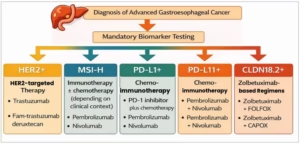
At diagnosis of advanced gastroesophageal cancer, comprehensive molecular and immune profiling enables personalized treatment selection. HER2 amplification, MSI-H/dMMR status, PD-L1 expression and CLDN18.2 expression guide the use of targeted therapy, antibody–drug conjugates, immunotherapy and chemoimmunotherapy across perioperative and metastatic treatment settings. Figure 2 was created using Claude.ai (Anthropic, San Francisco, CA, USA)
CAPOX = capecitabine and oxaliplatin; CLDN18.2 = Claudin-18 isoform 2; dMMR = mismatch repair deficiency; FOLFOX = oxaliplatin, fluorouracil, folinic acid; HER2+ = human epidermal growth factor receptor 2 positive; MSI-H = microsatellite instability-high; PD-1 = programmed cell death protein 1; PD-L1 = programmed death-ligand 1.
Hepatocellular carcinoma and biliary tract cancers
HCC and biliary tract cancers (BTCs) represent biologically distinct malignancies with partially overlapping therapeutic advances, yet important differences in clinical management and treatment selection. Historically, systemic treatment options for both entities were limited, with modest survival benefits achieved using kinase inhibitors or cytotoxic chemotherapy. Over the past decade, however, the emergence of immunotherapy–antiangiogenic combinations and molecularly matched targeted therapies has transformed management paradigms, underscoring the critical role of comprehensive molecular testing and multidisciplinary care in optimizing outcomes (Table 4).30,33
Table 4: Clinical applications of circulating tumor DNA in gastrointestinal cancers
| Clinical phase | ctDNA application | Evidence type | Clinical implication |
| Diagnosis | Mutation detection | Translational studies | Therapy selection |
| Post-operative | MRD detection | Prospective clinical studies | Adjuvant escalation |
| On-treatment | Response monitoring | Prospective and observational studies | Early treatment adaptation |
| Surveillance | Recurrence detection | Clinical studies | Early relapse detection |
ctDNA = circulating tumor DNA; MRD = minimal residual disease.
Immunotherapy and antiangiogenic combinations
Immunotherapy has become a cornerstone of systemic treatment for advanced HCC, particularly following the demonstration of improved survival with immune checkpoint inhibitor-based combination regimens. The combination of PD-L1 blockade with antiangiogenic therapy has shown superior overall and progression-free survival compared with prior standards of care, establishing a new first-line benchmark for unresectable disease.10,30
The biologic rationale for combining immunotherapy with antiangiogenic agents is grounded in the complementary effects of vascular normalization and immune modulation. Antiangiogenic therapy can reduce immunosuppressive signaling, improve immune cell infiltration and enhance antigen presentation, thereby potentiating the efficacy of immune checkpoint blockade. Foundational immune oncology frameworks describing the cancer-immunity cycle and tumor immune microenvironment provide mechanistic support for this strategy.36,37
Additional immune-based combinations, including dual checkpoint inhibition, have further expanded the therapeutic landscape in HCC. These regimens offer alternative options for patients who are not candidates for antiangiogenic therapy or who experience disease progression, highlighting the growing importance of individualized treatment selection based on liver function, comorbidities and toxicity profiles.17,30
In BTCs, immunotherapy has demonstrated more modest activity when used as monotherapy; however, combination approaches incorporating chemotherapy or targeted agents are actively being explored. Early clinical data and ongoing trials suggest that select patient subsets may derive benefit, particularly when immunotherapy is integrated into biomarker-informed treatment strategies.48
Targeted therapies in biliary tract cancers
BTCs have emerged as a paradigm for molecularly driven therapy within GI oncology due to the relatively high prevalence of actionable genomic alterations, particularly in intrahepatic cholangiocarcinoma. Advances in NGS have enabled routine identification of oncogenic drivers that inform therapeutic selection and clinical trial eligibility.33
Among the most clinically relevant alterations are FGFR2 fusions and rearrangements, which define a distinct molecular subset of intrahepatic cholangiocarcinoma. Targeted inhibition of FGFR signaling has demonstrated meaningful clinical activity in previously treated patients, validating FGFR2 as a therapeutically actionable driver. Similarly, IDH1 mutations represent another well-characterized target, with IDH1 inhibition improving disease control compared with placebo in molecularly selected populations.33
Additional actionable alterations, including BRAF V600E mutations and HER2 amplification, further expand the scope of targeted therapy in BTCs. While these alterations occur less frequently, their identification carries significant therapeutic implications, particularly in advanced disease where standard options are limited. Collectively, these advances highlight the necessity of early and comprehensive molecular profiling in BTCs to avoid missed opportunities for biomarker-matched therapy.30,33
Molecular testing and multidisciplinary care
The role of molecular testing differs substantially between HCC and BTCs. In BTCs, comprehensive genomic profiling is central to clinical decision-making, given the relatively high prevalence of actionable alterations such as FGFR2 fusions, IDH1 mutations and others that directly inform targeted therapy selection. In contrast, while molecular characterization in HCC continues to evolve, treatment decisions remain primarily driven by clinical factors including liver function, performance status, tumor burden and underlying liver disease, with molecular profiling playing a more limited role in routine practice.
Given the complexity of treatment decision-making in HCC and BTCs, multidisciplinary care models are essential for optimizing outcomes. In HCC, treatment selection must account for tumor burden, liver function, performance status and comorbidities, requiring close collaboration among hepatology, medical oncology, interventional radiology and surgery. The integration of systemic immunotherapy with locoregional and surgical approaches further underscores the need for coordinated care pathways.30
In BTCs, multidisciplinary evaluation is equally critical, particularly with respect to molecular testing. Early incorporation of comprehensive genomic profiling enables the timely identification of actionable alterations and facilitates referral to targeted therapies or clinical trials. Expert consensus emphasizes that molecular testing should be performed at diagnosis of advanced disease, rather than deferred until later lines of therapy, to maximize clinical benefit.33
As therapeutic options continue to expand, standardized molecular testing algorithms and coordinated multidisciplinary decision-making will be increasingly important to ensure equitable access to precision oncology advances in hepatobiliary malignancies.
Pancreatic cancer
Pancreatic ductal adenocarcinoma (PDAC) remains one of the most lethal GI malignancies, with limited long-term survival despite incremental therapeutic advances. Late-stage diagnosis, intrinsic chemoresistance and a profoundly immunosuppressive tumor microenvironment have historically constrained the effectiveness of systemic therapies. Nevertheless, recent progress in intensified perioperative treatment strategies, germline and molecularly guided therapy and rational approaches targeting the tumor microenvironment has begun to reshape clinical management and trial design in pancreatic cancer.31
Intensified perioperative and neoadjuvant strategies
Given the high risk of early systemic relapse even after curative–intent resection, perioperative systemic therapy has become a cornerstone of pancreatic cancer management. Intensified multiagent chemotherapy regimens have demonstrated improved survival compared with single-agent approaches, particularly in patients with adequate performance status. Contemporary management increasingly favors neoadjuvant or total neoadjuvant therapy strategies, which allow early treatment of micrometastatic disease, assessment of tumor biology and improved selection of patients most likely to benefit from surgery.31 Neoadjuvant therapy has also been associated with improved margin-negative resection rates and more accurate pathologic staging, particularly in borderline resectable and locally advanced disease. These approaches mitigate the risk of postoperative complications delaying adjuvant therapy and provide an opportunity to identify patients with rapidly progressive disease who may not benefit from surgical intervention. As a result, neoadjuvant strategies are increasingly explored even in anatomically resectable pancreatic cancer within clinical trials.31 Although immunotherapy has not yet demonstrated consistent benefit in unselected pancreatic cancer populations, perioperative treatment intensification remains an active area of investigation. Ongoing trials are evaluating whether earlier intervention, combination strategies or biomarker-selected populations may overcome the historical resistance of PDAC to immune-based therapies.30
Germline and molecularly guided therapy
Germline and somatic molecular profiling have assumed increasing importance in pancreatic cancer, both for therapeutic selection and for familial risk assessment. Pathogenic germline alterations in DNA damage repair pathways, particularly involving BRCA1, BRCA2 and other homologous recombination repair genes, define a clinically relevant subset of patients who may derive enhanced benefit from platinum-based chemotherapy and poly-ADP-ribose polymerase (PARP) inhibition.31 Maintenance PARP inhibitor therapy following platinum response has demonstrated the ability to prolong progression-free survival in patients with germline BRCA-mutated metastatic pancreatic cancer, establishing proof of principle for biomarker-driven therapy in this disease. These findings underscore the importance of universal germline testing in pancreatic cancer, regardless of age or family history, as actionable alterations may otherwise be missed.31 Beyond homologous recombination deficiency, broader molecular profiling continues to identify rare but potentially actionable alterations, including dMMR, high tumor mutational burden and oncogenic driver mutations amenable to targeted therapy. While such alterations occur infrequently in pancreatic cancer, their identification has meaningful therapeutic implications, particularly in advanced disease where treatment options are limited.30
Targeting the tumor microenvironment
The pancreatic tumor microenvironment represents a major barrier to effective therapy and is characterized by dense desmoplastic stroma, limited immune cell infiltration and profound immunosuppression. This hostile microenvironment restricts drug delivery, promotes immune evasion and contributes to resistance to both chemotherapy and immunotherapy.30,37
Efforts to therapeutically target the tumor microenvironment have focused on stromal modulation, immune reprogramming and combination strategies designed to enhance antitumor immunity.49 Approaches under investigation include agents targeting stromal components, myeloid-derived suppressor cells and immune checkpoint pathways, often in combination with chemotherapy or radiation to facilitate antigen release and immune priming.36,38,39
Despite the limited success of immune checkpoint inhibitors as monotherapy in pancreatic cancer, emerging evidence suggests that biomarker-selected populations, such as tumors with dMMR or hypermutated phenotypes, may exhibit increased immunotherapy sensitivity. Recent reviews highlight ongoing advances in pancreatic cancer management, including intensified perioperative therapy, biomarker-guided treatment and strategies targeting the tumor microenvironment to overcome resistance. In addition, ctDNA-based approaches are increasingly explored as tools to monitor treatment response and disease evolution, potentially informing adaptive therapeutic strategies in this challenging disease context.30,40
Colorectal cancer
CRC exemplifies the transition from stage- and histology-based management toward biomarker-driven care, with immunotherapy for MSI-H/dMMR disease, increasingly refined targeted strategies in molecular subsets, and ctDNA-guided approaches reshaping perioperative and metastatic treatment algorithms.50
Immunotherapy in microsatellite instability-high/mismatch repair deficiency disease
MSI-H/dMMR CRC is characterized by a high tumor mutational burden and neoantigen load, resulting in pronounced immunogenicity and susceptibility to PD-1 blockade. Foundational ‘basket’ studies across solid tumors established that mismatch-repair deficiency predicts marked responses to PD-1 inhibition, leading to tissue-agnostic approvals of pembrolizumab.
In metastatic CRC, the phase III KEYNOTE-177 trial demonstrated that first-line pembrolizumab significantly improved progression-free survival versus chemotherapy in MSI-H/dMMR disease, with higher response durability and a more favorable toxicity profile. These data support PD-1 blockade as the first-line therapy in advanced MSI-H CRC, with chemotherapy reserved for rapid disease management. Nivolumab-based strategies, including nivolumab monotherapy or nivolumab in combination with ipilimumab, have also demonstrated meaningful clinical activity in MSI-H/dMMR metastatic CRC and represent important alternative treatment options in this setting.8
Outside the context of metastatic disease, early-stage MSI-H/dMMR CRC is an area of interest and research. Proof-of-concept neoadjuvant PD-1 blockade in locally advanced dMMR rectal cancer has yielded unprecedented rates of clinical complete response, suggesting that curative–intent, organ-sparing strategies may become feasible in highly selected patients. Mechanistically, these outcomes align with the cancer-immunity cycle framework, in which abundant neoantigens and pre-existing immune infiltration enable checkpoint blockade to restore effective cytotoxic T-cell function. Emerging data from early-phase studies demonstrate high rates of clinical response with neoadjuvant immune checkpoint blockade in dMMR rectal and colon cancers, supporting a potential shift toward organ-preserving strategies in highly selected patients.7
Targeted therapies in molecular subsets
Comprehensive molecular profiling in CRC increasingly identifies actionable alterations beyond MSI status, supporting a precision-oncology approach. Among all of them, BRAF V600E is a marker of poor prognosis in a subset of patients in which combined BRAF, MEK and EGFR inhibition has been beneficial. Encorafenib plus cetuximab represents the current standard targeted approach, with additional combinations including chemotherapy under investigation in selected settings.
HER2 amplification, even though less common in CRC than in upper GI malignancies, represents another targeted subset. Experience from gastroesophageal cancers with HER2-directed antibodies and ADCs illustrates the broader principle that HER2-positive GI tumors can achieve substantial benefit from biomarker-matched therapies across disease sites. In addition, rare fusions or mutations in NTRK, ALK or RET may be managed with tissue-agnostic targeted agents when identified through broad NGS panels.
Dynamic resistance to EGFR-directed therapy is increasingly monitored via serial ctDNA, which can detect emergent RAS or EGFR extracellular domain mutations that drive acquired resistance and inform treatment sequencing or rechallenge strategies. Together, the data direct us to ramp our efforts and focus on routine and comprehensive molecular profiling in metastatic CRC to identify BRAF V600E, HER2 amplification, MSI status and other targetable alterations.
Circulating tumor DNA-guided adjuvant and surveillance strategies
ctDNA has emerged as a powerful prognostic and predictive biomarker in localized CRC. Across stages I–III disease, postoperative ctDNA positivity identifies patients at markedly elevated risk of recurrence, consistent with molecularly defined MRD. Longitudinal ctDNA monitoring can detect relapse months before radiographic progression and refines risk stratification beyond conventional clinicopathologic features.
Stage III colon cancer studies have shown that postoperative ctDNA status and early on-treatment dynamics correlate with recurrence risk and benefit from adjuvant chemotherapy, supporting ctDNA as a surrogate for adjuvant treatment efficacy and a tool for therapy escalation or de-escalation. Plasma-only assays have further demonstrated the feasibility of MRD detection without tumor tissue, enabling broader implementation in routine practice and in prospective trials testing ctDNA-guided adjuvant intensity.
In the metastatic setting, ctDNA kinetics during systemic therapy, including immune checkpoint blockade, correlate with response and may identify exceptional responders, such as patients with POLE-mutated hypermutated CRC. Case-level evidence further supports this concept, as POLE exonuclease domain mutations generate an ultra-mutated phenotype with markedly elevated tumor mutational burden and neoantigen load, driving profound immunogenicity. In a reported patient with early-onset, microsatellite-stable POLE-mutant colon cancer, immune checkpoint blockade was associated with rapid and sustained ctDNA clearance that closely paralleled durable clinical response.51 More broadly, ctDNA-based profiling provides a minimally invasive means to track clonal evolution and emerging resistance to targeted or EGFR-directed therapies, complementing tissue-based testing in adaptive treatment algorithms (Figure 3).
Figure 3: Circulating tumor DNA application across the gastrointestinal cancer disease course
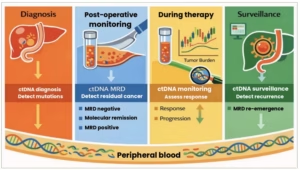
ctDNA provides a dynamic biomarker for molecular profiling, minimal residual disease detection, treatment response assessment and early relapse detection across disease stages. Figure 3 was created using Claude.ai (Anthropic, San Francisco, CA, USA)
ctDNA = circulating tumor DNA; MRD = minimal residual disease.
Health disparities and real-world implementation
Despite substantial advances in precision oncology, real-world adoption in GI cancers is uneven, with persistent disparities in stage at diagnosis, access to molecular testing and receipt of biomarker-matched therapy linked to race, socioeconomic status, geography, nutrition and other social determinants of health.
Disparities in diagnosis and access to biomarker testing
Large population-based analyses show that racial and socioeconomic minority groups experience a higher incidence of advanced-stage GI cancers and worse outcomes, reflecting disparities in screening, early detection and timely access to specialty care. Population-based analyses have demonstrated that younger cholangiocarcinoma patients from racial and socioeconomically disadvantaged groups experience lower cancer-free and overall survival, highlighting inequities in access to timely diagnosis and advanced therapies.52 In CRC specifically, racial and ethnic disparities in screening uptake persist despite guideline-based recommendations, contributing to later-stage presentation and higher mortality in underserved communities.
Access to comprehensive molecular profiling and ctDNA assays is similarly unequal. Real-world data in GI oncology indicate lower rates of biomarker testing and reduced use of targeted or immunotherapy regimens among patients treated in resource-limited settings, community practices or safety-net institutions, even when clinically indicated. Barriers include insurance coverage, limited pathology and NGS infrastructure, and variable clinician expertise with evolving biomarker guidelines.
Nutritional status and supportive care consideration
Nutritional status represents an under-recognized determinant of outcomes and access to advanced therapies in GI cancers. Undernutrition, sarcopenia and treatment-related cachexia are more prevalent in socioeconomically disadvantaged populations and can restrict eligibility for intensive regimens, clinical trials or aggressive perioperative approaches. Population-based analyses have shown that protein-energy malnutrition in hospitalized gastric cancer patients is associated with worse clinical outcomes, reinforcing the need for early nutritional assessment and intervention.53 Inadequate access to dietitians, symptom management and early palliative care further worsens toxicity and unplanned hospitalizations, undermining the potential benefit of biomarker-guided treatment.
Contemporary GI oncology frameworks increasingly emphasize proactive supportive care, including early nutritional assessment, management of treatment-related GI toxicities and rehabilitation, to maintain performance status and allow patients to receive optimal systemic therapy intensity and duration. Aligning these services into standard care pathways is particularly critical in high-risk and underserved populations.
Bridging the gap between clinical trials and practice
Randomized trials underpin contemporary immunotherapy, targeted therapy and ctDNA-guided strategies, yet their participants often differ substantially from real-world GI cancer populations. Patients enrolled in pivotal studies are more likely to have a favorable performance status, fewer comorbidities and better access to academic centers than those treated in routine practice. Consequently, the external validity of trial-derived regimens may be limited in safety-net, rural or community settings.
Real-world evidence (RWE) has emerged as a critical complement to trial data, informing regulatory decisions and implementation strategies for novel agents in broader, more diverse populations. However, without efforts to expand trial access, unify molecular testing pathways and develop implementation frameworks designed for regions that are resource deficient, precision oncology advances risk widening existing survival gaps rather than narrowing them. Including implementation science, health services research and policy initiatives into GI oncology is therefore essential to align clinical trial innovation with real-world practice and to realize population-level benefits from biomarker-driven therapies.
Future directions
The future of GI cancer management will be shaped by ongoing clinical trials, evolving biomarker strategies and the continued refinement of precision oncology approaches, alongside systematic efforts to translate therapeutic advances into durable and equitable clinical benefits. Contemporary GI oncology literature consistently emphasizes that progress will depend not only on the development of novel agents but also on optimized patient selection, rational combination strategies and improved implementation frameworks across diverse care settings.30,31
Expansion of actionable biomarkers remains a central priority. Beyond established markers such as MSI, HER2 amplification and PD-L1 expression, emerging targets, including CLDN18.2, FGFR2 and evolving immune signatures, are expected to further individualize therapy, particularly in gastroesophageal and hepatobiliary cancers. Increasingly, composite biomarker models integrating genomic alterations, immune microenvironment features and circulating biomarkers may offer superior predictive accuracy compared with single marker approaches, reflecting the biologic complexity of GI malignancies.33,37,39
Immunotherapy development is likely to progress toward rational combination strategies designed to overcome primary and acquired resistance. Building on foundational immune oncology principles, future trials are increasingly evaluating combinations of immune checkpoint inhibitors with chemotherapy, antiangiogenic agents, targeted therapies and microenvironment modulating approaches to enhance antigen release, immune infiltration and sustained T-cell activation.30,36,38 Early integration of immunotherapy in perioperative and neoadjuvant settings is an area of active investigation, with emerging clinical data suggesting potential benefit in selected GI tumor types. However, the maturity and consistency of evidence vary across disease sites, and further studies are needed before these approaches can be broadly adopted in routine practice.
Ongoing clinical trials are central to shaping the next phase of GI oncology. Large randomized studies are evaluating biomarker-selected immunotherapy combinations in both metastatic and perioperative settings, including trials integrating checkpoint inhibitors with chemotherapy, antiangiogenic agents and targeted therapies. In parallel, studies are assessing the role of ctDNA-guided treatment strategies, particularly in colorectal and pancreatic cancers, where molecular residual disease detection is being used to guide adjuvant therapy escalation or de-escalation. Early-phase trials are also exploring novel platforms such as bispecific antibodies, cellular therapies and next-generation ADCs across multiple GI tumor types. Collectively, these efforts are expected to refine patient selection, optimize sequencing strategies and expand the therapeutic landscape beyond current standards of care.
ADCs and next-generation targeted platforms represent another major frontier in GI oncology. Advances in ADC design, including improved linker stability and optimized cytotoxic payloads, are expanding their applicability beyond traditional biomarker-defined populations. In gastroesophageal cancers, ADCs targeting HER2 and CLDN18.2 have already demonstrated clinically meaningful activity, and similar strategies are under active investigation across other GI malignancies. Additional platforms, including bispecific antibodies and immune-engaging constructs, may further broaden therapeutic options as these technologies mature.31
ctDNA is poised to play an increasingly central role in future treatment paradigms across GI malignancies. Prospective studies are evaluating ctDNA-guided approaches for risk stratification, adaptive treatment escalation or de-escalation and early detection of relapse.21–24,30,40 As assay sensitivity improves and clinical validation expands, ctDNA may enable more dynamic and individualized management strategies that move beyond static treatment algorithms.22,24 Emerging data across multiple GI tumor types, including pancreatic cancer, support the association between serial ctDNA dynamics and clinical outcomes, reinforcing its potential role as a real-time biomarker for treatment monitoring and adaptive decision-making.40,54
Equally important is the imperative to address disparities in access to molecular testing, advanced therapeutics and multidisciplinary care. RWE continues to demonstrate inequities in biomarker testing rates, clinical trial participation and survival outcomes linked to socioeconomic status, race and geographic location. Without deliberate implementation strategies, ongoing therapeutic innovation risks widening existing disparities rather than narrowing them. Future efforts must therefore incorporate implementation science, health services research and policy-driven initiatives to ensure equitable adoption of precision oncology advances across GI cancer populations.30
Conclusion
GI cancers are moving from uniform, site-based treatment toward precisely tailored care built on molecular profiling, immunotherapy and circulating biomarkers.
Across oesophageal, gastric, hepatobiliary, pancreatic and colorectal tumors, NGS now uncovers targetable drivers such as HER2, CLDN18.2, FGFR2, IDH1, BRAF V600E and homologous recombination defects, enabling increasingly personalized regimens that improve outcomes in defined subsets. In parallel, immune checkpoint blockade has become standard for MSI-H/dMMR colorectal and gastroesophageal cancers and, when paired with antiangiogenic therapy, has redefined first-line treatment in advanced HCC.
ctDNA has emerged as a novel and multifaceted tool for detecting MRD, anticipating relapse, monitoring treatment response and tracking resistance, allowing more malleable adjustment of both perioperative and metastatic strategies. At the same time, persistent differences in stage at diagnosis, access to biomarker testing, supportive care and clinical trials, which are often aligned with race, socioeconomic status and geography, limit who benefits from these innovations.
Looking ahead, the greatest gains are likely to come from pairing scientific advances with implementation: routine early molecular and ctDNA testing, rational combinations based on tumor biology and microenvironment, and policies that extend precision oncology infrastructure to underserved settings. If these factors are aligned, the toolkit of targeted agents, immunotherapies and biomarkers can translate not only into longer survival but also into more consistent and equitable outcomes for people facing GI cancers worldwide.