
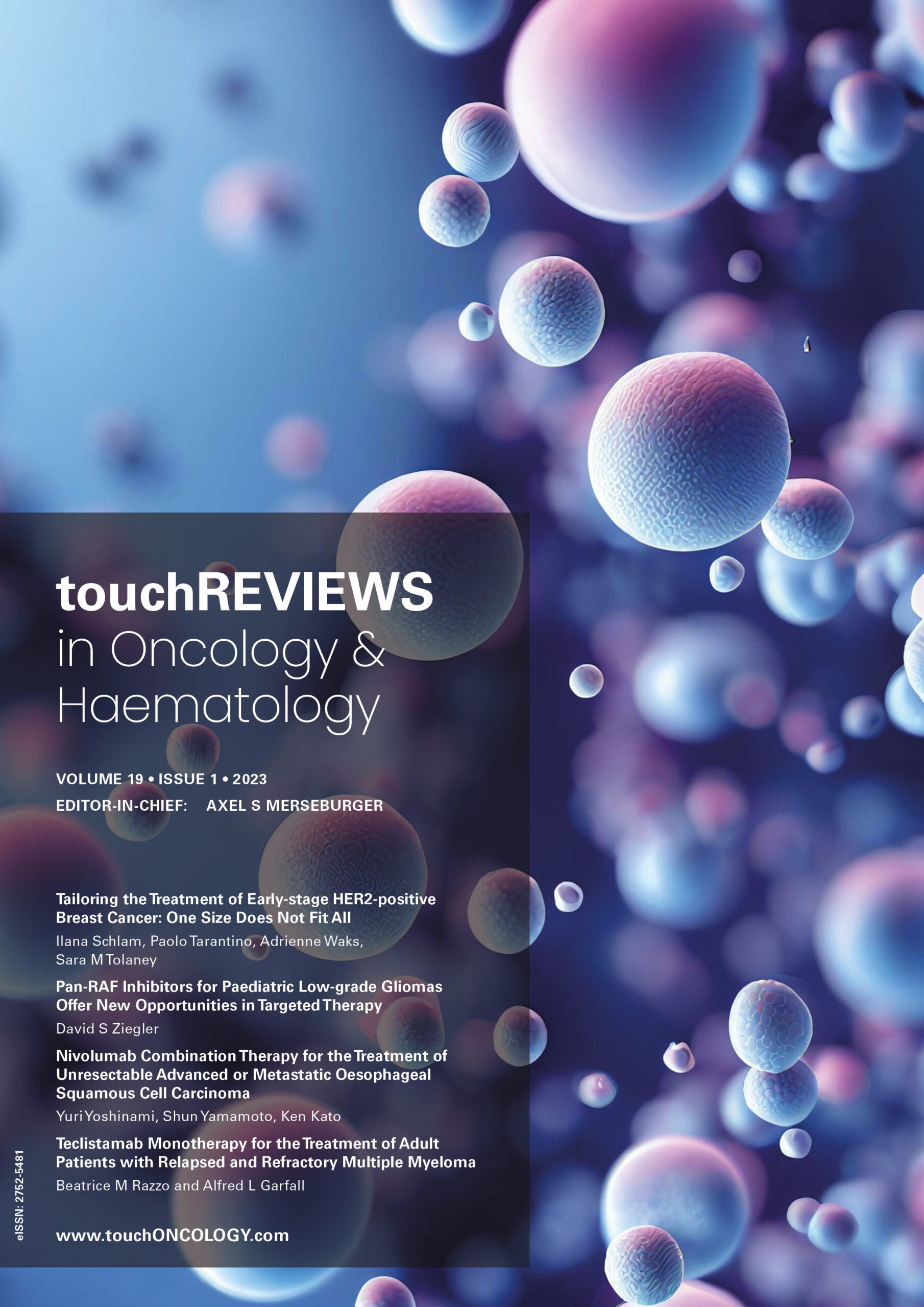
touchREVIEWS in Oncology & Haematology – Volume 19, Issue 1 – 2023
Foreword

Welcome to the latest edition of touchREVIEWS in Oncology & Haematology, which features some of the recent key developments in oncological and haematological disease. The journal opens with an expert interview with Linda Martin on a new fluorescent imaging agent for lung cancer detection. Screening using conventional methods is challenging but the results from the […]
Expert Interview

Accurately detecting lung tumours and their margins is important for disease outcomes.1,2 However, detection is challenging due to the use of minimally invasive surgery and current localization techniques, such as computed tomography (CT)-guided and endobronchial interventions, which add significantly to procedure time and risk of complications.3 Intraoperative imaging using a targeted agent to optically fluoresce cancerous cells may address these problems, in addition to locating […]
Editorial

Paediatric low-grade gliomas (pLGGs) most commonly develop in the cerebellum and can be resected safely, with minimal neurological complications and long-term cure achieved following surgery alone.1 However, a large proportion of pLGGs that develop in other parts of the brain remain unresectable and ultimately manifest as a chronic disease.2 The most common location at which unresectable pLGG […]
Reviews
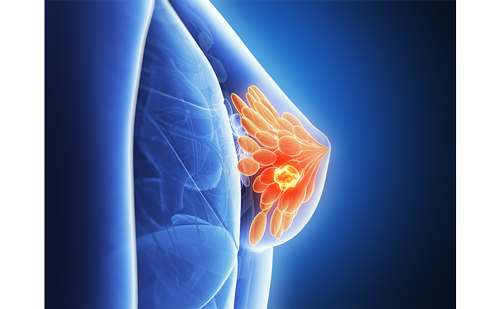
Trastuzumab deruxtecan (T-DXd) is a highly effective drug for the treatment of human epidermal growth factor receptor 2 (HER2)-positive advanced recurrent breast cancer. It was approved by the US Food and Drug Admninistration even though it had only been through a phase II study. It has attracted a great deal of attention among oncologists, and many clinical trials have been conducted. This article reviews reports of […]
Human epidermal growth factor receptor-2 (HER2)-positive breast cancer accounts for 15% of all breast cancers.1 This breast cancer subtype was historically associated with poor outcomes; however, the development of HER2-directed therapies has dramatically improved outcomes for patients with both early and advanced HER2+ disease.2 Currently, there are several types of HER2-targeted agents approved for the […]
Oesophageal cancer (OC) is the seventh most common malignancy and the sixth leading cause of death from cancer worldwide,1 with approximately 604,000 new cases in 2020.2 OC has two main histological subtypes: oesophageal squamous cell carcinoma (OSCC) and oesophageal adenocarcinoma (OAC). Worldwide, OSCC accounts for approximately 90% of all cases of oesophageal carcinoma and OAC for approximately 10%.3 OSCC is the most common subtype in East Asia and East Africa, and rates of OAC are […]
Biliary tract cancers (BTCs) are a heterogeneous group of adenocarcinomas that originate from the epithelial lining of the biliary tree and are classified into cholangiocarcinoma (CCA) and gallbladder cancer. BTC is an aggressive and rare epithelial malignancy that is usually diagnosed at an advanced stage with few effective therapeutic options.1 CCA is divided into extrahepatic and intrahepatic cholangiocarcinoma, with the extrahepatic […]
Bladder cancer is one of the most common malignancies in the USA, with an estimated 81,180 new cases and 17,100 deaths in 2022.1 Advanced urothelial carcinoma (aUC) includes both locally advanced, unresectable and metastatic urothelial cancer. About 5% of all bladder cancer cases present as de novo aUC, while almost 25% of patients present with muscle-invasive bladder cancer (MIBC). About 50% of these patients progress to aUC even with intent-to-cure locoregional therapy, […]
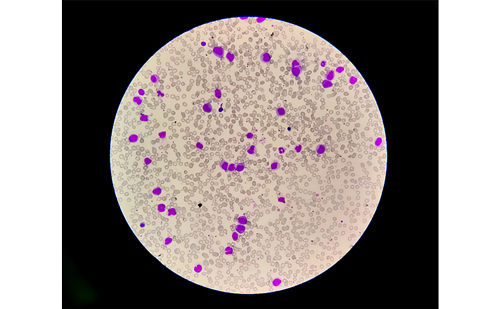
In recent years, our understanding of the complement system and its role in disease has increased dramatically. With the advent of complement 5 (C5) and C3 inhibitors, our ability to manipulate the complement system has improved the outcomes and quality of life for patients with paroxysmal nocturnal haemoglobinuria and atypical haemolytic–uraemic syndrome.1–3 More recently, this understanding […]
Cancers of the anal canal are relatively uncommon, and account for less than 1% of all new cancer diagnoses in the UK.1 However, the incidence of these cancers has increased over the past decade, primarily in females, in which they have more than doubled.1 Squamous cell anal carcinoma (SCAC) is the most common type of anal cancer, with adenocarcinomas, neuroendocrine carcinomas […]
Multiple myeloma (MM) is the second most common haematological malignancy, with upwards of 35,000 diagnoses in the USA each year.1,2 It remains a leading cause of blood cancer–related mortality worldwide, and although therapeutic advances have allowed for significant improvements in the median overall survival,3,4 the majority of patients still experience cycles of relapse that are eventually fatal.5 While patients with MM are living longer, a subgroup with high-risk disease at diagnosis still does poorly, with a median […]
Trending Topic
Multiple myeloma (MM) is the second most common haematological malignancy, with upwards of 35,000 diagnoses in the USA each year.1,2 It remains a leading cause of blood cancer–related mortality worldwide, and although therapeutic advances have allowed for significant improvements in the median overall survival,3,4 the majority of patients still experience cycles of relapse that are eventually fatal.5 While patients with MM are living longer, a subgroup with high-risk disease at diagnosis still does poorly, with a median […]
Journal Archive


Log into your Touch Account
Keep track of your clinical interests and newsletter subscriptions.
Sign up with an Email
Or use a .
Register now for FREE access
Already registered? Login below.