
EUROPEAN ONCOLOGY & HAEMATOLOGY – VOLUME 12 ISSUE 1 – SUMMER 2016
Welcome to the summer 2016 edition of European Oncology & Haematology, We are delighted to share this new selection of timely reviews and editorials across a variety of oncology and haematology topics.
In this edition Maurice Pérol discusses the two revolutions in the treatment of advanced non-small cell lung cancer and Christos Sotiriou and colleagues discuss genomic drivers in breast cancers. Ana Oaknin and Victor Rodriguez-Freixinos explore the timely topic of bevacizumab in the treatment of cervical cancer and Maria-Domenica Cappellini and colleagues review the 10 year anniversary of the Sherlock Holmes Symposia.
We hope you enjoy this edition of European Oncology & Haematology and that it provides a useful information relevant to your practice and interests.
Welcome to the latest edition of European Oncology & Haematology, which features a wide variety of topical articles of interest to oncologists and haematologists as well as the wider medical community. We begin with a review by Pérol of the treatment of advanced non-small cell lung cancer (NSCLC). Thanks to the advances in therapies that […]
Editorials
Changes that have been occurring since approximately 10 years in the treatment of advanced non-small cell lung cancer (NSCLC) constitute a good illustration of the evolving paradigms in oncology. Ten years ago, advanced NSCLC was considered as a single entity, resulting from tumour cells proliferation and was therefore treated with cytotoxic drugs. With this approach, […]
In the field of detection and imaging, multiparametric-prostate magnetic resonance images (MP-MRI) were re-interpreted with the Prostate Imaging Reporting and Data System (PIRADS) V.2 and correlated with the eventual histo-pathological finding(s) in 68 patients undergoing either transrectal ultrasound (TRUS)-guided biopsy or radical prostatectomy after the MP-MRI. The findings of this study suggest that a PIRADS […]
The term hyperfractionated radiotherapy (HFR) is used when radiotherapy is delivered in doses below 1.8-2.0 Gy per fraction. The rationale for doing so can be found in the differences in intrinsic radiosensitivity between tumours and late responding normal tissues. A small dose per fraction will tend to increase the therapeutic ratio between tumour and critical […]
The rate of childhood cancer caused by a genetic predisposition is now estimated around 8.5%.1 While proposing a genetic counselling has been classically considered as part of good clinical practice for few malignancies (retinoblastoma, adrenocortical tumours, choroid plexus carcinoma), its actual requirement and relevance was for long deemed questionable for most paediatric cancers. However, next […]
It is well known that there is a demographic transition all over the world. The most important explanation to this is the change from previously large groups of children in a family to now commonly only one or two children in most countries. This decrease in birth giving together with improved longevity means that most […]
Programmed death 1 (PD-1) and cytotoxic T-lymphocyte-associated protein 4 (CTLA-4) are immune checkpoints that are expressed on the surface of antigen-presenting cells in the initiator and effector phase of T-cell activation respectively. They are responsible for “switching off” the T-cell. Inhibition of these checkpoints allows for overexpression of the immune system. The mechanism of defeating […]
Significant advances in next-generation sequencing (NGS) technologies have allowed the identification of alterations in cancer genomes of different tumour types, providing important insight into the genetic complexity of cancers including breast cancer (BC). Notably, we have learned that primary BC genomes harbour mutations in multiple cancer genes but at a low frequency, less than 5% […]
Reviews
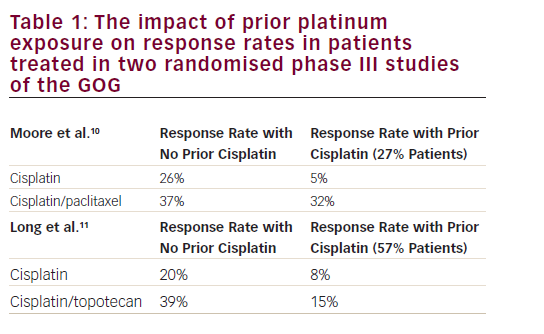
Worldwide, cervical cancer is the fourth most common cancer in women and seventh most common cancer overall. In 2012, approximately 528,000 new cervical cancer cases were diagnosed globally. Cervical cancer accounted for 7.5% of all female cancer deaths with approximately 266,000 deaths; the majority (87%) of these deaths occurred in developing countries.1,2 In Europe, the […]
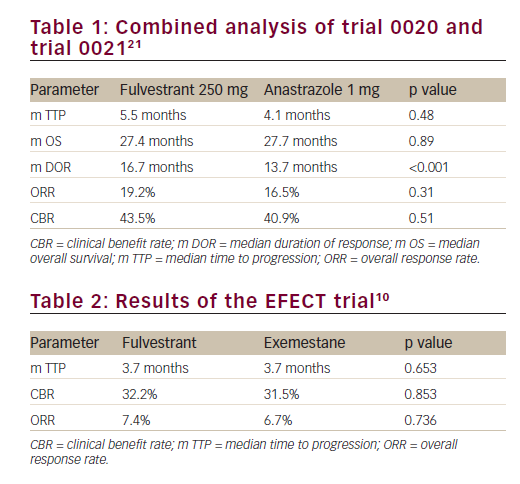
Globally, breast cancer is the most frequently diagnosed cancer and the leading cause of cancer death in women.1 More than 1.67 million cases of breast cancer were recorded in 2012, accounting for around 11.9% of all new cancer cases and 25.1% in women.2 Oestrogen receptor- (ER)-positive breast cancer accounts for 75% of breast cancers in […]
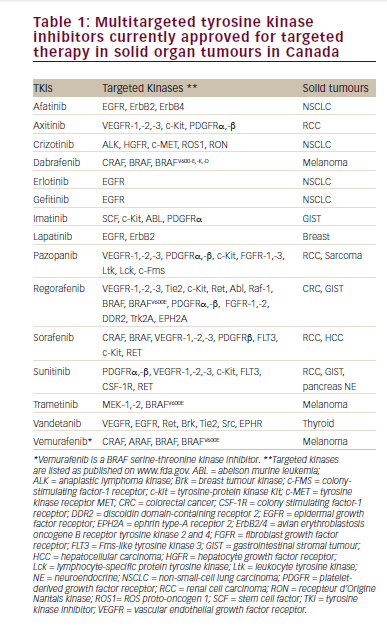
Tyrosine kinase inhibitors (TKIs) are small anticancer molecules targeting protooncogenic tyrosine kinase signalling pathways.1 TKIs are now therapies used routinely in the treatment of many solid tumours such as gastrointestinal stromal tumour (GIST), renal cell carcinoma (RCC), hepatocellular carcinoma (HCC), medullary thyroid cancer, breast cancer and non-small-cell lung carcinoma (Table 1). As opposed to cytotoxic […]
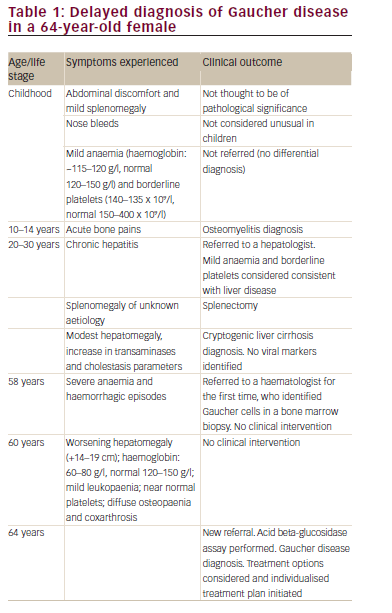
Early diagnosis of rare haematological diseases Rare haematological diseases often present ‘in disguise’, with nonspecific symptoms such as pancytopaenia, decreased circulating levels of one or two cell subsets and splenomegaly. Gaucher disease (GD) provides an excellent paradigm when considering challenges in diagnosing rare haematological diseases. Individuals presenting with GD will only rarely be seen regularly […]

Trending Topic
The first primary microangiopathic haemolytic anaemia was identified as thrombotic thrombocytopenic purpura (TTP) by Dr Moschowitz in 1924. At that time, the classic pentad of clinical features, still used today, included fever, erythrocyte fragmentation, thrombocytopenia, kidney injury and neurologic injury.1 It is now known that this disease is characterized by the deficiency of a disintegrin and metalloproteinase with thrombospondin-1-like […]
Journal Archive
Comprising articles contributed by renowned thought leaders, European Oncology & Haematology is a peer reviewed, free-to-access, bi-annual journal that aims to disseminate best practice through review articles addressing the most important and salient developments in the Oncological & Haematology field in practical terms.
European Oncology & Haematology
Frequency: Two print issues per year (Summer & Winter); ePub ahead of print throughout the year.
Print ISSN: 2045-5275 Electronic ISSN: 2045-5283
Indexing: EMBASE, Google Scholar, Genamics JournalSeek
Log into your Touch Account
Keep track of your clinical interests and newsletter subscriptions.
Sign up with an Email
Or use a .
Register now for FREE access
Already registered? Login below.