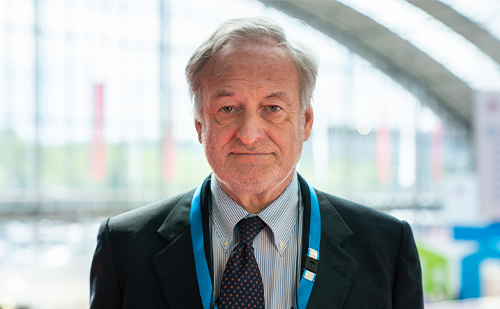
Elderly patients are often under-represented in clinical trials and therefore may not receive the necessary treatment. Dr Matti Aapro explains that elderly patients should receive immunotherapy under the same circumstances as younger patients. While they may experience more treatment-related toxicity, the benefits can outweigh this, and therefore the side effects just require close management. Dr Aapro explains that the reason for under-representation of elderly patients in clinical trials is often do to strict inclusion criteria, which does not reflect the real-world population of these patients. They may also be more susceptible to adverse events, which could confound the results. There is also the misconception that elderly patients may harbour less immune responsiveness; this is not always true, as elderly patients can sometimes be fitter than their younger counterparts. Ultimately, inclusion should be based on the individual patient, rather than their age.
Questions:
1. To what extent is immunotherapy currently used in elderly patients? (0:11)
2. Why are elderly patients under-represented in clinical trials? (0:49)
3. What are the other major challenges in identifying elderly patients who may respond to immunotherapy? (2:30)
4. How are age-related changes in the immune system likely to affect the response of elderly patients to immunotherapy? (4:00)
5. What initiatives are ongoing to improve our understanding of the response of elderly people to immunotherapy? (5:36)
Speaker disclosures: Matti Aapro has nothing to disclose in relation to this interview.
Filmed at the European Society for Medical Oncology (ESMO) 2018 Congress, Munich, Germany, 19–23 October 2018.